
What to Ask a Breeder About Pedigrees
Jeff Davis | https://perfectpedigree.com
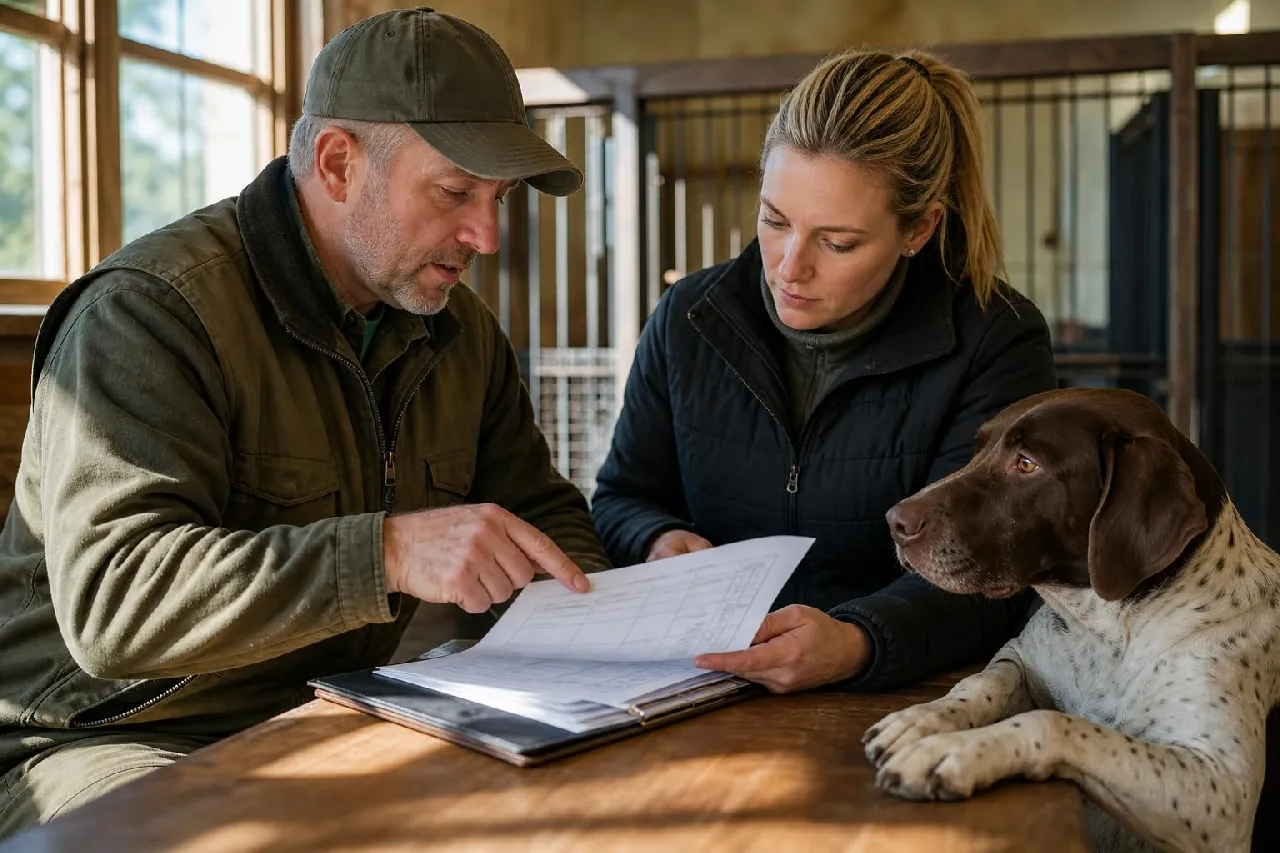
You dog's pedigree is not just paper. It is a trail through time. It tells you where a dog came from, what kind of stock shaped it, and whether the breeder in front of you is preserving something honest or merely selling a pretty story. If you are interested in buying a puppy or simply learning how dog lineage works, the right questions about pedigrees can save you money, disappointment, and heartache down the road.
I have always believed that a pedigree should be treated the way hunters treat sign in the field. A fresh track tells one thing. Old broken ground tells another. You do not glance once and declare the whole matter settled. You slow down, study the pattern, and ask what it means. The same is true when speaking with a breeder. Any breeder can show you a certificate with grand names stacked in neat rows. A good breeder can explain what those names mean, why they matter, and where the strengths and weaknesses sit in that family of dogs.
If you know what to ask a breeder about pedigrees, you stand a better chance of getting beyond the sales pitch and into the real substance of the bloodline.
Start With the Purpose Behind the Pedigree
The first question ought to be simple: what was this pedigree bred to produce? That sounds plain enough, but it is often where the truth begins to show. A pedigree built for bird work is not the same as one bred for conformation. A line developed for nose, grit, biddability, endurance, or family temperament will carry different priorities. A breeder worth listening to should be able to explain the purpose of the sire and dam pairing in clear language.
Ask whether the breeding was made to preserve working ability, improve structure, strengthen temperament, or continue a proven cross. If the answer wanders off into vague talk about champion blood without ever explaining the goals of the pairing, that is worth noting. A strong pedigree is never just a collection of famous ancestors. It is a plan, and a careful breeder should be able to speak about that plan with confidence.
Ask What Traits Show Up Consistently
One of the best pedigree questions you can ask is this: what traits appear again and again in this line? You are listening for specifics. A breeder who knows the family may tell you the dogs mature slowly but hunt all day once they come on. They may say the line throws strong retrieve drive, natural guarding instinct, stable house manners, or exceptional trainability. They may also admit the line can be stubborn, soft under pressure, vocal, or prone to roaming if not managed well.
That kind of candor is worth more than polished advertising. Pedigrees matter because inheritance matters, and inheritance includes faults as surely as strengths. Good breeders know both.
Ask About the Dogs Behind the First Three Generations
Most buyers stop at the names on the page. That is a mistake. Ask the breeder what they know about the dogs in the first three generations and, if possible, beyond. Were those dogs proven in the field, in the ring, in sport, or in service work? Were they healthy into old age? Did they produce consistently? Did their offspring resemble them in mind and body, or were they scattered and unpredictable?
A pedigree with depth is far more meaningful than one with a single standout name. I have seen folks get dazzled by one famous champion sitting in the second generation while ignoring a whole string of unproven or poorly matched dogs behind it. A pedigree should be read for pattern, not for decoration. The breeder should be able to tell you which ancestors had lasting influence and why.
Titles Matter, But Ask What They Actually Represent
If there are titles in the pedigree, ask what each one means. This is especially important for first-time buyers who may assume every title proves the same thing. Some titles speak to conformation, some to hunting performance, some to obedience, protection, endurance, or versatility. The letters before and after a dog's name mean little unless you understand the work required to earn them.
Ask whether the titled ancestors were handled by their owners or campaigned by professionals. Ask whether the breeder values those titles because they demonstrate ability relevant to the breed's purpose, or simply because they look impressive on paper. A title can be meaningful evidence, but only in context. In a true breeding program, titles should support the story the pedigree is telling, not distract from what is missing.
Ask About Health History in the Bloodline
No conversation about pedigrees is complete without health. A well-bred dog is not only a dog with notable ancestors; it is a dog backed by generations of thoughtful selection. Ask what health issues have appeared in the line, not just in the parents but in siblings, grandparents, aunts, uncles, and previous litters. Hip problems, eye disease, heart conditions, seizure disorders, allergies, autoimmune trouble, and temperament-linked instability can travel through bloodlines just as surely as coat color and prey drive.
The right breeder will not act offended by this question. They will understand it. In fact, many of the best breeders speak plainly about what they are watching in their line and what they have worked to reduce. Ask what health testing has been done and whether the breeder can provide records. Ask whether the pedigree shows a pattern of longevity. There is something reassuring in hearing that dogs from a family regularly worked, hunted, or lived comfortably into old age. That says a great deal about the care taken behind the scenes.
Ask About Temperament as an Inherited Trait
People often focus on size, color, and titles while forgetting that temperament runs in families. A pedigree should give you clues about nerve, confidence, sociability, resilience, and handler sensitivity. Ask the breeder what the line is known for in the home and in public. Are the dogs steady with strangers? Sharp with other animals? Easy with children? Slow to warm up? Intense in drive but calm when settled?
That question matters whether you are choosing a hunting companion, a family pet, or a dog for sport. A handsome pedigree means little if the line produces dogs poorly suited to your life. The breeder should help you understand not just what the dogs can do, but what sort of minds they carry.
Ask Whether the Breeding Is Linebred, Outcrossed, or Inbred
Now we come to a subject that deserves honest treatment. Ask the breeder whether the pedigree reflects linebreeding, outcrossing, or close inbreeding, and ask why that choice was made. Linebreeding is often used to preserve desired traits by concentrating on a certain family of dogs. Outcrossing may be used to widen the gene pool or bring in traits lacking in the current line. Close inbreeding is more controversial and demands a breeder with deep knowledge and a very clear purpose.
This is not a question to ask in a suspicious tone, but in a serious one. The answer can tell you much about the breeder's understanding of genetics and consistency. If they cannot explain the reasoning behind the structure of the pedigree, you have learned something important.
Ask How Previous Litters From Similar Pairings Turned Out
One of the strongest pieces of evidence in any pedigree discussion is production history. Ask whether the breeder has made this cross before, or used similar blood combinations in the past. What did those pups become? Were they healthy? Did they train easily? Did they meet the breeder's goals? A pedigree is one thing in theory and another thing in practice. Breeding records, previous offspring, and repeatable results are where theory meets the real world.
I have always trusted the breeder who says, 'This cross gave me strong noses and sound hips, but I saw a little extra independence,' more than the one who insists every pup from every litter was exceptional. Dogs are living creatures, not stamped parts. Honest evaluation is the mark of a serious kennel.
Ask to See Documentation, But Also Ask for Stories
Paperwork matters. Registration records, health clearances, title certifications, and pedigree printouts all belong in the conversation. But do not stop there. Ask for stories about the ancestors. Ask what the granddam was like in the kennel on a cold morning. Ask which dog in the pedigree had uncommon heart, unusual intelligence, or a fault the breeder had to breed away from. Those stories often reveal more than a stack of documents because they show whether the breeder truly knows the dogs behind the names.
Any old hand around dog bloodlines will tell you that the best pedigrees carry a memory with them. Somewhere in those generations is a dog folks still talk about because it marked the line in a lasting way. A knowledgeable breeder should be able to tell you who that dog was and what it passed on.
Final Thoughts on Reading a Breeder's Pedigree
At the end of the day, asking a breeder about pedigrees is not about trying to sound clever. It is about learning whether the dog in front of you comes from deliberate breeding, tested stock, and a line that suits your goals. The pedigree should help explain the dog, not confuse the matter. If the breeder welcomes thoughtful questions and answers them with clarity, detail, and honesty, you are likely in better hands than if they rely on fancy names and polished promises.
A good dog can still surprise you. Anyone who has followed dogs long enough knows that truth. But a sound pedigree, properly understood, shifts the odds in your favor. It tells you what generations before this pup were bred to do, how they lived, how they worked, and what they were known to pass along. That is the kind of knowledge worth carrying before you put money down or bring a dog home.
When you ask the right questions, you are not being difficult. You are honoring the old idea that breeding should mean something. And in the world of dogs, especially among those of us who value heritage, work, and honest stock, that still counts for a great deal.
I have always believed that a pedigree should be treated the way hunters treat sign in the field. A fresh track tells one thing. Old broken ground tells another. You do not glance once and declare the whole matter settled. You slow down, study the pattern, and ask what it means. The same is true when speaking with a breeder. Any breeder can show you a certificate with grand names stacked in neat rows. A good breeder can explain what those names mean, why they matter, and where the strengths and weaknesses sit in that family of dogs.
If you know what to ask a breeder about pedigrees, you stand a better chance of getting beyond the sales pitch and into the real substance of the bloodline.
Start With the Purpose Behind the Pedigree
The first question ought to be simple: what was this pedigree bred to produce? That sounds plain enough, but it is often where the truth begins to show. A pedigree built for bird work is not the same as one bred for conformation. A line developed for nose, grit, biddability, endurance, or family temperament will carry different priorities. A breeder worth listening to should be able to explain the purpose of the sire and dam pairing in clear language.
Ask whether the breeding was made to preserve working ability, improve structure, strengthen temperament, or continue a proven cross. If the answer wanders off into vague talk about champion blood without ever explaining the goals of the pairing, that is worth noting. A strong pedigree is never just a collection of famous ancestors. It is a plan, and a careful breeder should be able to speak about that plan with confidence.
Ask What Traits Show Up Consistently
One of the best pedigree questions you can ask is this: what traits appear again and again in this line? You are listening for specifics. A breeder who knows the family may tell you the dogs mature slowly but hunt all day once they come on. They may say the line throws strong retrieve drive, natural guarding instinct, stable house manners, or exceptional trainability. They may also admit the line can be stubborn, soft under pressure, vocal, or prone to roaming if not managed well.
That kind of candor is worth more than polished advertising. Pedigrees matter because inheritance matters, and inheritance includes faults as surely as strengths. Good breeders know both.
Ask About the Dogs Behind the First Three Generations
Most buyers stop at the names on the page. That is a mistake. Ask the breeder what they know about the dogs in the first three generations and, if possible, beyond. Were those dogs proven in the field, in the ring, in sport, or in service work? Were they healthy into old age? Did they produce consistently? Did their offspring resemble them in mind and body, or were they scattered and unpredictable?
A pedigree with depth is far more meaningful than one with a single standout name. I have seen folks get dazzled by one famous champion sitting in the second generation while ignoring a whole string of unproven or poorly matched dogs behind it. A pedigree should be read for pattern, not for decoration. The breeder should be able to tell you which ancestors had lasting influence and why.
Titles Matter, But Ask What They Actually Represent
If there are titles in the pedigree, ask what each one means. This is especially important for first-time buyers who may assume every title proves the same thing. Some titles speak to conformation, some to hunting performance, some to obedience, protection, endurance, or versatility. The letters before and after a dog's name mean little unless you understand the work required to earn them.
Ask whether the titled ancestors were handled by their owners or campaigned by professionals. Ask whether the breeder values those titles because they demonstrate ability relevant to the breed's purpose, or simply because they look impressive on paper. A title can be meaningful evidence, but only in context. In a true breeding program, titles should support the story the pedigree is telling, not distract from what is missing.
Ask About Health History in the Bloodline
No conversation about pedigrees is complete without health. A well-bred dog is not only a dog with notable ancestors; it is a dog backed by generations of thoughtful selection. Ask what health issues have appeared in the line, not just in the parents but in siblings, grandparents, aunts, uncles, and previous litters. Hip problems, eye disease, heart conditions, seizure disorders, allergies, autoimmune trouble, and temperament-linked instability can travel through bloodlines just as surely as coat color and prey drive.
The right breeder will not act offended by this question. They will understand it. In fact, many of the best breeders speak plainly about what they are watching in their line and what they have worked to reduce. Ask what health testing has been done and whether the breeder can provide records. Ask whether the pedigree shows a pattern of longevity. There is something reassuring in hearing that dogs from a family regularly worked, hunted, or lived comfortably into old age. That says a great deal about the care taken behind the scenes.
Ask About Temperament as an Inherited Trait
People often focus on size, color, and titles while forgetting that temperament runs in families. A pedigree should give you clues about nerve, confidence, sociability, resilience, and handler sensitivity. Ask the breeder what the line is known for in the home and in public. Are the dogs steady with strangers? Sharp with other animals? Easy with children? Slow to warm up? Intense in drive but calm when settled?
That question matters whether you are choosing a hunting companion, a family pet, or a dog for sport. A handsome pedigree means little if the line produces dogs poorly suited to your life. The breeder should help you understand not just what the dogs can do, but what sort of minds they carry.
Ask Whether the Breeding Is Linebred, Outcrossed, or Inbred
Now we come to a subject that deserves honest treatment. Ask the breeder whether the pedigree reflects linebreeding, outcrossing, or close inbreeding, and ask why that choice was made. Linebreeding is often used to preserve desired traits by concentrating on a certain family of dogs. Outcrossing may be used to widen the gene pool or bring in traits lacking in the current line. Close inbreeding is more controversial and demands a breeder with deep knowledge and a very clear purpose.
This is not a question to ask in a suspicious tone, but in a serious one. The answer can tell you much about the breeder's understanding of genetics and consistency. If they cannot explain the reasoning behind the structure of the pedigree, you have learned something important.
Ask How Previous Litters From Similar Pairings Turned Out
One of the strongest pieces of evidence in any pedigree discussion is production history. Ask whether the breeder has made this cross before, or used similar blood combinations in the past. What did those pups become? Were they healthy? Did they train easily? Did they meet the breeder's goals? A pedigree is one thing in theory and another thing in practice. Breeding records, previous offspring, and repeatable results are where theory meets the real world.
I have always trusted the breeder who says, 'This cross gave me strong noses and sound hips, but I saw a little extra independence,' more than the one who insists every pup from every litter was exceptional. Dogs are living creatures, not stamped parts. Honest evaluation is the mark of a serious kennel.
Ask to See Documentation, But Also Ask for Stories
Paperwork matters. Registration records, health clearances, title certifications, and pedigree printouts all belong in the conversation. But do not stop there. Ask for stories about the ancestors. Ask what the granddam was like in the kennel on a cold morning. Ask which dog in the pedigree had uncommon heart, unusual intelligence, or a fault the breeder had to breed away from. Those stories often reveal more than a stack of documents because they show whether the breeder truly knows the dogs behind the names.
Any old hand around dog bloodlines will tell you that the best pedigrees carry a memory with them. Somewhere in those generations is a dog folks still talk about because it marked the line in a lasting way. A knowledgeable breeder should be able to tell you who that dog was and what it passed on.
Final Thoughts on Reading a Breeder's Pedigree
At the end of the day, asking a breeder about pedigrees is not about trying to sound clever. It is about learning whether the dog in front of you comes from deliberate breeding, tested stock, and a line that suits your goals. The pedigree should help explain the dog, not confuse the matter. If the breeder welcomes thoughtful questions and answers them with clarity, detail, and honesty, you are likely in better hands than if they rely on fancy names and polished promises.
A good dog can still surprise you. Anyone who has followed dogs long enough knows that truth. But a sound pedigree, properly understood, shifts the odds in your favor. It tells you what generations before this pup were bred to do, how they lived, how they worked, and what they were known to pass along. That is the kind of knowledge worth carrying before you put money down or bring a dog home.
When you ask the right questions, you are not being difficult. You are honoring the old idea that breeding should mean something. And in the world of dogs, especially among those of us who value heritage, work, and honest stock, that still counts for a great deal.


View all 0 comments