
How Far Back Should a Good Pedigree Go?
Jeff Davis | https://perfectpedigree.com
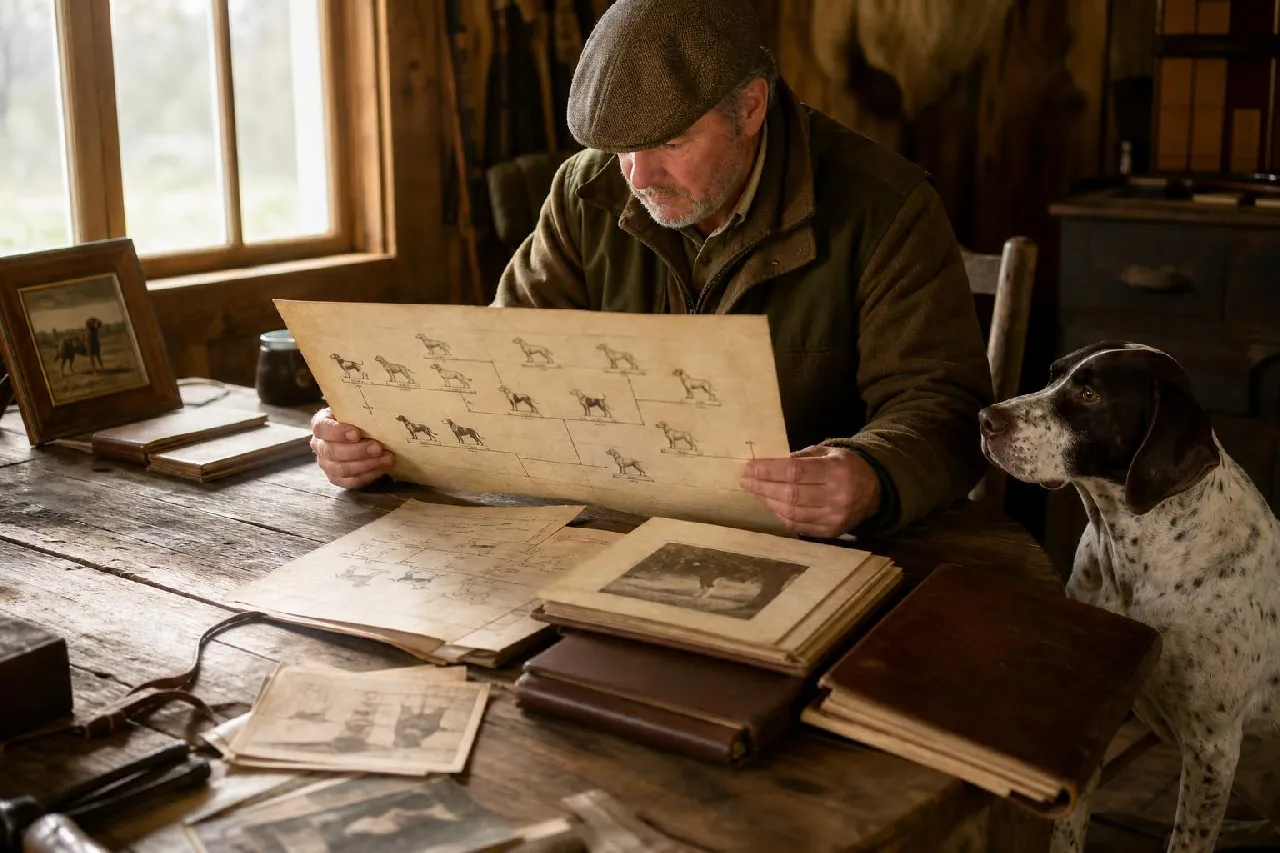
When folks first start looking at dog papers, they often ask the same question: how far back should a good pedigree go? It is a fair question, and an important one. I have sat at tailgates after a hunt, with cold coffee in hand and dogs panting in the shade, listening to men argue over bloodlines as if they were discussing old horse stock or family land. Some swore by a three-generation pedigree. Others would not look twice at a dog unless they could trace him back six, eight, or even ten generations. The truth, as with most things in dogs, sits somewhere between simple and complicated.
A pedigree should go back far enough to tell a meaningful story. That is the short answer. The longer answer is that the right depth depends on what you are trying to learn. If you are buying a family companion from health-tested parents, three to five generations may be enough to see the shape of the breeding. If you are studying a working line, trying to predict drive, nose, grit, biddability, or consistency, then five generations starts to become far more useful. Beyond that, older generations can still matter, but only if the names on the page actually mean something and are backed by real records, titles, health information, or a known history in the breed.
What a Pedigree Is Really Supposed to Show
Too many buyers think a pedigree is just proof that a dog is purebred. That is only the surface of it. A pedigree is really a map of inheritance. It shows you where a dog came from, which traits may have been concentrated, and whether a breeder has been making careful choices or just pairing dogs because they happened to be available. Good pedigrees do not impress me because they are long. They impress me because they are informative.
When I look at a pedigree, I am not just counting generations. I am asking whether the same qualities show up again and again. Are there dogs known for stable temperament? Are there field champions, hunting dogs, proven retrievers, steady hounds, or dogs with consistent conformation and health records? Do the same kennel names appear because a breeder spent years refining a line, or is the pedigree a patchwork of random pairings? Length matters less than clarity.
A short pedigree packed with proven dogs can tell you more than a ten-generation chart full of strangers. I have seen plenty of papers dressed up to look grand, loaded with names no one remembers and accomplishments no one can verify. A pedigree ought to help you predict. If it does not help you predict, it is just decoration.
How Many Generations Are Usually Enough?
Three Generations: A Good Starting Point
A three-generation pedigree covers parents, grandparents, and great-grandparents. For many buyers, this is the minimum useful range. It gives you a look at the immediate breeding decisions behind a litter. You can often spot whether the breeder has repeated successful pairings, whether close relatives have similar strengths, and whether major health or temperament issues might be lurking near the surface.
If you are buying a pet or a dual-purpose dog, three generations may be enough to ask smart questions. It lets you examine the nearest influences, which often carry the strongest practical impact on the pup in front of you. But on its own, three generations can still leave blind spots. A weakness introduced four or five generations back may reappear if linebreeding pulls it forward.
Five Generations: The Sweet Spot for Most Serious Buyers
In my view, five generations is where a pedigree starts to earn its keep. At that depth, patterns begin to show themselves. You can see whether certain sires or dams appear more than once. You can spot linebreeding, outcrosses, and family clusters. If the same notable dogs are stacked in the background, and if those dogs were known for sound hips, honest mouths, bird sense, endurance, or calm house manners, then you have something worth studying.
For hunting dogs, five generations often gives enough depth to understand whether the line has been bred for real field ability or just for reputation. A dog may be by a fine sire and out of a nice dam, but if the generations behind them are soft, erratic, unhealthy, or never proven in the field, that matters. Good traits can fade quickly when they are not anchored by consistent breeding.
Seven Generations and Beyond: Valuable, but Only with Context
Pedigrees that stretch back seven generations or more can be useful, especially in well-documented breeds with strong historical records. They help experienced breeders identify foundation dogs, influential crosses, and the source of certain traits. But the farther back you go, the more careful you have to be. Old names can carry a kind of myth. Folks repeat stories long after the facts have gone thin.
If the deep pedigree includes titled dogs, health certifications, kennel records, field trial results, or a breeder's long-standing notes, that history has real value. If it is just names in small print, it may not tell you much. Paper alone does not tree a coon, point a covey, or settle quietly by the fire after a long day.
Why Depth Alone Does Not Make a Pedigree Good
I have known hunters who could recite bloodlines from memory the way some men quote scripture. The best of them never confused pedigree depth with pedigree quality. A good pedigree is not measured only by how far it goes back. It is measured by how reliably it explains the dog standing in front of you.
You want to see consistency. If several generations show the same kind of temperament, working style, structure, and health, that is a stronger sign than a distant famous ancestor tucked into the seventh generation. Every breed has a few celebrated names that breeders love to mention. The trouble is, one famous dog buried deep in the pedigree does not guarantee much. By the time you get several generations removed, that ancestor's genetic contribution may be quite small unless the line has been deliberately concentrated.
That is why linebreeding deserves attention when reading pedigrees. When certain quality dogs appear multiple times within five generations, it can suggest a breeder was trying to fix desirable traits. Done wisely, linebreeding can create consistency. Done carelessly, it can also magnify faults. So when you see repeated ancestors, do not just admire the pattern. Ask what exactly was being preserved.
What Buyers Should Look for Besides Generations
If you are serious about dog lineage, look beyond the chart itself. Ask what the dogs in the pedigree were known for. Did they hunt? Did they compete? Were they structurally sound? How long did they live? Did they have stable nerves and clear heads? The best breeders I have known could talk about the dogs behind the papers in plain language. They did not hide behind fancy terminology. They told you which dog had a tremendous nose, which bitch was as honest as daylight, which male threw strong shoulders, and which line needed watching for allergies or soft temperaments.
Health testing matters every bit as much as old names. A pedigree should be paired with documentation on genetic screening, orthopedic clearances, and breed-specific concerns. A long lineage means little if it also carries a trail of preventable problems. Buyers often focus so hard on titles and famous kennels that they forget a sound body and a steady mind are part of good breeding too.
It also helps to see the pedigree matched against the actual dog. Papers should confirm what your eyes and instincts are already telling you. If a pup comes from generations of confident, trainable working stock, you ought to see some spark of that in how he carries himself, even young. If the pedigree promises one thing and the dog shows another, pay attention.
Pedigrees for Working Dogs Versus Companion Dogs
The purpose of the dog should shape how deeply you study the pedigree. For a hard-going hunting dog, a deeper pedigree is usually more valuable because performance traits can be subtle, layered, and easier to lose than people think. Nose, prey drive, stamina, independence, cooperation, mouth, and grit do not always announce themselves fully in the first generation or two. Looking back five or more generations gives you a better shot at seeing whether those qualities run true.
For companion homes, the emphasis may shift toward health, temperament, and predictability in everyday life. In that case, a clean, well-documented three- to five-generation pedigree can be plenty, provided the breeder can explain the dogs and support the paper with health records and honest conversation. Not every buyer needs a historian's ledger. But every buyer should want enough depth to see whether the breeding was intentional.
The Difference Between Registered and Well Bred
This is a lesson worth learning early. A registered dog is not automatically a well-bred dog. Registration simply means the dog is recorded within a system. A good pedigree goes a step beyond registration. It shows planned breeding, traceable quality, and some level of proof. In the old days, before databases were a click away, men relied on memory, kennel reputation, trial reports, and the word of folks they trusted. Today, we have more records than ever, yet buyers can still be fooled if they mistake paperwork for substance.
A well-bred dog should come from a pedigree that is deep enough to reveal consistency and close enough to remain relevant. For most people, that means at least three generations, with five being ideal. More than five can be helpful, especially for breeders and dedicated students of a bloodline, but only when those added generations carry real information rather than empty prestige.
So, How Far Back Should a Good Pedigree Go?
If you want the plainspoken answer, a good pedigree should go back at least three generations, and five is better for anyone who truly wants to understand dog lineage. That range usually gives enough information to evaluate breeding decisions, spot patterns, and judge whether the line has been built with care. Going farther back can add value, especially in established bloodlines, but only if the history is meaningful and verifiable.
At the end of the day, a pedigree is a tool, not a trophy. It should help you understand the dog, not distract you from him. The finest pedigrees I have ever handled did not just name ancestors. They told a coherent story of purpose, selection, and consistency. And when those dogs hit the field, they carried that story honestly. That is what you want. Not just long papers, but lineage with proof in its bones.
A pedigree should go back far enough to tell a meaningful story. That is the short answer. The longer answer is that the right depth depends on what you are trying to learn. If you are buying a family companion from health-tested parents, three to five generations may be enough to see the shape of the breeding. If you are studying a working line, trying to predict drive, nose, grit, biddability, or consistency, then five generations starts to become far more useful. Beyond that, older generations can still matter, but only if the names on the page actually mean something and are backed by real records, titles, health information, or a known history in the breed.
What a Pedigree Is Really Supposed to Show
Too many buyers think a pedigree is just proof that a dog is purebred. That is only the surface of it. A pedigree is really a map of inheritance. It shows you where a dog came from, which traits may have been concentrated, and whether a breeder has been making careful choices or just pairing dogs because they happened to be available. Good pedigrees do not impress me because they are long. They impress me because they are informative.
When I look at a pedigree, I am not just counting generations. I am asking whether the same qualities show up again and again. Are there dogs known for stable temperament? Are there field champions, hunting dogs, proven retrievers, steady hounds, or dogs with consistent conformation and health records? Do the same kennel names appear because a breeder spent years refining a line, or is the pedigree a patchwork of random pairings? Length matters less than clarity.
A short pedigree packed with proven dogs can tell you more than a ten-generation chart full of strangers. I have seen plenty of papers dressed up to look grand, loaded with names no one remembers and accomplishments no one can verify. A pedigree ought to help you predict. If it does not help you predict, it is just decoration.
How Many Generations Are Usually Enough?
Three Generations: A Good Starting Point
A three-generation pedigree covers parents, grandparents, and great-grandparents. For many buyers, this is the minimum useful range. It gives you a look at the immediate breeding decisions behind a litter. You can often spot whether the breeder has repeated successful pairings, whether close relatives have similar strengths, and whether major health or temperament issues might be lurking near the surface.
If you are buying a pet or a dual-purpose dog, three generations may be enough to ask smart questions. It lets you examine the nearest influences, which often carry the strongest practical impact on the pup in front of you. But on its own, three generations can still leave blind spots. A weakness introduced four or five generations back may reappear if linebreeding pulls it forward.
Five Generations: The Sweet Spot for Most Serious Buyers
In my view, five generations is where a pedigree starts to earn its keep. At that depth, patterns begin to show themselves. You can see whether certain sires or dams appear more than once. You can spot linebreeding, outcrosses, and family clusters. If the same notable dogs are stacked in the background, and if those dogs were known for sound hips, honest mouths, bird sense, endurance, or calm house manners, then you have something worth studying.
For hunting dogs, five generations often gives enough depth to understand whether the line has been bred for real field ability or just for reputation. A dog may be by a fine sire and out of a nice dam, but if the generations behind them are soft, erratic, unhealthy, or never proven in the field, that matters. Good traits can fade quickly when they are not anchored by consistent breeding.
Seven Generations and Beyond: Valuable, but Only with Context
Pedigrees that stretch back seven generations or more can be useful, especially in well-documented breeds with strong historical records. They help experienced breeders identify foundation dogs, influential crosses, and the source of certain traits. But the farther back you go, the more careful you have to be. Old names can carry a kind of myth. Folks repeat stories long after the facts have gone thin.
If the deep pedigree includes titled dogs, health certifications, kennel records, field trial results, or a breeder's long-standing notes, that history has real value. If it is just names in small print, it may not tell you much. Paper alone does not tree a coon, point a covey, or settle quietly by the fire after a long day.
Why Depth Alone Does Not Make a Pedigree Good
I have known hunters who could recite bloodlines from memory the way some men quote scripture. The best of them never confused pedigree depth with pedigree quality. A good pedigree is not measured only by how far it goes back. It is measured by how reliably it explains the dog standing in front of you.
You want to see consistency. If several generations show the same kind of temperament, working style, structure, and health, that is a stronger sign than a distant famous ancestor tucked into the seventh generation. Every breed has a few celebrated names that breeders love to mention. The trouble is, one famous dog buried deep in the pedigree does not guarantee much. By the time you get several generations removed, that ancestor's genetic contribution may be quite small unless the line has been deliberately concentrated.
That is why linebreeding deserves attention when reading pedigrees. When certain quality dogs appear multiple times within five generations, it can suggest a breeder was trying to fix desirable traits. Done wisely, linebreeding can create consistency. Done carelessly, it can also magnify faults. So when you see repeated ancestors, do not just admire the pattern. Ask what exactly was being preserved.
What Buyers Should Look for Besides Generations
If you are serious about dog lineage, look beyond the chart itself. Ask what the dogs in the pedigree were known for. Did they hunt? Did they compete? Were they structurally sound? How long did they live? Did they have stable nerves and clear heads? The best breeders I have known could talk about the dogs behind the papers in plain language. They did not hide behind fancy terminology. They told you which dog had a tremendous nose, which bitch was as honest as daylight, which male threw strong shoulders, and which line needed watching for allergies or soft temperaments.
Health testing matters every bit as much as old names. A pedigree should be paired with documentation on genetic screening, orthopedic clearances, and breed-specific concerns. A long lineage means little if it also carries a trail of preventable problems. Buyers often focus so hard on titles and famous kennels that they forget a sound body and a steady mind are part of good breeding too.
It also helps to see the pedigree matched against the actual dog. Papers should confirm what your eyes and instincts are already telling you. If a pup comes from generations of confident, trainable working stock, you ought to see some spark of that in how he carries himself, even young. If the pedigree promises one thing and the dog shows another, pay attention.
Pedigrees for Working Dogs Versus Companion Dogs
The purpose of the dog should shape how deeply you study the pedigree. For a hard-going hunting dog, a deeper pedigree is usually more valuable because performance traits can be subtle, layered, and easier to lose than people think. Nose, prey drive, stamina, independence, cooperation, mouth, and grit do not always announce themselves fully in the first generation or two. Looking back five or more generations gives you a better shot at seeing whether those qualities run true.
For companion homes, the emphasis may shift toward health, temperament, and predictability in everyday life. In that case, a clean, well-documented three- to five-generation pedigree can be plenty, provided the breeder can explain the dogs and support the paper with health records and honest conversation. Not every buyer needs a historian's ledger. But every buyer should want enough depth to see whether the breeding was intentional.
The Difference Between Registered and Well Bred
This is a lesson worth learning early. A registered dog is not automatically a well-bred dog. Registration simply means the dog is recorded within a system. A good pedigree goes a step beyond registration. It shows planned breeding, traceable quality, and some level of proof. In the old days, before databases were a click away, men relied on memory, kennel reputation, trial reports, and the word of folks they trusted. Today, we have more records than ever, yet buyers can still be fooled if they mistake paperwork for substance.
A well-bred dog should come from a pedigree that is deep enough to reveal consistency and close enough to remain relevant. For most people, that means at least three generations, with five being ideal. More than five can be helpful, especially for breeders and dedicated students of a bloodline, but only when those added generations carry real information rather than empty prestige.
So, How Far Back Should a Good Pedigree Go?
If you want the plainspoken answer, a good pedigree should go back at least three generations, and five is better for anyone who truly wants to understand dog lineage. That range usually gives enough information to evaluate breeding decisions, spot patterns, and judge whether the line has been built with care. Going farther back can add value, especially in established bloodlines, but only if the history is meaningful and verifiable.
At the end of the day, a pedigree is a tool, not a trophy. It should help you understand the dog, not distract you from him. The finest pedigrees I have ever handled did not just name ancestors. They told a coherent story of purpose, selection, and consistency. And when those dogs hit the field, they carried that story honestly. That is what you want. Not just long papers, but lineage with proof in its bones.


View all 0 comments