
Breaking Down a Champion Dog’s Pedigree
Jeff Davis | https://perfectpedigree.com
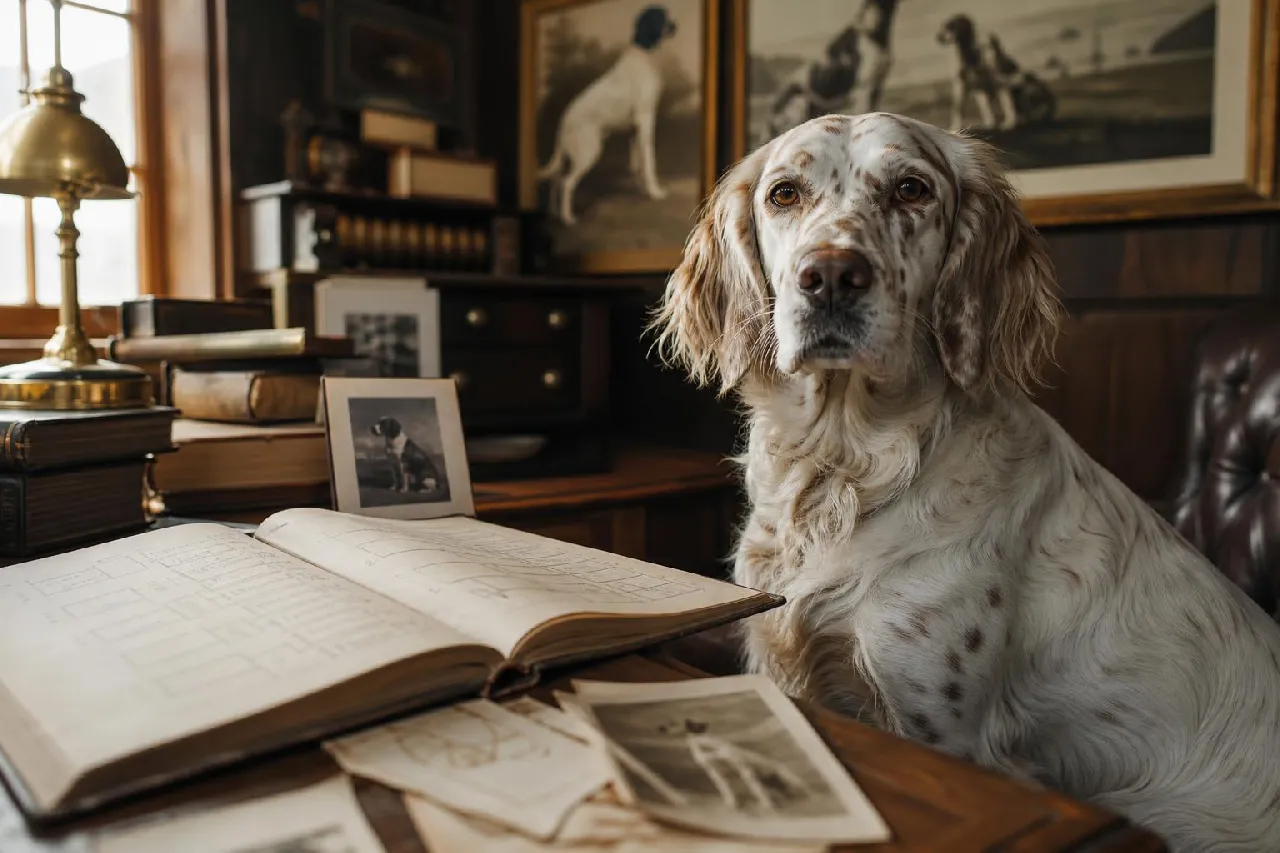
There's a world of difference between glancing at a stack of registered names and truly understanding what a champion dog's pedigree is telling you. To the untrained eye, a pedigree can look like a tangle of titles, kennel names, and old dogs buried several generations deep. But to someone who has spent time around good hounds, bird dogs, retrievers, or working stock, that paper reads more like a field journal. It tells you where the dog came from, what traits have been concentrated, what kind of people stood behind the breeding, and whether the dog in front of you is likely to carry on the family business.
I've always believed a pedigree ought to be studied the way a hunter studies sign in the dirt. You don't just look for one print and make up your mind. You read the trail, look for direction, judge freshness, and fit one clue to the next. A champion dog's pedigree works much the same way. The titles matter, yes, but so does the density of quality behind them, the consistency of performance across generations, and the purpose that shaped the bloodline in the first place.
What a champion pedigree really represents
When folks hear the word champion, they often picture ribbons, polished coats, and a dog standing square under bright lights. That can be part of the story, but it's only one piece. A champion pedigree is not just a list of winners. At its best, it is a record of generations of selection. Somewhere along the way, breeders made hard choices about which dogs deserved to reproduce and which ones did not. They selected for structure, drive, temperament, health, nose, biddability, endurance, style, or whatever mattered most to the breed's original purpose.
That is why no serious buyer should stop at the first champion title they see. One champion in the first generation may impress a newcomer, but a pedigree filled with accomplished, proven dogs from top to bottom tells a much deeper story. Consistency is what separates a lucky cross from a true family of dogs. If excellence keeps showing up, the blood is carrying something real.
For buyers, this matters because a pedigree does not guarantee the future, but it does improve your odds of understanding it. A well-bred pup from a line of champions has a stronger chance of reflecting the traits that made those ancestors worth remembering. That doesn't mean every pup becomes a winner. It means the deck may be stacked in your favor if the pedigree has been built with care and honesty.
How to read the names, titles, and kennel prefixes
The first thing most people notice in a pedigree is the names. They can be long, formal, and sometimes confusing. Usually, a registered name includes a kennel prefix, a unique call name or identifier, and a string of titles before or after it. Those kennel names matter more than many beginners realize. A respected kennel prefix often signals a breeder with a known program, a recognizable type, and a history of producing dogs with similar strengths.
Titles tell you how a dog was proven. In conformation, a championship title may indicate that the dog met the breed standard in the ring. In field work, hunt tests, obedience, protection sports, tracking, or other performance venues, titles may show trainability, instinct, steadiness, and practical ability. The key is to understand what those titles actually measure. A field champion and a show champion are both accomplished dogs, but they may represent very different kinds of excellence.
When I look over a pedigree, I want to know whether the titles match the purpose of the dog I'm considering. If I'm studying a bird dog line, I care a great deal about whether those ancestors proved themselves where feathers fly and conditions get honest. If I'm evaluating a breed better known for conformation and companionship, I still want to see evidence of soundness and stable temperament. A title is only useful if you understand what it reflects.
Why titles alone are not enough
A common mistake is assuming more titles automatically mean a better breeding. Sometimes they do. Sometimes they simply mean the owner campaigned the dog hard. The real question is whether the pedigree shows repeated proof of quality in different branches. If a dog's sire, grandsire, dam, and several collateral relatives all carry meaningful accomplishments, that begins to paint a picture of inherited value rather than individual luck.
It also helps to ask whether untitled dogs in the pedigree were still known producers. Some dogs never had a chance to compete much, yet they became cornerstones because they consistently threw outstanding offspring. In old hunting circles, a dog's reputation was often carried from tailgate to tailgate long before databases and glossy ads ever caught up.
Looking past the first three generations
Most casual buyers stop at the parents and grandparents. That's understandable, but if you really want to break down a champion dog's pedigree, you need to go deeper. The fourth and fifth generations can reveal the linebreeding patterns that shaped the dog. They can also expose whether a breeder has been preserving a family of dogs or simply mixing fashionable names in hopes of catching lightning.
Deep pedigrees often show the return of certain influential sires or dams multiple times. This is where the art of pedigree research begins. If one ancestor appears again and again, the breeder may have been trying to lock in that dog's strengths. Sometimes that produces a recognizable type with dependable traits. Other times it can amplify weaknesses if the breeder was careless or overly proud. That is why the names repeated in a pedigree deserve close scrutiny.
A champion pedigree should have depth, not just sparkle. It ought to reward a long look. The farther back you study, the more you can see whether the line was built intentionally and whether the same kind of dog keeps turning up generation after generation.
Linebreeding, outcrossing, and family resemblance
Linebreeding is often misunderstood. In simple terms, it is a breeding strategy that pairs dogs with shared ancestry to preserve desired traits. Done thoughtfully, it can strengthen consistency in structure, instinct, and temperament. Done poorly, it can fix faults just as firmly. Outcrossing, on the other hand, brings in less-related blood to widen the gene pool and sometimes add missing qualities. Neither approach is automatically right or wrong. The best breeders use each as a tool, not a religion.
When reviewing a champion dog's pedigree, look for whether the dogs in the background appear to belong to the same family type. Do they come from related kennels or a connected web of breeders pursuing similar goals? Or does the pedigree jump all over the map with little coherence? A line that has family resemblance often offers more predictability than a pedigree assembled from isolated stars.
The importance of dams in a champion pedigree
Too many pedigree discussions revolve around famous sires while the dams get treated like footnotes. That's a mistake, and old breeders knew better. Great brood bitches have anchored some of the finest bloodlines in dog history. The dam contributes half the genetics, and in many cases her influence on early development, temperament, and litter quality leaves a mark that goes beyond paper.
When I study a champion pedigree, I want to know whether the female side is strong. Are the dams producing multiple quality offspring? Do the sisters, half-sisters, and daughters also carry titles or produce notable dogs? A pedigree with a powerful female family often has more breeding value than one built around a single popular sire whose name has been plastered everywhere.
If you really want to understand lineage, follow the dams with the same seriousness you follow the males. A wise buyer learns to ask where the producing females are, because that is often where the true strength of a line is hiding.
Health, temperament, and the truth behind the paper
A pedigree can inspire confidence, but it should never replace common sense. No matter how many champions appear on paper, you still need to look into health testing, temperament, and the breeder's reputation for honesty. Titles and famous ancestors don't excuse weak nerves, poor hips, chronic health issues, or unstable character. In fact, one of the surest signs of a responsible breeding program is that it values soundness as highly as status.
A good pedigree researcher learns to ask practical questions. Were the parents health tested according to breed standards? Did the line produce dogs that lived long, useful lives? Were they known for solid minds, or were they hot, sharp, timid, or difficult? The paper can tell you where to look, but the truth still lives in the dogs themselves and in the testimony of people who hunted, trained, showed, or lived with them.
I've seen men buy a pup because they fell in love with three famous names on the registration form, only to discover later that nobody had bothered to talk about the line's weak temperaments or recurring health faults. That kind of lesson is expensive. A pedigree is a map, not the destination.
How buyers can use pedigree research wisely
If you are interested in buying a dog, pedigree research should help you match the dog to your goals. A family looking for a stable companion may read a pedigree differently than a hunter looking for grit, stamina, and natural instinct. Neither approach is wrong, but the best outcomes come when the pedigree supports the job you expect the dog to do.
Start by identifying what matters most to you. Then study whether the pedigree reflects those priorities repeatedly, not just once. Look for consistency among littermates, close relatives, and prior generations. Ask the breeder what the line is known for, then verify that claim through titles, health records, and the reputation of the dogs behind the papers. The more your research lines up with what the breeder says, the more confidence you can have.
It also pays to remember that pedigrees are best read in context. Some breeds have long traditions in the field. Others are better documented in conformation or companion work. Some old dogs earned their reputations before modern title systems were widespread. The trick is not to worship paperwork, but to understand it well enough to separate a meaningful pedigree from a decorative one.
Final thoughts on reading a champion dog's pedigree
In the end, breaking down a champion dog's pedigree is about learning to see inheritance as a living story. Those names on the page are not just ink. They are the record of noses that found birds on frosty mornings, legs that held up over rough ground, minds that stayed steady under pressure, and breeders who either improved a line or drifted away from its purpose. A true pedigree rewards patience. The more you study it, the more it gives back.
For anyone interested in dog lineage and pedigrees, the smartest approach is equal parts curiosity and caution. Admire the champions, certainly, but also study the families behind them. Look for depth, consistency, health, working sense, and producing power on both the sire's side and the dam's. When you do, you stop being dazzled by paper and start understanding what that paper really means.
That's when a pedigree becomes useful. Not as decoration, and not as a sales gimmick, but as a hard-earned trail through generations of dogs. And if you can learn to read that trail cleanly, you'll be far better prepared to choose a dog worth your time, your money, and your trust.
I've always believed a pedigree ought to be studied the way a hunter studies sign in the dirt. You don't just look for one print and make up your mind. You read the trail, look for direction, judge freshness, and fit one clue to the next. A champion dog's pedigree works much the same way. The titles matter, yes, but so does the density of quality behind them, the consistency of performance across generations, and the purpose that shaped the bloodline in the first place.
What a champion pedigree really represents
When folks hear the word champion, they often picture ribbons, polished coats, and a dog standing square under bright lights. That can be part of the story, but it's only one piece. A champion pedigree is not just a list of winners. At its best, it is a record of generations of selection. Somewhere along the way, breeders made hard choices about which dogs deserved to reproduce and which ones did not. They selected for structure, drive, temperament, health, nose, biddability, endurance, style, or whatever mattered most to the breed's original purpose.
That is why no serious buyer should stop at the first champion title they see. One champion in the first generation may impress a newcomer, but a pedigree filled with accomplished, proven dogs from top to bottom tells a much deeper story. Consistency is what separates a lucky cross from a true family of dogs. If excellence keeps showing up, the blood is carrying something real.
For buyers, this matters because a pedigree does not guarantee the future, but it does improve your odds of understanding it. A well-bred pup from a line of champions has a stronger chance of reflecting the traits that made those ancestors worth remembering. That doesn't mean every pup becomes a winner. It means the deck may be stacked in your favor if the pedigree has been built with care and honesty.
How to read the names, titles, and kennel prefixes
The first thing most people notice in a pedigree is the names. They can be long, formal, and sometimes confusing. Usually, a registered name includes a kennel prefix, a unique call name or identifier, and a string of titles before or after it. Those kennel names matter more than many beginners realize. A respected kennel prefix often signals a breeder with a known program, a recognizable type, and a history of producing dogs with similar strengths.
Titles tell you how a dog was proven. In conformation, a championship title may indicate that the dog met the breed standard in the ring. In field work, hunt tests, obedience, protection sports, tracking, or other performance venues, titles may show trainability, instinct, steadiness, and practical ability. The key is to understand what those titles actually measure. A field champion and a show champion are both accomplished dogs, but they may represent very different kinds of excellence.
When I look over a pedigree, I want to know whether the titles match the purpose of the dog I'm considering. If I'm studying a bird dog line, I care a great deal about whether those ancestors proved themselves where feathers fly and conditions get honest. If I'm evaluating a breed better known for conformation and companionship, I still want to see evidence of soundness and stable temperament. A title is only useful if you understand what it reflects.
Why titles alone are not enough
A common mistake is assuming more titles automatically mean a better breeding. Sometimes they do. Sometimes they simply mean the owner campaigned the dog hard. The real question is whether the pedigree shows repeated proof of quality in different branches. If a dog's sire, grandsire, dam, and several collateral relatives all carry meaningful accomplishments, that begins to paint a picture of inherited value rather than individual luck.
It also helps to ask whether untitled dogs in the pedigree were still known producers. Some dogs never had a chance to compete much, yet they became cornerstones because they consistently threw outstanding offspring. In old hunting circles, a dog's reputation was often carried from tailgate to tailgate long before databases and glossy ads ever caught up.
Looking past the first three generations
Most casual buyers stop at the parents and grandparents. That's understandable, but if you really want to break down a champion dog's pedigree, you need to go deeper. The fourth and fifth generations can reveal the linebreeding patterns that shaped the dog. They can also expose whether a breeder has been preserving a family of dogs or simply mixing fashionable names in hopes of catching lightning.
Deep pedigrees often show the return of certain influential sires or dams multiple times. This is where the art of pedigree research begins. If one ancestor appears again and again, the breeder may have been trying to lock in that dog's strengths. Sometimes that produces a recognizable type with dependable traits. Other times it can amplify weaknesses if the breeder was careless or overly proud. That is why the names repeated in a pedigree deserve close scrutiny.
A champion pedigree should have depth, not just sparkle. It ought to reward a long look. The farther back you study, the more you can see whether the line was built intentionally and whether the same kind of dog keeps turning up generation after generation.
Linebreeding, outcrossing, and family resemblance
Linebreeding is often misunderstood. In simple terms, it is a breeding strategy that pairs dogs with shared ancestry to preserve desired traits. Done thoughtfully, it can strengthen consistency in structure, instinct, and temperament. Done poorly, it can fix faults just as firmly. Outcrossing, on the other hand, brings in less-related blood to widen the gene pool and sometimes add missing qualities. Neither approach is automatically right or wrong. The best breeders use each as a tool, not a religion.
When reviewing a champion dog's pedigree, look for whether the dogs in the background appear to belong to the same family type. Do they come from related kennels or a connected web of breeders pursuing similar goals? Or does the pedigree jump all over the map with little coherence? A line that has family resemblance often offers more predictability than a pedigree assembled from isolated stars.
The importance of dams in a champion pedigree
Too many pedigree discussions revolve around famous sires while the dams get treated like footnotes. That's a mistake, and old breeders knew better. Great brood bitches have anchored some of the finest bloodlines in dog history. The dam contributes half the genetics, and in many cases her influence on early development, temperament, and litter quality leaves a mark that goes beyond paper.
When I study a champion pedigree, I want to know whether the female side is strong. Are the dams producing multiple quality offspring? Do the sisters, half-sisters, and daughters also carry titles or produce notable dogs? A pedigree with a powerful female family often has more breeding value than one built around a single popular sire whose name has been plastered everywhere.
If you really want to understand lineage, follow the dams with the same seriousness you follow the males. A wise buyer learns to ask where the producing females are, because that is often where the true strength of a line is hiding.
Health, temperament, and the truth behind the paper
A pedigree can inspire confidence, but it should never replace common sense. No matter how many champions appear on paper, you still need to look into health testing, temperament, and the breeder's reputation for honesty. Titles and famous ancestors don't excuse weak nerves, poor hips, chronic health issues, or unstable character. In fact, one of the surest signs of a responsible breeding program is that it values soundness as highly as status.
A good pedigree researcher learns to ask practical questions. Were the parents health tested according to breed standards? Did the line produce dogs that lived long, useful lives? Were they known for solid minds, or were they hot, sharp, timid, or difficult? The paper can tell you where to look, but the truth still lives in the dogs themselves and in the testimony of people who hunted, trained, showed, or lived with them.
I've seen men buy a pup because they fell in love with three famous names on the registration form, only to discover later that nobody had bothered to talk about the line's weak temperaments or recurring health faults. That kind of lesson is expensive. A pedigree is a map, not the destination.
How buyers can use pedigree research wisely
If you are interested in buying a dog, pedigree research should help you match the dog to your goals. A family looking for a stable companion may read a pedigree differently than a hunter looking for grit, stamina, and natural instinct. Neither approach is wrong, but the best outcomes come when the pedigree supports the job you expect the dog to do.
Start by identifying what matters most to you. Then study whether the pedigree reflects those priorities repeatedly, not just once. Look for consistency among littermates, close relatives, and prior generations. Ask the breeder what the line is known for, then verify that claim through titles, health records, and the reputation of the dogs behind the papers. The more your research lines up with what the breeder says, the more confidence you can have.
It also pays to remember that pedigrees are best read in context. Some breeds have long traditions in the field. Others are better documented in conformation or companion work. Some old dogs earned their reputations before modern title systems were widespread. The trick is not to worship paperwork, but to understand it well enough to separate a meaningful pedigree from a decorative one.
Final thoughts on reading a champion dog's pedigree
In the end, breaking down a champion dog's pedigree is about learning to see inheritance as a living story. Those names on the page are not just ink. They are the record of noses that found birds on frosty mornings, legs that held up over rough ground, minds that stayed steady under pressure, and breeders who either improved a line or drifted away from its purpose. A true pedigree rewards patience. The more you study it, the more it gives back.
For anyone interested in dog lineage and pedigrees, the smartest approach is equal parts curiosity and caution. Admire the champions, certainly, but also study the families behind them. Look for depth, consistency, health, working sense, and producing power on both the sire's side and the dam's. When you do, you stop being dazzled by paper and start understanding what that paper really means.
That's when a pedigree becomes useful. Not as decoration, and not as a sales gimmick, but as a hard-earned trail through generations of dogs. And if you can learn to read that trail cleanly, you'll be far better prepared to choose a dog worth your time, your money, and your trust.


View all 0 comments