
What Do Titles in a Pedigree Mean? (CH, FC, MH, etc.)
Jeff Davis | https://perfectpedigree.com
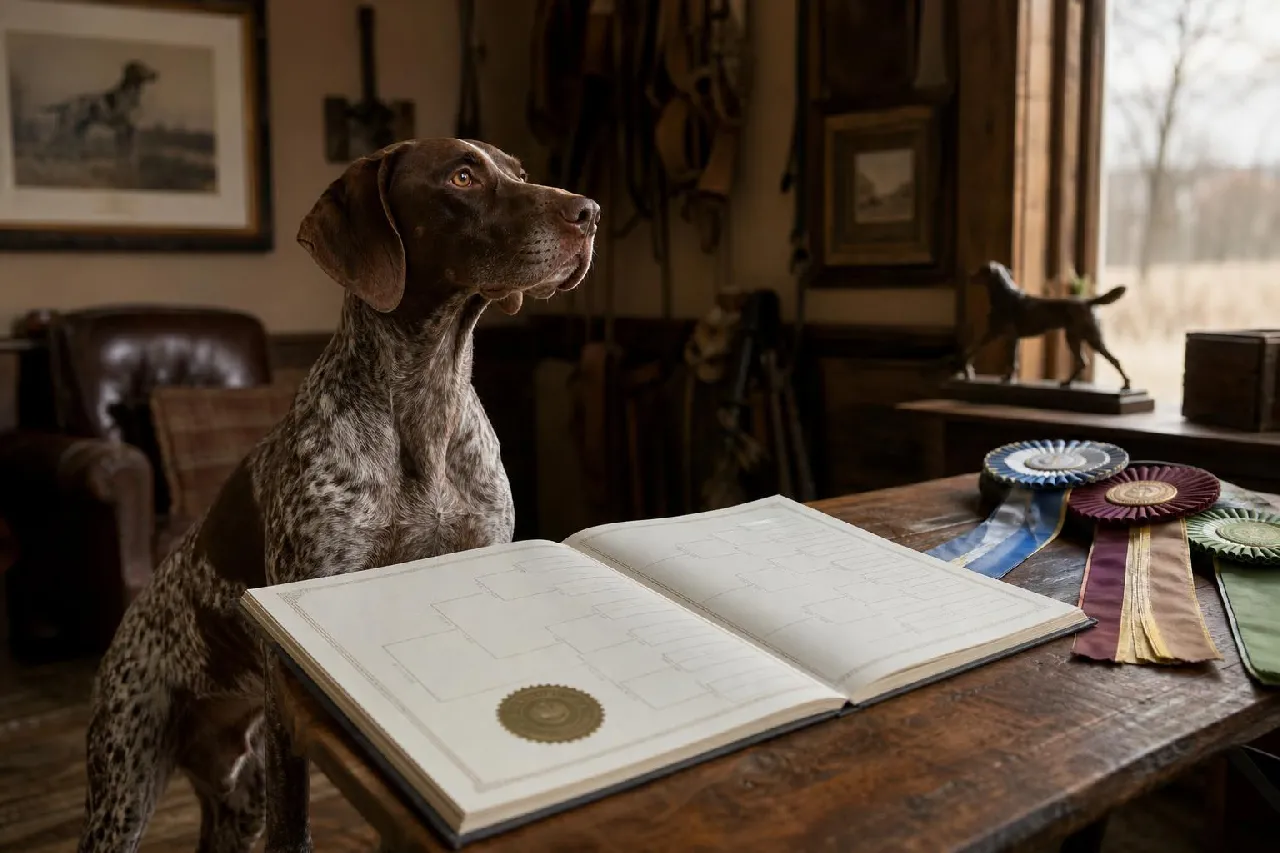
When folks first start studying dog pedigrees, their eyes usually go straight to the names. Before long, though, they start noticing the letters tucked in front of or behind those names. CH. FC. MH. CD. JH. GCH. At first glance it can look like alphabet soup. Spend enough time around bird dogs, retrievers, hounds, or show people, and those letters begin to carry weight. They are not decoration. They are shorthand for what a dog has proven in the ring, in the field, or in organized performance work.
As someone who has spent many mornings watching dogs work from daylight to noon and many evenings tracing old bloodlines on paper, I can tell you those titles matter'but only if you know how to read them in context. A title can point toward talent, consistency, soundness, and trainability. It can also be misunderstood if you treat it like the whole story. The smartest buyers and breeders use titles as clues, not as magic stamps.
If you are looking at a litter, evaluating a stud dog, or simply trying to understand the dogs behind your own companion, learning pedigree titles is one of the best places to start.
Why Titles Matter in a Dog Pedigree
A pedigree is more than a family tree. It is a record of inheritance, selection, and proof. Titles show that a dog was entered into a recognized venue and met a standard set by judges, handlers, or field evaluators. In plain terms, titles tell you that somebody took the dog out, tested it, and earned something beyond a good opinion at the tailgate.
That matters because a registered name by itself proves very little. Plenty of dogs come from famous blood and never do a thing with it. Titles help separate reputation from record. A champion title in conformation suggests the dog met the breed standard under multiple judges. A field title suggests the dog performed at a high level against competition or in hunting tests. An obedience or performance title says the dog was trainable, steady, and mentally suited to organized work.
For buyers, titles can offer reassurance that the dogs in a pedigree were more than just bred on paper. For breeders, they help preserve purpose. For anyone interested in lineage, they tell a story about what people valued enough to prove.
Understanding the Most Common Pedigree Titles
Most pedigree titles fall into a few broad categories: conformation, field, hunting tests, obedience, and performance events. Different registries may use slightly different abbreviations, but many of the common ones show up again and again.
CH: Champion
CH usually stands for Champion in conformation, most often under the American Kennel Club or a similar registry. This means the dog earned enough points under judges to become a champion based on how closely it matched the written breed standard. That standard covers structure, movement, coat, size, balance, and overall breed type.
For a buyer, a CH in the pedigree can suggest physical soundness and breed correctness, at least from a conformation standpoint. In breeds where structure directly affects working ability, that can be meaningful. A well-built dog tends to hold up better over years of work. Still, a conformation champion is not automatically a great hunting dog, just as a hard-driving field dog is not automatically show quality.
GCH: Grand Champion
GCH means Grand Champion, a title earned after a dog becomes a champion and continues to win at a higher level in conformation competition. When you see GCH in a pedigree, it usually indicates a dog that did more than just finish a championship. It kept competing successfully against other champions.
That may not matter much if your only concern is bird finding or retrieving ducks in flooded timber, but it does tell you the dog had sustained quality in the show ring. For those trying to preserve classic breed type, that can carry real value.
FC and AFC: Field Champion and Amateur Field Champion
These are titles field folks pay close attention to. FC stands for Field Champion. AFC stands for Amateur Field Champion. You will often see them in retrievers, pointers, setters, and other sporting breeds with strong field trial traditions. These titles are earned in competitive field events where dogs are judged on performance, style, marking ability, stamina, bird work, or handling, depending on the breed and venue.
An FC title is serious evidence of high-level ability. It says the dog competed and won under demanding standards. An AFC adds another layer, showing success in amateur competition. In many pedigrees, especially among retrievers and pointing dogs, FC/AFC dogs are the kind of animals people build programs around.
That said, field trial success often reflects a specific style of work. Some field trial lines are bred for all-age range and intensity that may not suit every weekend hunter. A title tells you what a dog proved, but you still need to ask whether that proof fits your own needs.
MH, SH, and JH: Master Hunter, Senior Hunter, Junior Hunter
These hunting test titles are familiar to many sporting dog owners. JH is Junior Hunter, SH is Senior Hunter, and MH is Master Hunter. Unlike field trials, hunting tests are usually based on a dog meeting a standard rather than defeating other dogs head-to-head. The dog is judged against the requirements of the test.
Junior Hunter often shows basic hunting instinct and introductory skills. Senior Hunter reflects a more polished dog with steadiness, marking, and control. Master Hunter is the highest of the three and indicates a dog that performed to an advanced hunting standard with consistency.
For the average buyer who wants a capable gun dog, these titles can be especially useful. A Master Hunter in the pedigree often tells you the dog came from stock that can be trained to a practical, finished level in the field. I have seen plenty of dogs with MH behind the name that were exactly what a hunter wanted at daybreak: honest, steady, biddable, and dependable when birds started moving.
CD, CDX, and UD: Obedience Titles
CD stands for Companion Dog, CDX for Companion Dog Excellent, and UD for Utility Dog. These are obedience titles, and while they may not sound flashy to field-minded folks, they reveal something important: trainability. Dogs that earn obedience titles show control, focus, and willingness to work with a handler in a disciplined way.
In some breeds, especially versatile sporting dogs and working breeds, obedience titles in the pedigree can be a real plus. A dog may have all the natural talent in the world, but if it lacks steadiness or a cooperative mind, that talent can be hard to live with. Obedience titles help round out the picture.
What Titles Do Not Tell You
This is where experience matters. Titles are useful, but they are not the whole dog. They do not tell you everything about health, temperament in the home, longevity, or whether the dog consistently reproduces its strengths. They also do not tell you how much opportunity, money, and professional handling may have gone into earning them.
I have seen untitled dogs that could hunt all season and make a man smile every time they hit the cover. I have also seen titled dogs that were impressive on paper yet too much dog for the average owner. The truth sits in the middle. Titles should inform your judgment, not replace it.
When reading a pedigree, pair titles with health testing, breeder reputation, consistency across generations, and honest conversation about what the dogs are like day to day. A single champion three generations back is interesting. Multiple titled dogs throughout the pedigree, especially in ways that match the breed's purpose, are more telling.
How to Read Titles in Context
The first thing to ask is what kind of dog you want. If you are buying a Labrador for duck hunting, titles like MH, FC, AFC, or HRCH may mean more to you than a conformation CH alone. If you are buying a dog for showing and preserving breed type, CH and GCH may carry more weight. If you want a stable, trainable family companion from proven working stock, a blend of field and obedience titles can be a strong sign.
The second thing is to look for patterns. One title on one dog may be a nice note. Repeated titles across parents, grandparents, and littermates suggest a breeding program with purpose. That kind of consistency often means the traits are not accidental.
The third thing is to consider the venue. Different registries and organizations title dogs under different systems. AKC titles are common, but you may also see titles from UKC, NAVHDA, retriever clubs, coonhound registries, or breed-specific organizations. A serious pedigree reader learns the language of the registry involved.
Why Buyers Should Care About Titles
If you are investing in a puppy, you are not just buying a cute face and a wagging tail. You are buying potential shaped by generations. Titles help you see where that potential comes from. They can point to bird sense, retrieving ability, composure, structure, nose, drive, and responsiveness to training. In short, titles offer a record of what a pedigree has produced under pressure.
That does not mean every puppy from titled parents will become a titleholder. Genetics does not work that neatly. But titles increase the odds that the traits you want were valued, tested, and retained. That is a much better foundation than guessing.
For newcomers, understanding titles also makes breeder conversations more productive. Instead of asking only whether the parents are 'good dogs,' you can ask what the titles represent, how those dogs performed, and whether the line tends to produce the same strengths in the next generation.
Final Thoughts on CH, FC, MH, and Other Pedigree Titles
The letters in a pedigree are more than ornament. They are field notes written in shorthand. CH speaks to conformation quality. FC and AFC point to competitive field excellence. MH, SH, and JH reflect tested hunting ability. CD and related obedience titles reveal control and cooperation. Each one adds a piece to the puzzle.
The best way to use titles is with a clear eye and an honest goal. Know what kind of dog you want, learn what the abbreviations mean, and study how those titles repeat through the pedigree. Then go a step further and ask about health, temperament, and the real-world performance of the dogs behind the paper.
Out in the field, paper never flushes a bird and ink never makes a retrieve. But a good pedigree, read properly, can tell you a lot about the dog standing in front of you. And when those letters line up with purpose, proof, and generations of thoughtful breeding, they mean something worth paying attention to.
As someone who has spent many mornings watching dogs work from daylight to noon and many evenings tracing old bloodlines on paper, I can tell you those titles matter'but only if you know how to read them in context. A title can point toward talent, consistency, soundness, and trainability. It can also be misunderstood if you treat it like the whole story. The smartest buyers and breeders use titles as clues, not as magic stamps.
If you are looking at a litter, evaluating a stud dog, or simply trying to understand the dogs behind your own companion, learning pedigree titles is one of the best places to start.
Why Titles Matter in a Dog Pedigree
A pedigree is more than a family tree. It is a record of inheritance, selection, and proof. Titles show that a dog was entered into a recognized venue and met a standard set by judges, handlers, or field evaluators. In plain terms, titles tell you that somebody took the dog out, tested it, and earned something beyond a good opinion at the tailgate.
That matters because a registered name by itself proves very little. Plenty of dogs come from famous blood and never do a thing with it. Titles help separate reputation from record. A champion title in conformation suggests the dog met the breed standard under multiple judges. A field title suggests the dog performed at a high level against competition or in hunting tests. An obedience or performance title says the dog was trainable, steady, and mentally suited to organized work.
For buyers, titles can offer reassurance that the dogs in a pedigree were more than just bred on paper. For breeders, they help preserve purpose. For anyone interested in lineage, they tell a story about what people valued enough to prove.
Understanding the Most Common Pedigree Titles
Most pedigree titles fall into a few broad categories: conformation, field, hunting tests, obedience, and performance events. Different registries may use slightly different abbreviations, but many of the common ones show up again and again.
CH: Champion
CH usually stands for Champion in conformation, most often under the American Kennel Club or a similar registry. This means the dog earned enough points under judges to become a champion based on how closely it matched the written breed standard. That standard covers structure, movement, coat, size, balance, and overall breed type.
For a buyer, a CH in the pedigree can suggest physical soundness and breed correctness, at least from a conformation standpoint. In breeds where structure directly affects working ability, that can be meaningful. A well-built dog tends to hold up better over years of work. Still, a conformation champion is not automatically a great hunting dog, just as a hard-driving field dog is not automatically show quality.
GCH: Grand Champion
GCH means Grand Champion, a title earned after a dog becomes a champion and continues to win at a higher level in conformation competition. When you see GCH in a pedigree, it usually indicates a dog that did more than just finish a championship. It kept competing successfully against other champions.
That may not matter much if your only concern is bird finding or retrieving ducks in flooded timber, but it does tell you the dog had sustained quality in the show ring. For those trying to preserve classic breed type, that can carry real value.
FC and AFC: Field Champion and Amateur Field Champion
These are titles field folks pay close attention to. FC stands for Field Champion. AFC stands for Amateur Field Champion. You will often see them in retrievers, pointers, setters, and other sporting breeds with strong field trial traditions. These titles are earned in competitive field events where dogs are judged on performance, style, marking ability, stamina, bird work, or handling, depending on the breed and venue.
An FC title is serious evidence of high-level ability. It says the dog competed and won under demanding standards. An AFC adds another layer, showing success in amateur competition. In many pedigrees, especially among retrievers and pointing dogs, FC/AFC dogs are the kind of animals people build programs around.
That said, field trial success often reflects a specific style of work. Some field trial lines are bred for all-age range and intensity that may not suit every weekend hunter. A title tells you what a dog proved, but you still need to ask whether that proof fits your own needs.
MH, SH, and JH: Master Hunter, Senior Hunter, Junior Hunter
These hunting test titles are familiar to many sporting dog owners. JH is Junior Hunter, SH is Senior Hunter, and MH is Master Hunter. Unlike field trials, hunting tests are usually based on a dog meeting a standard rather than defeating other dogs head-to-head. The dog is judged against the requirements of the test.
Junior Hunter often shows basic hunting instinct and introductory skills. Senior Hunter reflects a more polished dog with steadiness, marking, and control. Master Hunter is the highest of the three and indicates a dog that performed to an advanced hunting standard with consistency.
For the average buyer who wants a capable gun dog, these titles can be especially useful. A Master Hunter in the pedigree often tells you the dog came from stock that can be trained to a practical, finished level in the field. I have seen plenty of dogs with MH behind the name that were exactly what a hunter wanted at daybreak: honest, steady, biddable, and dependable when birds started moving.
CD, CDX, and UD: Obedience Titles
CD stands for Companion Dog, CDX for Companion Dog Excellent, and UD for Utility Dog. These are obedience titles, and while they may not sound flashy to field-minded folks, they reveal something important: trainability. Dogs that earn obedience titles show control, focus, and willingness to work with a handler in a disciplined way.
In some breeds, especially versatile sporting dogs and working breeds, obedience titles in the pedigree can be a real plus. A dog may have all the natural talent in the world, but if it lacks steadiness or a cooperative mind, that talent can be hard to live with. Obedience titles help round out the picture.
What Titles Do Not Tell You
This is where experience matters. Titles are useful, but they are not the whole dog. They do not tell you everything about health, temperament in the home, longevity, or whether the dog consistently reproduces its strengths. They also do not tell you how much opportunity, money, and professional handling may have gone into earning them.
I have seen untitled dogs that could hunt all season and make a man smile every time they hit the cover. I have also seen titled dogs that were impressive on paper yet too much dog for the average owner. The truth sits in the middle. Titles should inform your judgment, not replace it.
When reading a pedigree, pair titles with health testing, breeder reputation, consistency across generations, and honest conversation about what the dogs are like day to day. A single champion three generations back is interesting. Multiple titled dogs throughout the pedigree, especially in ways that match the breed's purpose, are more telling.
How to Read Titles in Context
The first thing to ask is what kind of dog you want. If you are buying a Labrador for duck hunting, titles like MH, FC, AFC, or HRCH may mean more to you than a conformation CH alone. If you are buying a dog for showing and preserving breed type, CH and GCH may carry more weight. If you want a stable, trainable family companion from proven working stock, a blend of field and obedience titles can be a strong sign.
The second thing is to look for patterns. One title on one dog may be a nice note. Repeated titles across parents, grandparents, and littermates suggest a breeding program with purpose. That kind of consistency often means the traits are not accidental.
The third thing is to consider the venue. Different registries and organizations title dogs under different systems. AKC titles are common, but you may also see titles from UKC, NAVHDA, retriever clubs, coonhound registries, or breed-specific organizations. A serious pedigree reader learns the language of the registry involved.
Why Buyers Should Care About Titles
If you are investing in a puppy, you are not just buying a cute face and a wagging tail. You are buying potential shaped by generations. Titles help you see where that potential comes from. They can point to bird sense, retrieving ability, composure, structure, nose, drive, and responsiveness to training. In short, titles offer a record of what a pedigree has produced under pressure.
That does not mean every puppy from titled parents will become a titleholder. Genetics does not work that neatly. But titles increase the odds that the traits you want were valued, tested, and retained. That is a much better foundation than guessing.
For newcomers, understanding titles also makes breeder conversations more productive. Instead of asking only whether the parents are 'good dogs,' you can ask what the titles represent, how those dogs performed, and whether the line tends to produce the same strengths in the next generation.
Final Thoughts on CH, FC, MH, and Other Pedigree Titles
The letters in a pedigree are more than ornament. They are field notes written in shorthand. CH speaks to conformation quality. FC and AFC point to competitive field excellence. MH, SH, and JH reflect tested hunting ability. CD and related obedience titles reveal control and cooperation. Each one adds a piece to the puzzle.
The best way to use titles is with a clear eye and an honest goal. Know what kind of dog you want, learn what the abbreviations mean, and study how those titles repeat through the pedigree. Then go a step further and ask about health, temperament, and the real-world performance of the dogs behind the paper.
Out in the field, paper never flushes a bird and ink never makes a retrieve. But a good pedigree, read properly, can tell you a lot about the dog standing in front of you. And when those letters line up with purpose, proof, and generations of thoughtful breeding, they mean something worth paying attention to.


View all 0 comments