
Deer Hunting
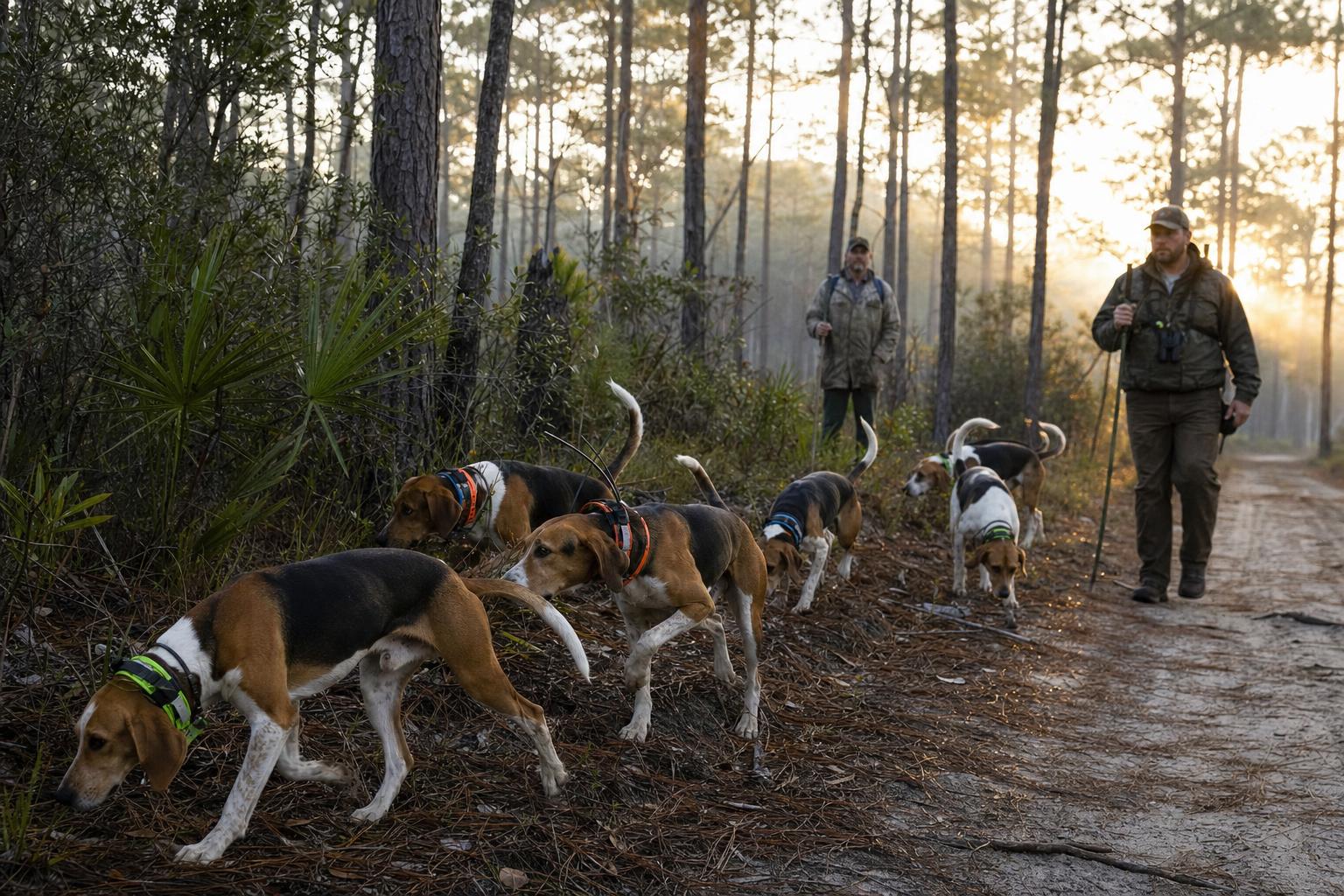
Deer hunting with dogs can mean very different things depending on region, laws, and tradition. In some places, dogs are used to track wounded deer after the shot—quiet, methodical recovery work that focuses on ethics and minimizing loss. In other places, dogs are used in drives where they push deer toward hunters positioned along escape routes. The common thread is that the dog adds information and movement to a situation where humans often have limited visibility. Done responsibly, dogs can improve recovery rates and make deer hunting more humane. Done recklessly, they can create safety problems, stress animals unnecessarily, and cause conflict with landowners. The quality of the work is defined by control, planning, and respect for the animal.
Tracking and recovery is the most universally defensible use. A dog trained to follow a blood trail or interdigital scent can locate a deer that would otherwise be lost in thick cover, at night, or after rain. The dog works in a harness on a long line, staying on odor even when sign is minimal. The handler reads both the dog and the ground: blood droplets, hair, disturbed leaves, tracks. Good teams also manage decisions—when to wait before tracking so a wounded deer beds rather than runs, when to back out, and how to approach the final location safely. That patience is part of ethics. Pushing too soon can turn a recoverable deer into an all-night chase. In recovery work, the dog’s calm persistence is the real advantage.
Drive hunting with dogs is a different style and should only be done where it is legal and where safety and property boundaries can be managed. In that context, dogs—often hounds—work to locate deer, jump them from cover, and push them along predictable routes. The “music” of hounds is part of the tradition in some regions, but it comes with responsibilities: dogs must be trained and equipped (GPS, collars) to prevent crossing into unsafe areas, and handlers must coordinate with hunters so shots are safe and controlled. The goal is not to run deer to exhaustion; it’s to move deer in a way that creates ethical shot opportunities. Good operations keep drives short, manage pressure, and recover dogs promptly.
No matter the style, the best deer-dog work is grounded in control. Dogs should have reliable recall or reliable handling systems, clear boundaries, and a job they understand. Handlers should have plans for lost dogs, for wounded deer, and for public interactions. When the work is focused on recovery and done with patience, dogs can be one of the best tools for reducing waste and making a hunt end cleanly. When the work is focused on chaos, everyone loses—hunters, landowners, dogs, and deer. The difference is not the dog’s breed or drive; it’s the standards the humans set and the training that turns instinct into responsible action.