
Sled Dog Racing/Mushing
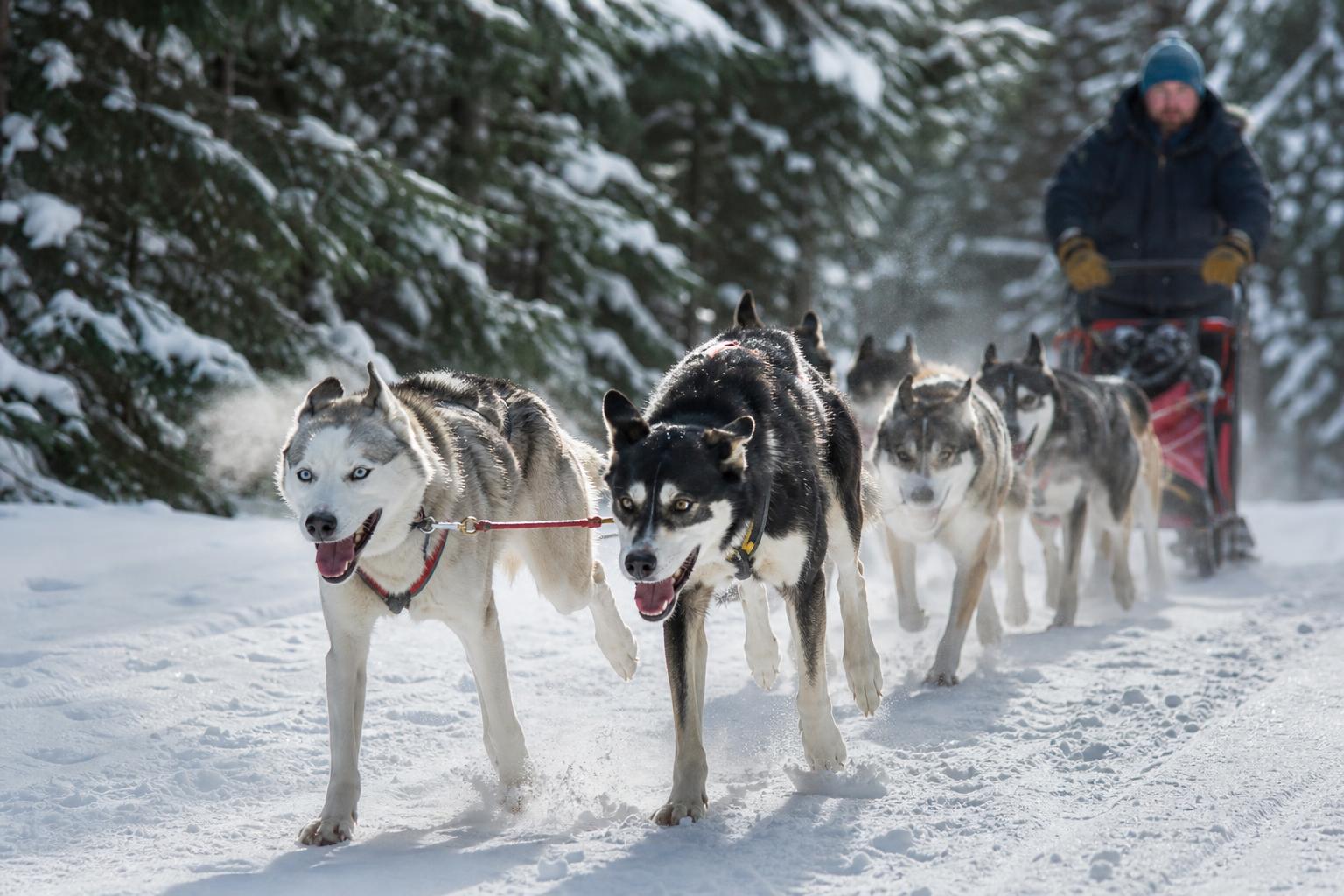
Sled dog racing and mushing are the traditional—and still evolving—world of dogs pulling a load over snow or trail under human guidance. The image most people have is a big team of huskies in deep winter, but the broader reality includes sprint races, long-distance endurance events, skijoring-style pairings, dryland training on carts and rigs, and recreational travel where the goal is simply to move efficiently across terrain. What makes mushing special is that it’s not one dog doing one trick. It’s a system: multiple dogs running as a unit, responding to cues, maintaining rhythm, and working through fatigue and environmental stress. A well-run team looks like flow—quiet harness pressure, synchronized movement, and a line that stays tight without chaos.
Training starts with fundamentals: harness comfort, pulling in a straight line, and learning to run with the team without tangles or conflict. Dogs are introduced to the idea that forward motion is the job and that the line and harness mean “work.” Then you build communication. Leaders learn directional cues—gee, haw, on by—plus the harder skill of making decisions when the trail is confusing. Swing dogs learn to help turn the team. Wheel dogs learn to handle the heavier pull closer to the sled. Even in smaller recreational setups, dogs learn pacing and responsiveness so the human can manage safety. Conditioning is a huge piece. Pulling and running are demanding, and good teams build fitness gradually to protect joints, pads, shoulders, and backs. They also manage nutrition, hydration, and recovery as carefully as any endurance athlete.
The environment is both the challenge and the joy. Snow, ice, and wind change the feel of the run. Trails can be hard-packed, soft, drifted, or glazed. Weather can swing from perfect to dangerous quickly. Dogs need to be confident in darkness, comfortable with strange noises, and steady around other teams and wildlife. Handlers learn to read the dogs: subtle changes in gait, tail carriage, ear position, appetite, and motivation that signal fatigue or injury. They learn to manage pacing—when to let the team run, when to slow, when to rest. They learn that a “successful” day is often the day you stop early because conditions are unsafe. Responsible mushing is about long-term dog health, not one dramatic run.
At its best, mushing builds a unique kind of partnership. Dogs aren’t just following; they’re participating. They learn routes, recognize patterns, and often show unmistakable enthusiasm for harness time. The human learns how to lead a team—how to set expectations, how to keep energy positive, and how to make decisions that prioritize safety. Whether it’s a competitive sprint, an endurance race, or a quiet recreational trail, the payoff is the same: a group of dogs moving with purpose, breathing together, pulling together, and turning human planning into motion. It’s athletic, it’s logistical, and it’s deeply satisfying for dogs that were built to run.