
Canicross
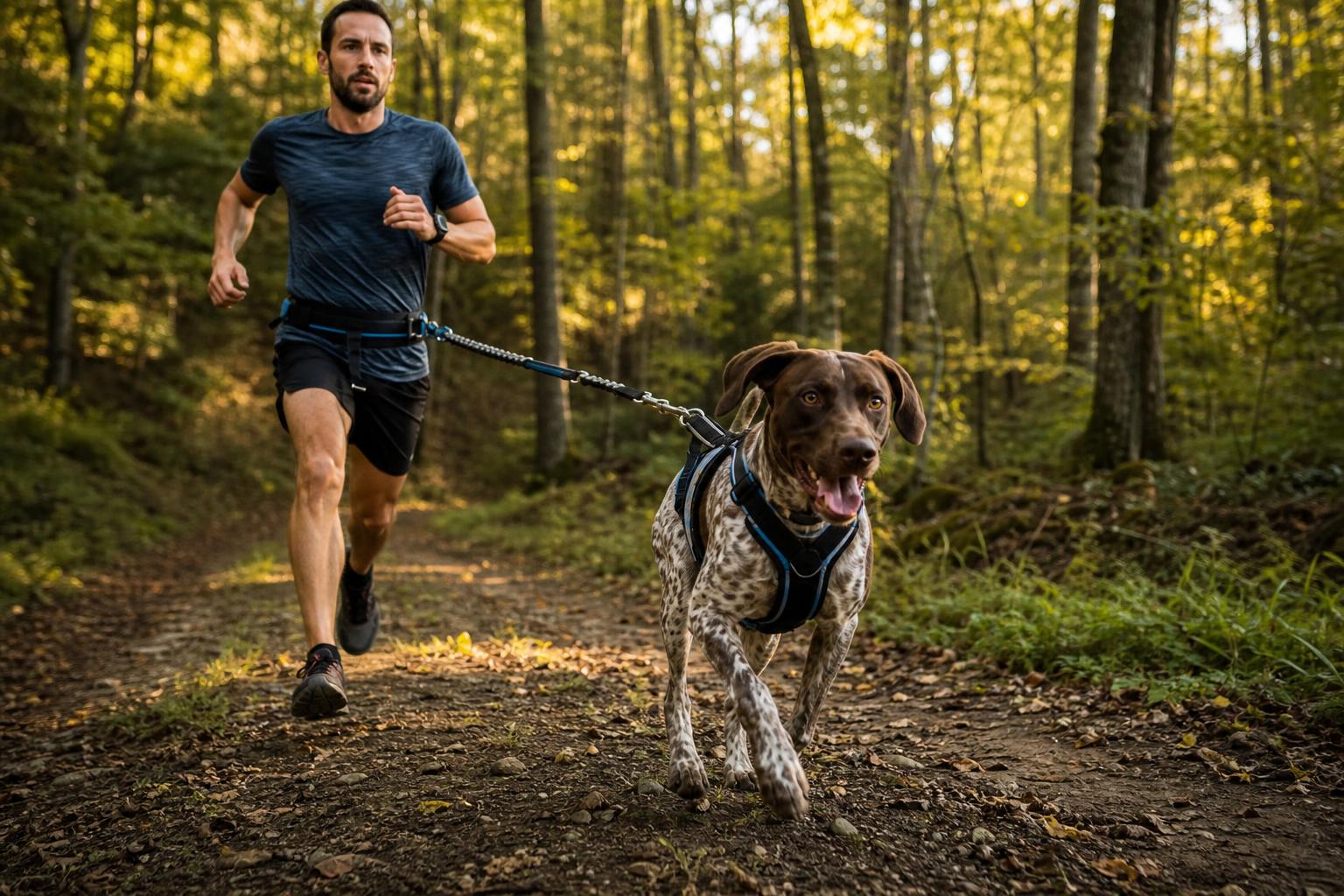
Canicross is a running sport where a person runs while connected to a dog via a waist belt and a bungee line. The dog runs out front in a harness, providing gentle pull and forward momentum, while the human keeps pace and manages direction. It’s simple in concept and surprisingly technical in practice. The best teams look smooth: the dog runs straight, the line stays comfortably taut, and the human’s stride stays stable. The sport can be competitive, but many people use it as structured exercise and as a way to give high-energy dogs a job that blends fitness with training.
Training focuses on forward focus, line manners, and communication. Dogs learn that the harness means “run forward” and that sniffing, weaving, and stopping are not part of the game. Many teams teach the same cue set used in other pulling sports: left, right, on by, easy, stop. Those cues are trained first on walks and jogs, then generalized to trails and new environments. Because the dog is out front, the human must cue early and clearly. A late cue often means the dog chooses the route, and the human gets yanked into a branch or off a trail. Start-line routines matter too: a calm wait, a controlled release, then steady acceleration. That structure prevents the sport from turning into frantic dragging.
Conditioning and surface choice make a big difference for safety. Running and pulling load the dog’s shoulders, back, and core, and they also load the human’s hips and lower back. Gradual conditioning protects both. Good teams pay attention to heat, hydration, paws, and recovery, and they choose appropriate distances for the dog’s age and fitness. Equipment matters: a proper pulling harness that doesn’t restrict shoulders, a bungee line to absorb shock, and a comfortable belt that distributes load across the hips. Many teams also build strength and mobility off the trail—core work, balance, controlled hill work—because the sport involves sudden turns, uneven footing, and variable pace.
What makes canicross special is how quickly it improves teamwork. Dogs learn to stay engaged and run with purpose. Humans learn to communicate with timing and to manage pace as a partnership rather than as a solo run. For many people it becomes a mental outlet as much as a physical one: you’re not just exercising, you’re doing something together that has rules and goals. Done well, canicross produces a dog that is fit, focused, and responsive in motion—and a runner who has learned that the best speed comes from rhythm, not force.