
Carting/Drafting
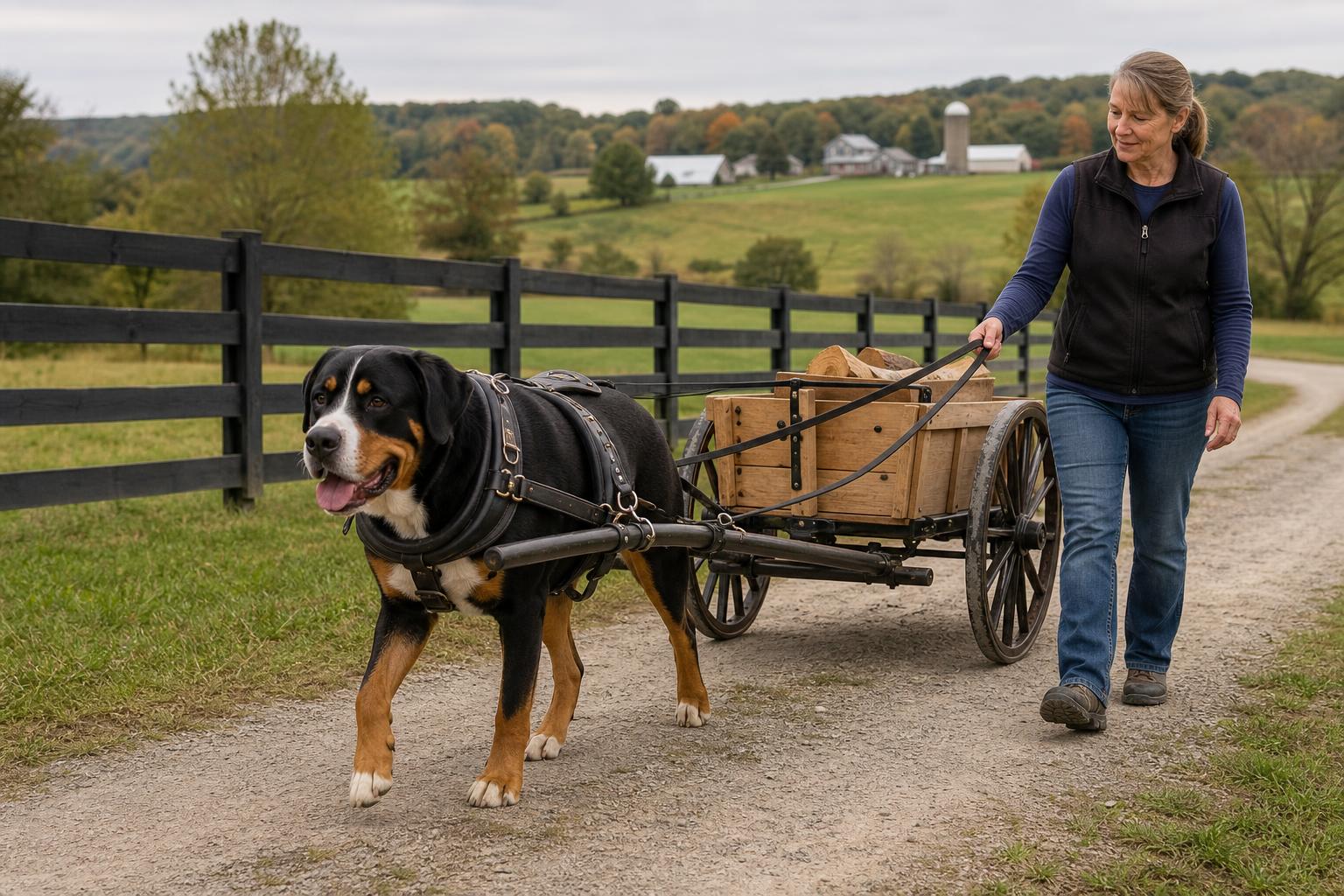
Carting and drafting are the traditional work of teaching a dog to pull a cart or small wagon under human guidance. Historically, many breeds were developed to haul goods—milk, tools, market items—especially in regions where horses were expensive or impractical. Today, carting shows up as recreation, sport titles, parades, and practical chores on small farms. The work looks gentle compared to high-speed pulling sports, but it has its own demands: steadiness, obedience, comfort with equipment, and the ability to pull smoothly without spooking. A carting dog needs to be calm around noise, traffic, and the strange sensation of something following behind.
Training starts with equipment confidence. Dogs learn to wear a properly fitted draft harness and to accept shafts beside their body without fear. This is often introduced gradually: harness first, then light dragging objects, then the feel of shafts, then a very light cart. The dog learns to stand still while being hitched and unhitched, to move forward on cue, to stop and hold position, to back up in small controlled steps, and to turn without clipping wheels or tangling. Handlers learn to walk with awareness, give clear cues, and keep the experience positive. A dog that is rushed can develop fear of the cart, and fear plus wheels is not something you want.
Once the dog is comfortable, the work becomes about precision and calm power. Pulling should be smooth, not explosive. The dog learns to keep a straight line, maintain an even pace, and respond to directional cues. Many programs also teach the dog to ignore distractions—people reaching toward the cart, other dogs, loud noises—because a startled jump can flip a cart or injure the dog. Conditioning matters here too. Draft work uses muscles and joints differently than running does, and you want gradual progression in weight and distance. Ethical carting keeps loads appropriate for the dog’s size, structure, and age, and it keeps sessions short enough to prevent strain.
Carting and drafting have a particular charm because they emphasize composure. A great draft dog looks dignified: steady steps, relaxed posture, quiet attention to the handler. It’s a skill set that can translate into better everyday manners—standing still, waiting calmly, moving thoughtfully around obstacles. For many teams, it becomes a shared hobby that combines history, training craft, and practical capability. Done well, it turns a dog’s strength into controlled usefulness, and it does it in a way that feels collaborative rather than frenetic.