
Livestock Guardian
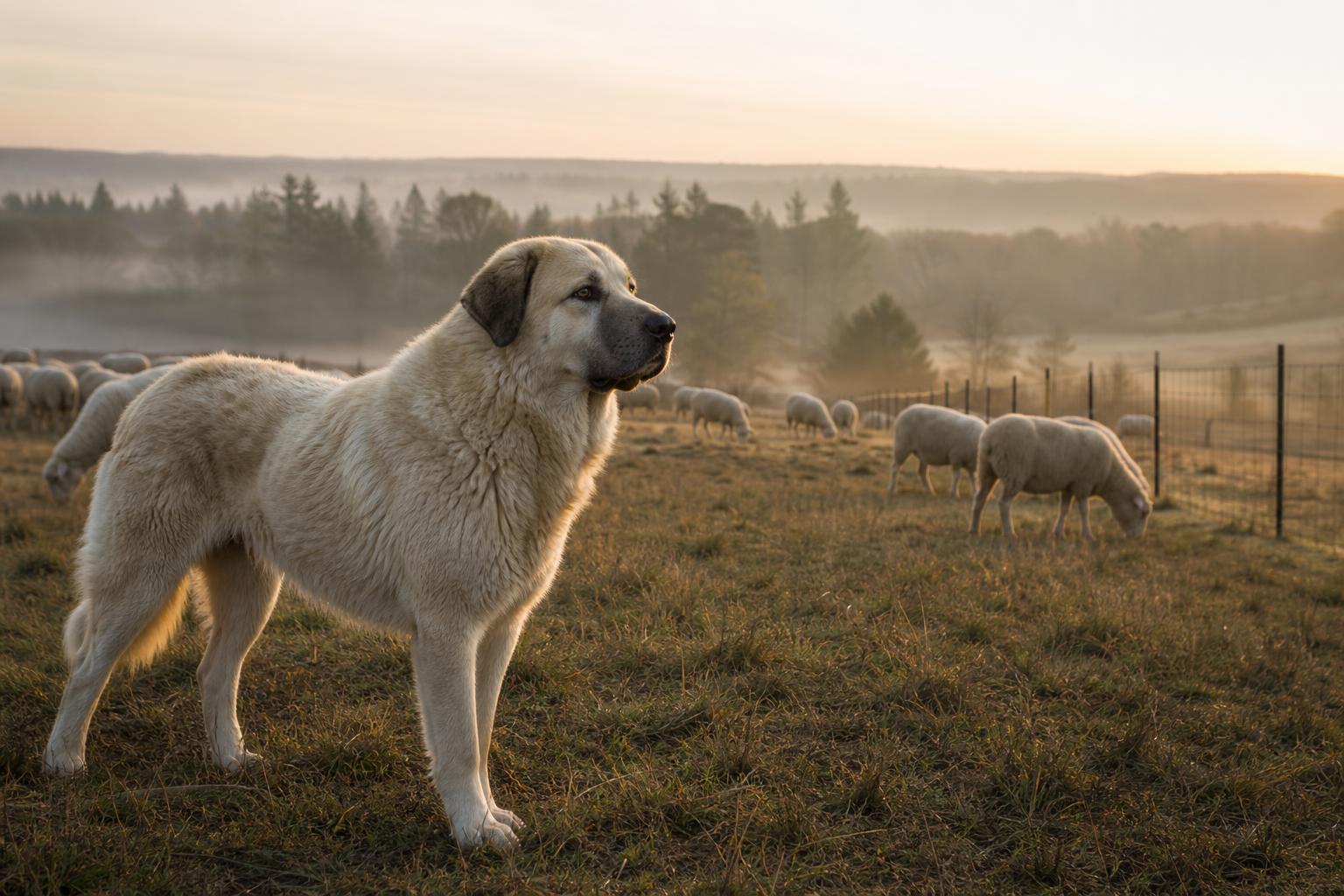
Livestock guardian work is about a dog living with animals—sheep, goats, poultry, cattle, or mixed farm stock—and using presence, vigilance, and selective confrontation to deter predators. The dog is not herding. The dog is not chasing for sport. The dog is providing a steady, territorial “no.” Many of the classic guardian breeds were developed to live outdoors, patrol boundaries, and make predation more expensive and less appealing. The work is measured in nights with no losses, in livestock that graze calmly, and in predators that choose easier targets. It’s also measured in restraint. A guardian dog must be safe with the animals it protects and safe enough around people and farm activity to live in a working environment.
The foundation begins with bonding and appropriate socialization. A guardian dog learns who its “family” is—usually the stock and the farm—and learns to treat those animals as normal. That means early exposure, careful supervision, and management to prevent play behavior from becoming harassment. Young guardian dogs often go through a juvenile phase where they are enthusiastic and clumsy; good handlers manage that with fencing, mentorship from older guardian dogs when available, and clear boundaries. Many farms use multiple dogs because the work is 24/7 and because teamwork matters: one dog may patrol while another stays near the flock. The dog also needs a strong default behavior of calm observation. A guardian that is constantly roaming far away or constantly looking for conflict is not helpful.
Real-world deterrence depends on presence and decision-making. A good guardian dog patrols, marks boundaries, and responds to unusual sounds and movement with alerts that escalate only when needed. The dog may bark, posture, and move toward a threat to push it away. In some cases, contact with predators can occur, and that’s where courage and size matter—but the goal is usually to prevent that moment from happening. Management choices are part of the job: secure fencing, nighttime penning, rotational grazing patterns, and human oversight. A guardian dog is one layer of a system, not the entire system. Training also includes human interactions. Many guardian dogs should be neutral rather than friendly with strangers. But neutrality must not become indiscriminate aggression. Clear routines for visitors, feed deliveries, and farm work help the dog understand what is normal.
When livestock guardian work is successful, it creates stability. Stock graze more confidently. Predators shift to other areas. Farmers sleep more. But it’s not effortless. These dogs need space, appropriate housing, health care, and ongoing management. They also need a handler who understands that the work is mostly quiet: long hours of watching, occasional bursts of action, then back to calm. A great guardian dog is not a pet with a job on weekends; it’s a working partner embedded in the farm’s daily life. Done well, the dog becomes part of the landscape—always present, always aware, and quietly effective at keeping animals safe.