
Badgers Hunting
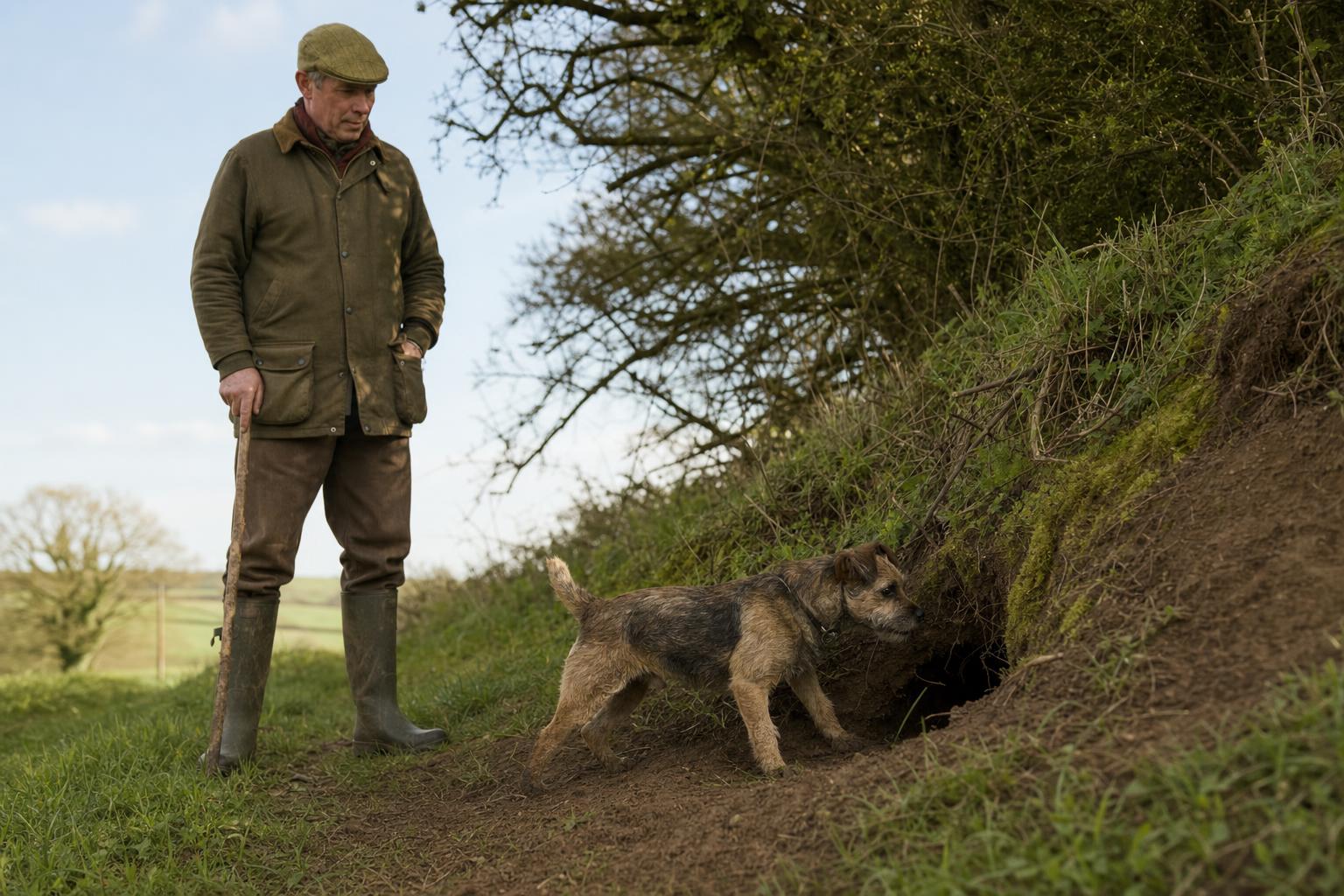
Badger hunting, where legal and practiced, is traditionally associated with terriers and other small, gritty dogs that will work in and around dens. Badgers are powerful, tenacious animals with strong jaws and sharp claws, and encounters in confined spaces can be dangerous for dogs. Historically, dogs were used to locate a badger in its set, push it to move, or hold it at bay so humans could approach. In modern contexts, this kind of pursuit raises significant welfare and legal questions, and many regions restrict or prohibit it. If you’re documenting it as a historical or niche practice, it’s important to be clear that it is not a casual pastime and that it carries real risk and controversy.
From a working-dog perspective, the skills involved overlap with other underground quarry work. Dogs need determination, confidence in tight spaces, and the ability to work scent and sound in a tunnel environment. Handlers need strong control and strong judgment, because underground work can escalate quickly. Dogs can be injured by bites, clawing, or collapse hazards, and animals can suffer as well. Some traditions emphasize locating and barking rather than direct contact, but even then, pressure in a den environment can create prolonged stress. A responsible handler, in any legal context, would prioritize minimizing conflict, preventing drawn-out encounters, and maintaining the ability to end the situation quickly.
The land and structure of dens matter. Underground systems can branch, collapse, or trap a dog. That’s why many modern “earth” sports replaced live quarry with artificial tunnels and safe, controlled formats. Those sports preserve the dog’s instinct to enter and work a tunnel while avoiding the worst outcomes. In places where live quarry work exists, ethical considerations are unavoidable: the line between “working dog task” and “cruelty” is debated heavily, and legal frameworks differ. If your goal is to represent the activity accurately, it’s worth noting that many people who love terriers choose controlled sports or pest control contexts instead of live confrontations with badgers.
If you’re curating dog work categories, badger hunting often sits as a historical reference point for terrier development rather than a recommended modern pursuit. Terriers were shaped by underground work, and the traits—boldness, persistence, problem-solving in tight spaces—show up today in safer outlets like earthdog trials, barn hunt, and practical vermin control. Those alternatives allow people to channel the same instincts without the same level of risk and ethical baggage. In that sense, “badger hunting” can be described as part of the story of working terriers—important historically, but controversial and restricted in many modern settings.