
Mountain Lion Hunting
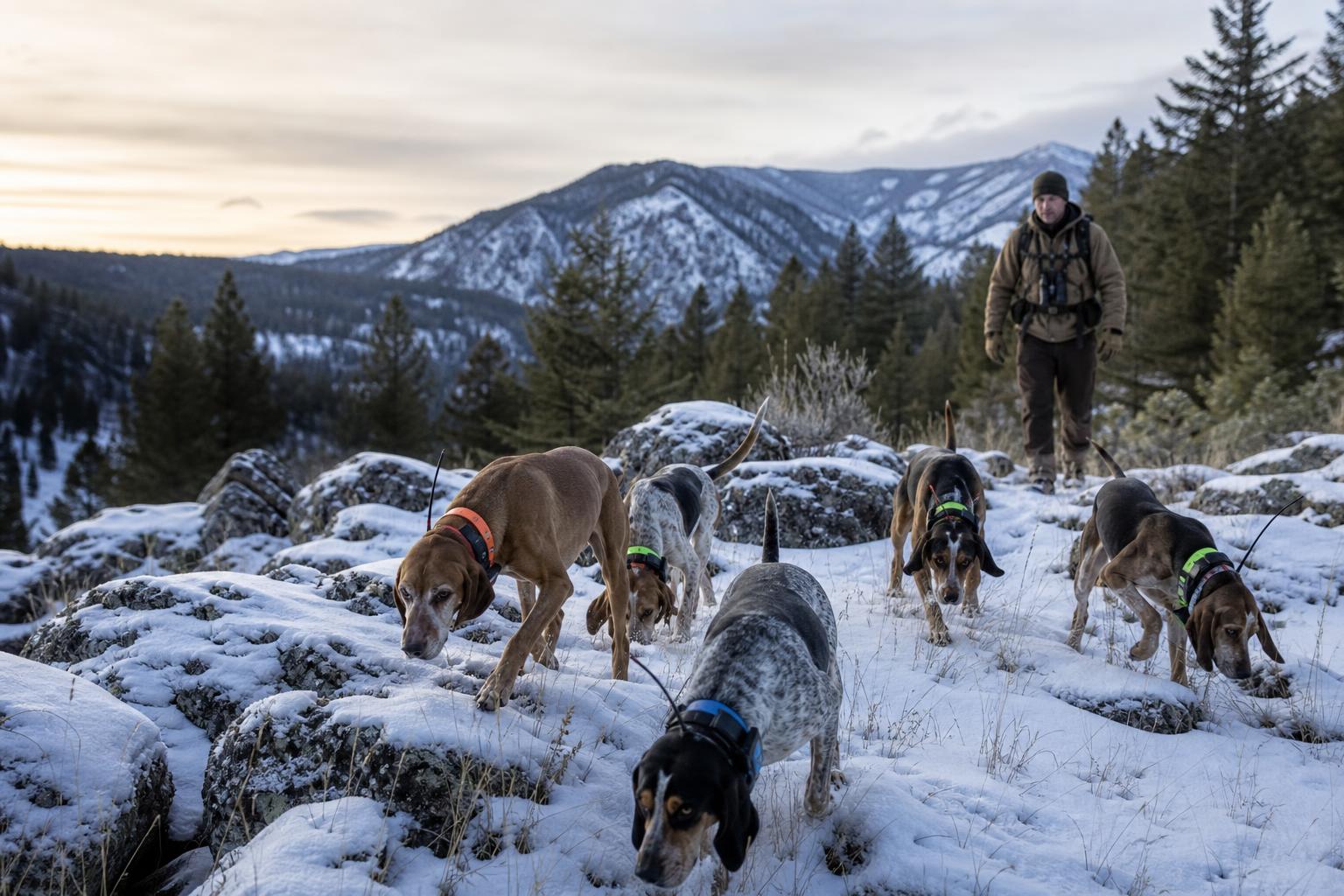
Mountain lion hunting with hounds is built around tracking a solitary predator across terrain that can be vast and unforgiving. Mountain lions—also called cougars in many regions—leave scent trails that may be faint, broken by weather, and spread across rock, timber, and snow. Dogs are used because they can locate and follow those trails where humans would have little chance. In many modern contexts, hounds are valued not only for pursuit but for selectivity. When dogs locate and tree a lion, the hunter can identify the animal and choose whether to harvest or release based on regulations, management goals, and ethics. That ability to see before acting is one of the main arguments people make in favor of hound methods.
Hounds suited for lion work need exceptional noses, endurance, and mental steadiness. They must sort older tracks, ignore non-target game, and stay on the right line when conditions are confusing. They also need enough grit to hold a lion at bay or keep it treed without recklessly engaging, because injury risk is real. Handlers develop packs over time, often mixing traits: some dogs are better cold-nosed trail dogs, others are better at pushing a hot track, and some excel at locating and treeing. Modern tools like GPS collars have changed the safety and management side of the work. They allow handlers to know where dogs are, whether they are moving, and whether they have treed—information that helps prevent lost dogs and helps keep pursuit within legal areas.
The terrain and conditions are often the hardest part. Snow can provide readable sign and hold scent, but it also exhausts dogs and humans and can hide hazards. Heat can kill scent and create dehydration risk. Wind can push odor off ridges and into canyons, creating confusing scent pools. Responsible handlers condition dogs, carry water, protect feet, and choose when to stop. They also manage the ethical side: avoiding excessively long chases, avoiding running females with kittens where prohibited or discouraged, and making clean decisions at the end. The dogs’ welfare is central because this work is physically demanding and risks include cliffs, deadfall, and direct predator confrontation.
Public views on lion hunting vary widely, which makes professionalism and restraint important. In some regions, lion harvest is framed as part of wildlife management, especially where livestock depredation or human-lion conflict is a concern. In other regions, it is highly controversial. Where it is legal, the quality of the practice is defined by the handler’s standards: clear dog control, respect for land and regulations, and humane outcomes. When the dogs work well, the hunt is less about chaos and more about tracking, locating, and making deliberate choices. That is the most accurate way to describe it: a hound-driven process that turns an invisible predator into a visible decision point.