
Bobcat Hunting
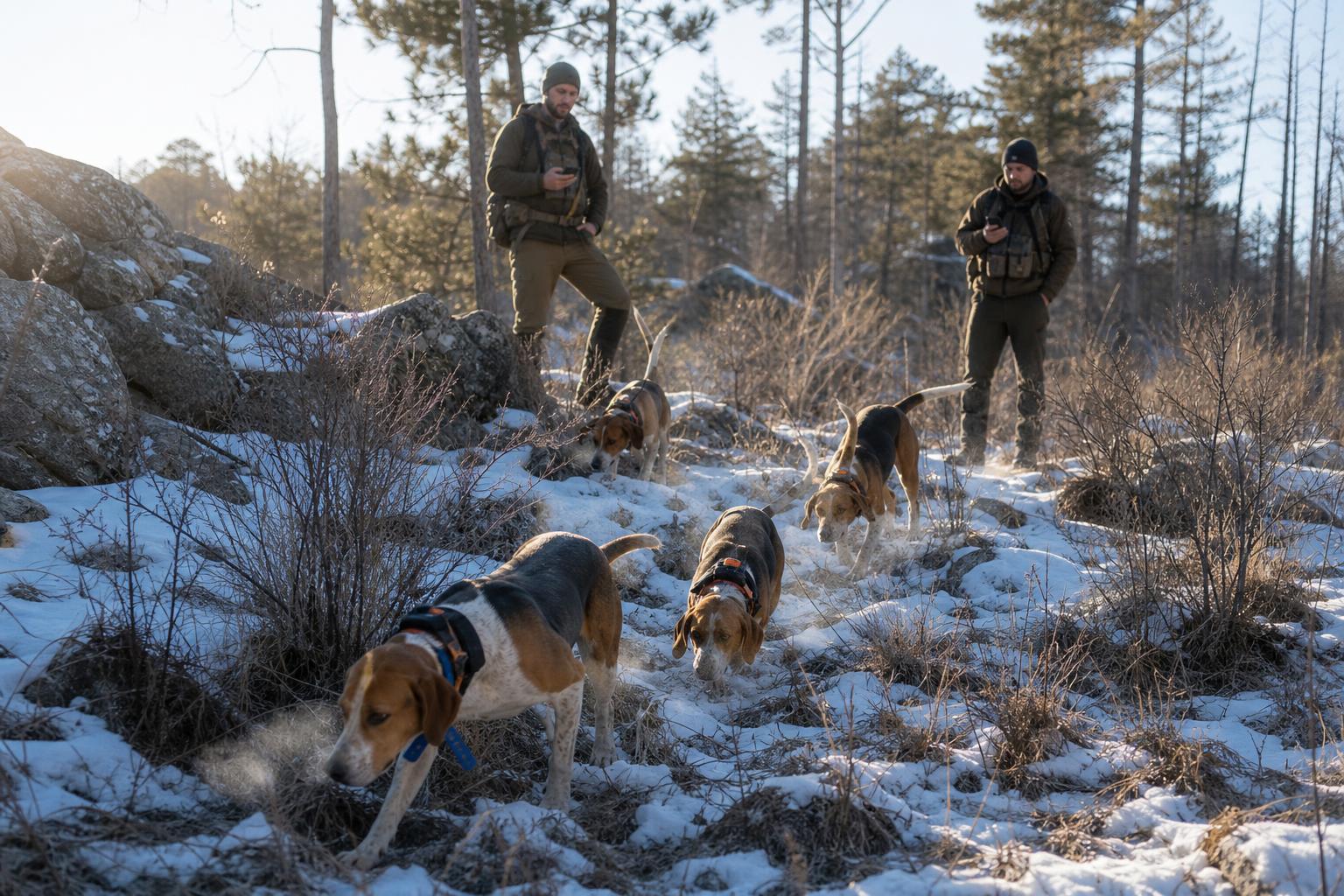
Bobcat hunting with hounds is a form of small-predator pursuit that relies heavily on a dog’s ability to work scent in messy, changeable conditions. Bobcats are smaller than mountain lions but often trickier in their own way. They may move through thick brush, rocky breaks, swamps, or snow, and they can use terrain to confuse dogs—circling, backtracking, climbing, slipping through tight cover, or crossing rocks where scent is weak. Dogs are used because they can locate a track, push it forward, and ultimately locate the bobcat in a tree or bayed in cover. For many houndsmen, bobcats are a test animal because they demand patience and a dog that won’t quit when the track goes cold.
The dogs that excel here tend to be persistent, accurate, and mentally steady. They need enough nose to work older or weak scent, and enough drive to keep moving when the track breaks. Packs are often developed with a mix of traits, because no single dog is perfect. Some dogs are better at opening on track, some are better at silent trailing, and some are better at locating and treeing. Handlers learn to read the race by voice and by GPS. Voice changes can indicate when scent is hot, when a cat has climbed, or when the dogs are sorting out a loss. GPS helps handlers keep dogs safe and helps them locate a tree quickly, reducing the time the cat is pressured.
Terrain and weather shape everything. Snow can help by showing track and supporting scent, but it can also create long races that exhaust dogs. Dry ground can make scent faint. Wind can carry odor off the line. Bobcats also often live in thick, tangled places where visibility is poor and risks include thorns, barbed wire, and water hazards. Responsible handlers condition dogs, manage hydration, and avoid pushing dogs beyond safe limits. They also manage the ethical side: knowing local regulations, respecting seasons, and making careful choices about harvest versus release.
As with other hound pursuits, the quality of the practice is defined by standards. Dogs should be controlled, recoverable, and protected. The pursuit should not become a reckless endurance test. When handled professionally, bobcat hunting becomes a study in scent work, dog development, and terrain reading. It’s less about a shot and more about the chase as a measure of the dogs’ skill. Whether a bobcat is harvested or released, the work demonstrates what hounds can do: take faint information on the ground and turn it into a track that can be followed, solved, and brought to a clear conclusion.