
Predator Calling Dogs
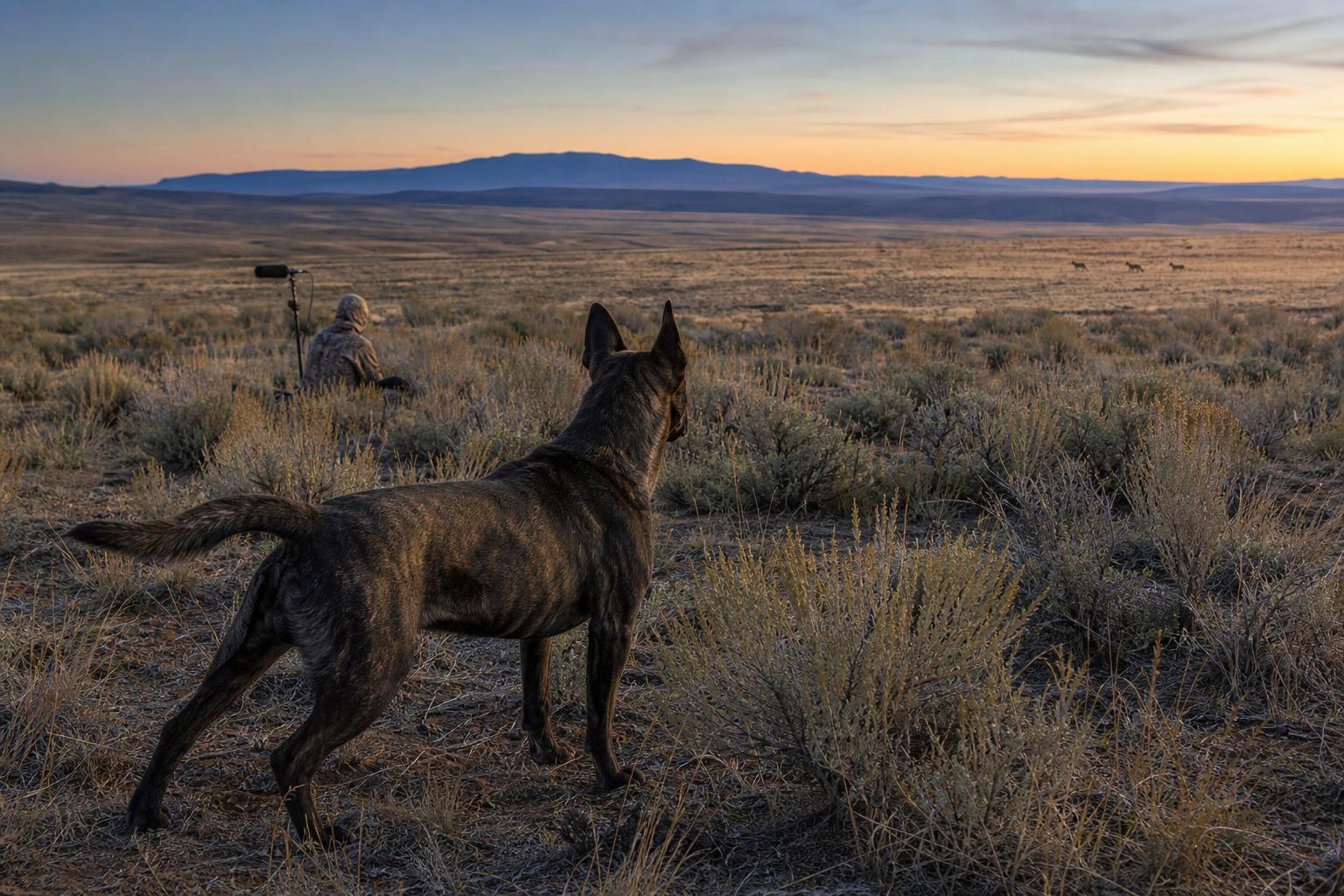
Predator calling with dogs is a style of hunting where a hunter uses calls—mouth calls or electronic calls—to attract predators like coyotes, foxes, and bobcats, and a dog is used to add realism, draw attention, and create shot opportunities. The dog’s role can vary from simply staying visible and calm to actively engaging with a predator and then retreating to pull it closer. In many regions, this work is most commonly associated with coyotes. Done well, the dog becomes part of the setup: an attention magnet that keeps a predator focused on the dog instead of on the hunter’s location.
A good calling dog needs a blend of boldness and control. The dog must be steady enough to sit or lie quietly while calls are played and predators approach. It must be able to move on cue—out into view, then back—without freelancing. Many teams train a dog to respond to hand signals and to return immediately on recall, because a dog that chases too far can push predators out of range or get into dangerous situations. Some dogs are trained to bark or posture to trigger a predator’s territorial response, then retreat, creating the classic “come closer” effect. That requires a dog with confidence and a handler who can read the situation quickly.
Safety is a defining concern. Predators can injure dogs, and in some areas there may be additional risks like wolves or other large predators. That’s why responsible handlers train strong obedience, use protective gear when appropriate, and choose setups that provide visibility and control. The dog’s temperament matters. A dog that is too timid will retreat and disengage. A dog that is too hot will chase and get hurt. The best dogs are tactical: they tease, retreat, and re-engage under command. Training often starts in controlled environments and builds toward real stands with careful selection of terrain that allows the handler to see and manage the dog.
Predator calling dogs can be extremely effective because they add movement and realism that calls alone can’t provide. But effectiveness should not outweigh welfare. The goal is not to use a dog as bait; it’s to use a trained partner to create a controlled interaction that results in a clean outcome. When the dog is trained well, the work looks purposeful: the dog stays composed, responds instantly, and avoids reckless contact. The handler remains focused on safety and shot selection. That combination turns a high-risk scenario into a structured hunting method where the dog’s job is clear and the risks are managed.