
Obedience
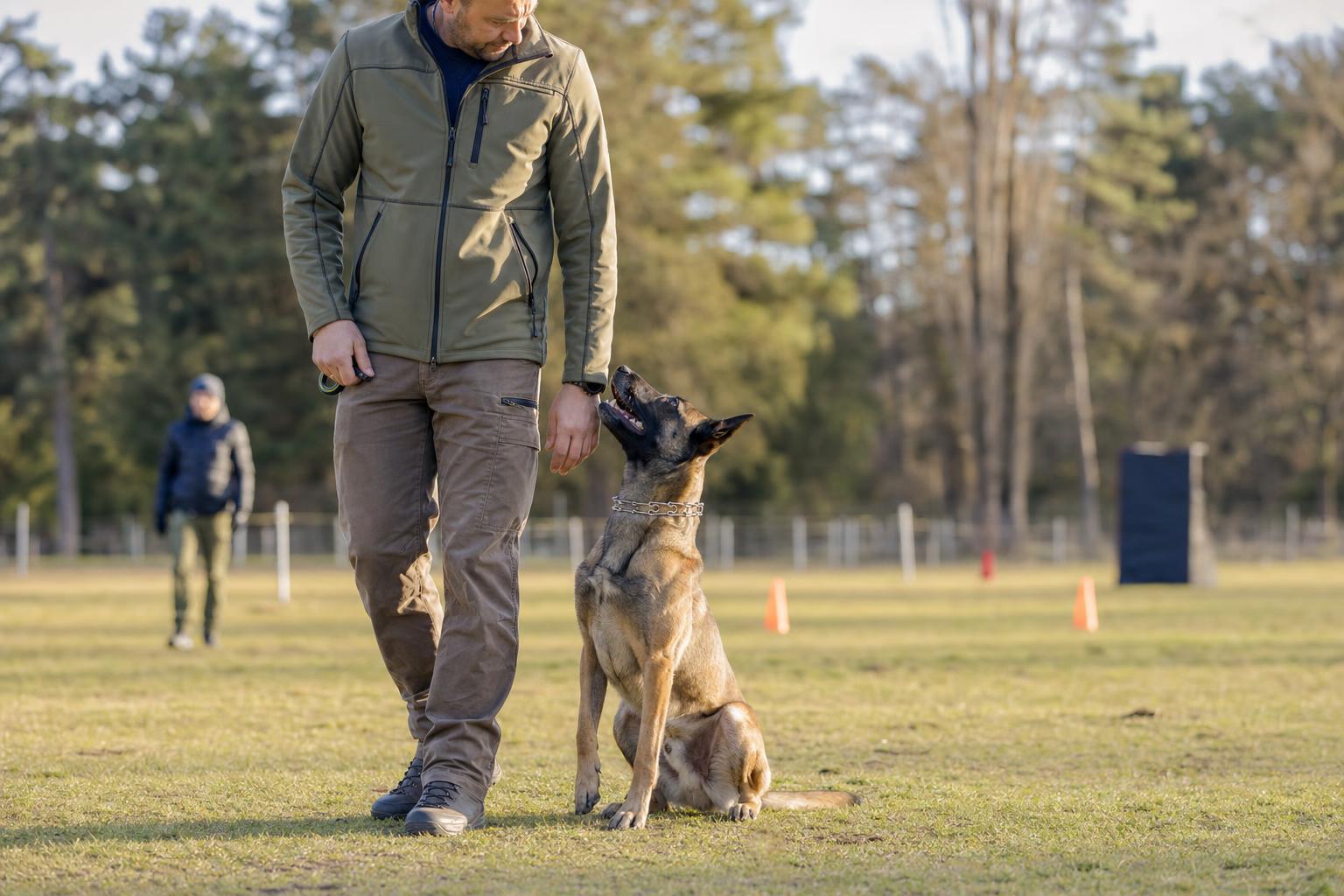
Obedience is the everyday backbone behind a well-mannered dog and a confident handler. It’s the set of learned behaviors that let a dog move through life with clarity—coming when called, staying put when asked, walking on a loose leash, ignoring distractions, and settling when nothing is happening. The best work here looks almost boring from the outside, and that’s the point: the dog understands what a cue means, understands when it is optional and when it is not, and can follow through even when the environment is busy. In a home, it prevents small annoyances from becoming habits. In the field, it keeps everyone safer. In sport settings, it becomes precision and polish, but the core is the same: communication that holds up.
Training usually starts with making “the right answer” easy. You teach the dog how to win. A sit becomes a sit anywhere, not just in the kitchen. A recall becomes a real recall, not a hopeful suggestion. That doesn’t happen by saying the cue louder; it happens by building value, then building understanding, then building reliability. Many teams find that short, upbeat sessions do more than long grinds. They also learn quickly that the handler’s timing matters as much as the dog’s enthusiasm. Reward the moment the dog makes the correct choice, and the dog repeats it. Reward late, or reward the wrong piece, and you accidentally teach something else. Over time you shape duration (holding a stay), distance (responding from farther away), and distraction (responding while life is happening). The pace is not linear. Some days you push forward. Some days you simplify, because protecting confidence is part of progress.
What separates truly dependable behavior from “pretty good” is proofing and real-world rehearsal. Proofing means you deliberately practice in contexts where the dog is tempted to blow you off: new parks, kids running, wildlife scent, other dogs, doorbells, visitors, food on the counter. You also practice the transitions that break teams: going from play to calm, from car to heel, from off-leash freedom back to control. A thoughtful trainer builds a dog who can recover from mistakes without spiraling—pause, reorient, try again—because that is how real life works. You can add tools (long lines, treat pouches, markers, structured games) but the goal isn’t gadgets. The goal is a dog who understands the job and trusts the handler’s direction.
When obedience is done well, it shows up everywhere. It’s a calm greeting instead of a launch. It’s a dog who can be taken to a café, a kid’s game, or a busy trail without drama. It’s also the foundation that makes other skills possible: scent work, hunting, herding, protection sports, therapy work, service tasks. Without clear basic behaviors, everything else gets harder and more stressful. With them, the dog becomes easier to live with and more capable to work with. The handler becomes calmer too, because they have a plan and a language that both sides understand.