
Rally
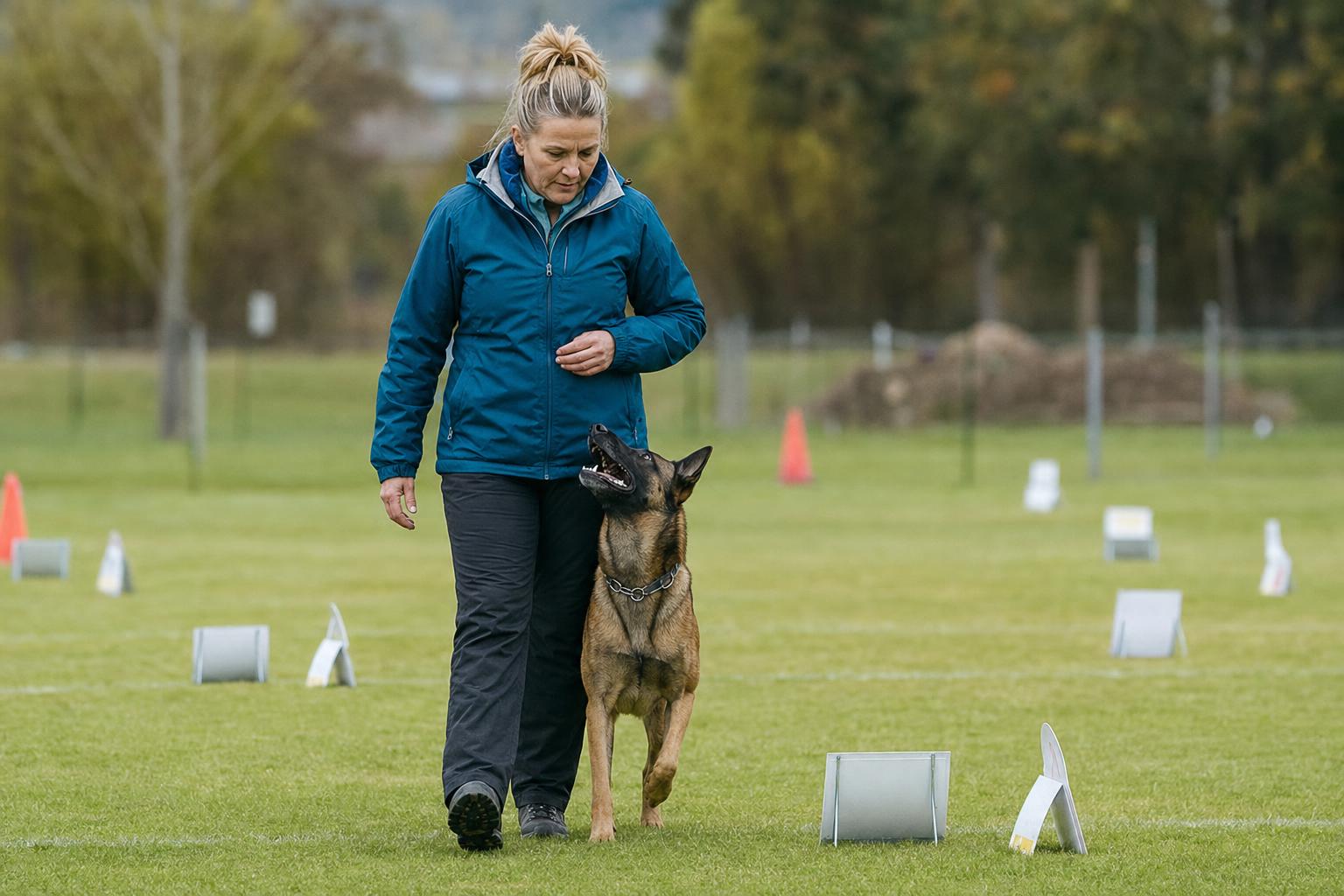
Rally is a teamwork game built around a course of signs that tell the handler and dog what to do next. One moment you’re heeling with turns and pace changes; the next you’re doing a sit, a down, a front, a finish, a pivot, or a stationary exercise. The appeal is that it feels like a conversation while you move: the team reads the sign, executes the skill, then flows to the next station. It’s structured, but not stiff. When it’s going well, you can see the dog thinking, the handler planning, and the two of them staying connected through the whole course.
The skills underneath rally are classic control behaviors—heel position, attention, sits and downs, recalls, stays—but the course format changes how you train. You’re not just polishing one exercise in isolation; you’re practicing transitions. You’re teaching the dog to stay engaged while the handler reads a sign. You’re teaching the dog that movement doesn’t mean chaos, and pausing doesn’t mean the session is over. Good teams build “micro-habits”: the dog checks in after each station, the handler delivers information clearly, and rewards appear in a way that doesn’t break the dog’s rhythm. Training sessions often look like puzzles: run three signs, reward; run five, reward; add a new sign; move the signs closer together; change the order.
Because rally happens in rings with people, noise, and other dogs, a lot of progress comes from practicing in the presence of distraction without flooding the dog. You build confidence first, then add precision. You also teach the handler to be consistent: cue once, maintain posture, don’t accidentally prompt with body language you can’t repeat in a trial. Many dogs find rally fun because it has variety, and many handlers like it because it rewards planning and steady communication instead of brute speed. If the dog forges, you don’t just correct; you teach the dog what to do when excited. If the dog lags, you build drive and clarity. If the dog gets sticky on sits, you teach reinforcement patterns that keep the dog fluid.
The best part is how rally carries back into daily life. The dog learns to stay with you while you move, to respond to small cues, and to handle changes without unraveling. It also sharpens the handler’s skills: timing, reinforcement, reading the dog’s stress, and building routines that travel. Whether you compete or not, rally-style training tends to create a dog that feels “with you” in public—because the dog has practiced staying with you through sequences, not just isolated commands.