
Dock Diving
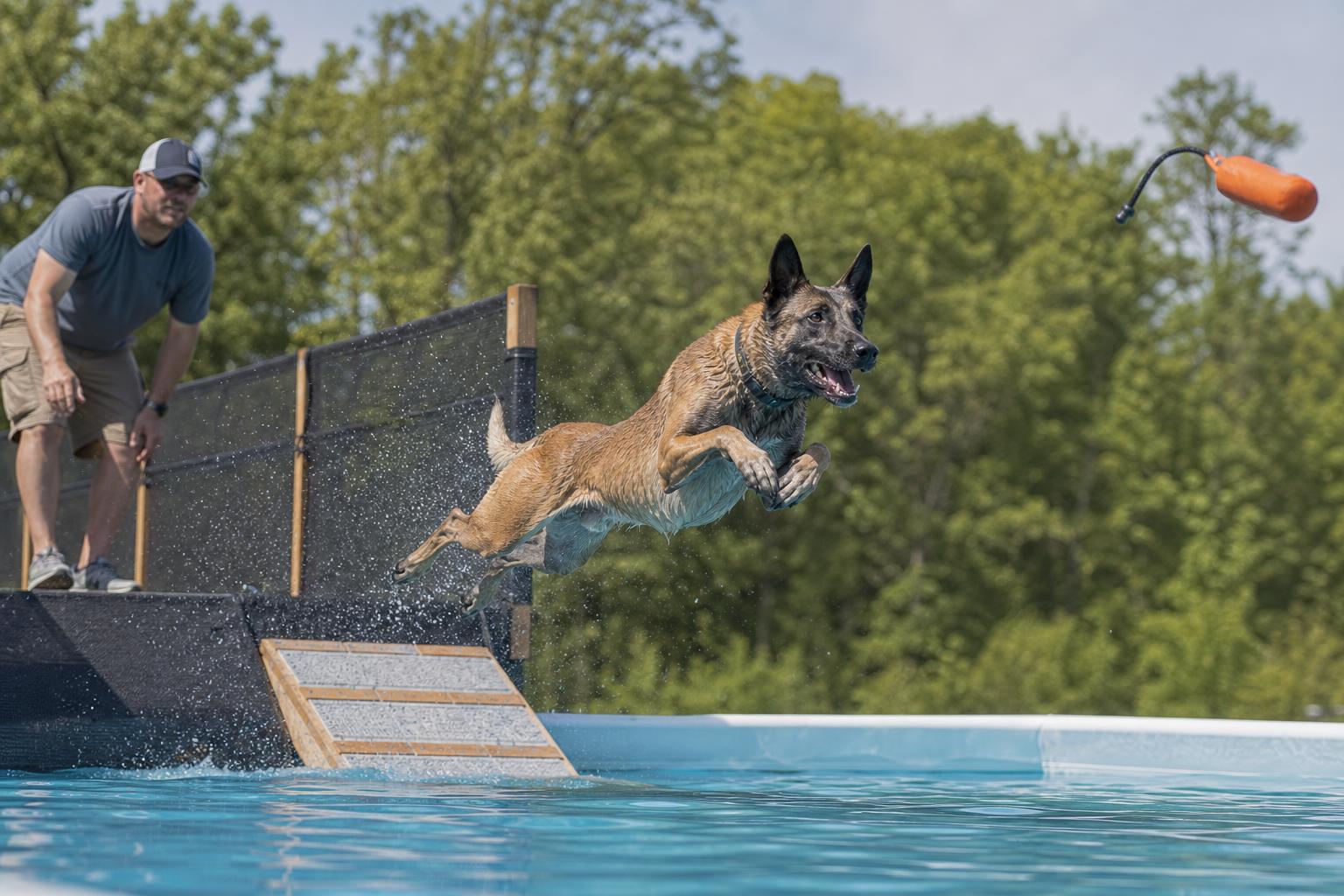
Dock diving is a jumping-and-retrieving sport where a dog launches from a dock into water to chase a thrown toy. Some venues score distance, some score height, and some score speed, but the shared idea is simple: the dog commits to a target and gives everything for a clean jump. It looks like pure fun, and for many dogs it is—but there’s also training behind the best performances. Dogs learn to accelerate down the dock without slipping, to track the toy in the air, to time their takeoff, and to land safely. Handlers learn how to throw consistently and how to build a dog’s confidence without creating frantic, unsafe behavior.
Most dogs start with basic water confidence. A dog that is uncertain in water can’t jump well, and pushing too fast can create lasting hesitation. Good training makes the water rewarding: easy retrieves, shallow entries, lots of praise. From there, the work becomes about approach and timing. Dogs learn a run-up that builds speed while keeping control. They learn to focus forward instead of scanning for the toy too early. Many teams use a staged progression—short tosses close to the dock, then longer tosses once the dog is committed. For height events, dogs learn how to drive upward at the right moment and how to take a straight line to the bumper.
Safety matters, especially with enthusiastic dogs. You manage surface traction, warm-ups, and recovery. You avoid too many hard repetitions, because jumping is physically demanding. You watch for shoulder fatigue and for dogs that twist in the air. You also train start-line behavior so the dog doesn’t launch prematurely or slide. A good dock dog is powerful, but also thoughtful. The best jumps come from clean mechanics, not just hype.
Dock diving has a special charm because it welcomes a lot of different dogs and handler styles. It can be a serious competition, and it can be a weekend activity that builds a dog’s confidence and fitness. For water-loving retrievers it’s an obvious fit, but many terriers, herding dogs, and mixed breeds surprise people once they realize the game is “run fast and grab the toy.” Done well, it creates a dog that is bold, joyful, and responsive—and a handler who understands how to channel excitement into a safe, repeatable performance.