
Disc Dog
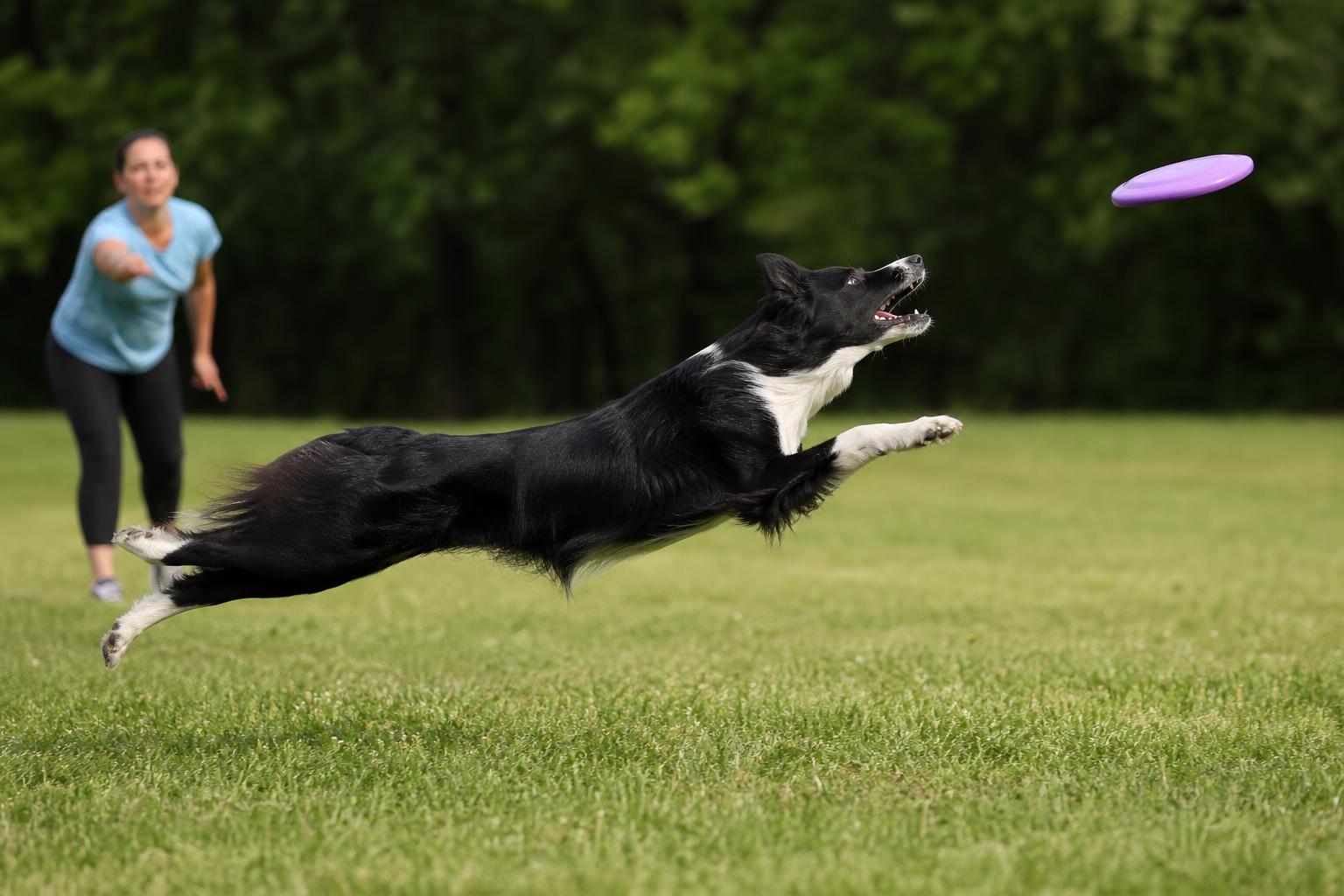
Disc dog is the world of canine frisbee games—distance throws, freestyle routines, and catching skills that blend athleticism with teamwork. Some formats focus on how far the dog can run and catch in a timed window; others reward choreography, tricks, and clean catches. What unites them is the dog’s ability to track a flying disc, judge its path, and catch confidently without fear. It’s exciting to watch, but the best teams make it look easy: the dog drives out on a line, the handler throws on time, and the catch happens in stride.
A strong foundation starts with toy skills. The dog learns to chase, grip, and release. It learns that bringing the disc back starts the next rep. Many dogs also need confidence-building around the disc itself: the sound, the movement, and the way it can wobble in the air. Handlers learn throwing mechanics and learn to choose throws that fit the dog’s stride and jumping style. A beautiful routine is often less about difficulty and more about flow—throws that keep the dog safe, catches that don’t require reckless leaps, and patterns that let the dog accelerate and decelerate without slipping.
There’s an art to keeping disc work safe. High, vertical “sky” catches look dramatic, but repeated hard landings can take a toll. Smart teams train flat, forward-moving catches and teach the dog to read the disc early so it doesn’t have to launch late. They also build body awareness through warm-ups, conditioning, and controlled jumping drills. Freestyle routines are built in pieces: a setup skill, a throw, a catch, a reset, then another sequence. You reward calm resets as much as the big moments, because the dog’s nervous system needs to recover between bursts.
Disc dog training has a nice side effect: it teaches engagement. The dog learns that staying connected to the handler is what makes the fun happen. For many teams, it becomes a relationship builder and an outlet for high-drive dogs that need a job. It can be competitive and technical, or it can be simple backyard play with better throws and cleaner catches. Either way, the goal is the same—shared motion, shared timing, and a dog that runs out with confidence because it trusts the picture the handler is creating.