
IGP/Schutzhund
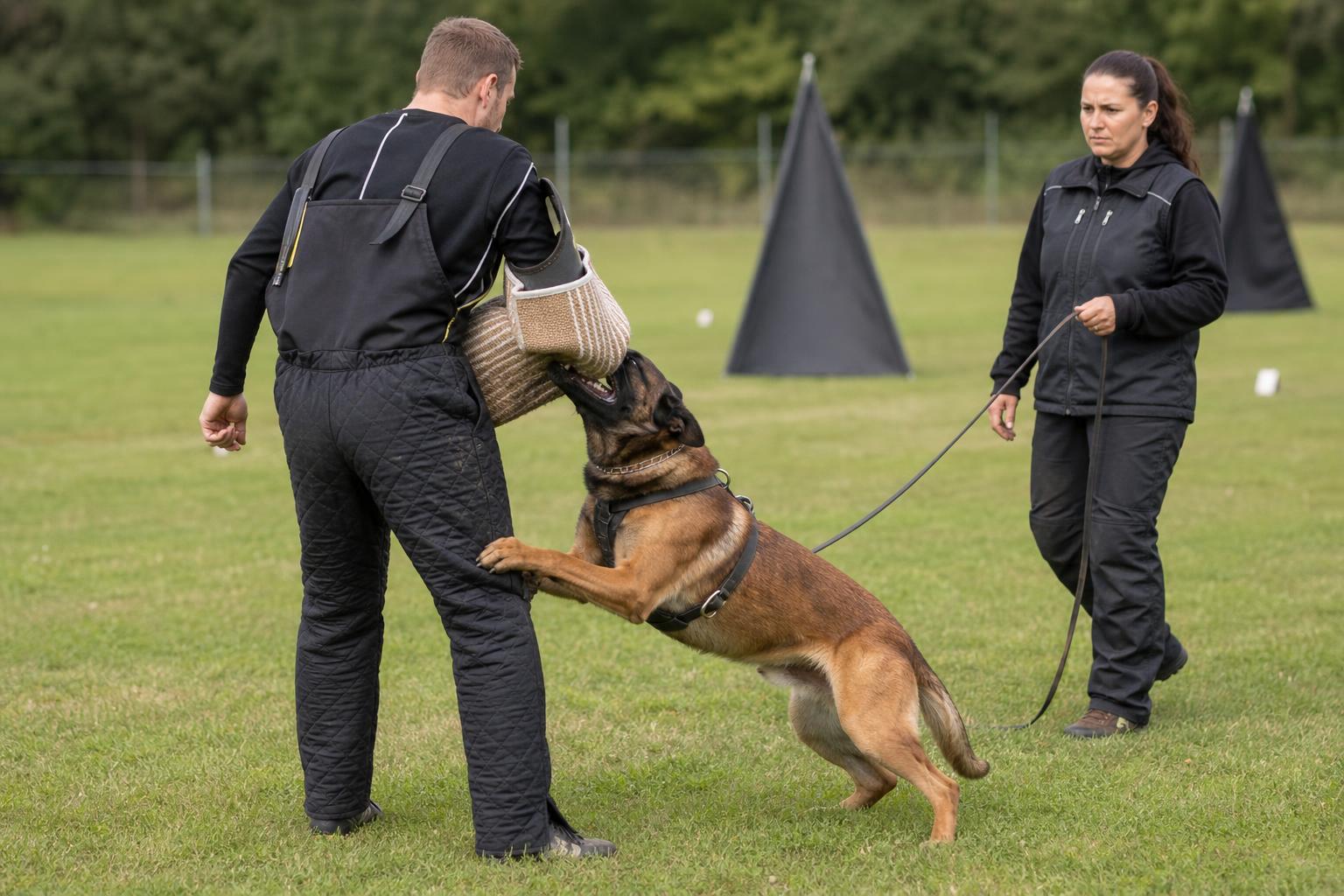
IGP and Schutzhund are structured working-dog sports built around three pillars: tracking, obedience, and protection work. If you strip away the uniforms and the field equipment, what remains is a test of clarity and nerve. The dog is asked to switch gears on cue—quiet, methodical scent work; precise, animated obedience; then a highly controlled confrontation with a decoy where the dog must show intensity without losing control. That combination is why these programs have shaped generations of training methods. They are not casual games, and they are not simple bite work. They are a long-form evaluation of temperament, athleticism, confidence, and the dog’s ability to work under pressure while staying in a defined set of rules.
The tracking phase is slow and honest. The dog follows a laid track with articles placed along the line, and the handler learns quickly that you cannot fake foundation. The dog must understand that the ground scent matters, that corners matter, that rushing is not the same as working. Many teams spend months building a calm, methodical style—rewarding the dog for staying in odor, teaching the dog to indicate articles cleanly, and teaching the handler to trust the dog’s nose instead of steering. It is a different kind of intensity: quiet, focused, almost meditative. The obedience phase is the opposite in feel. Here the dog is expected to be energetic and precise—heeling with attention, fast responses to positions, clean retrieves, accurate jumps, and a steady down under distraction. The best performances look crisp but not mechanical. You see a dog that wants the job and understands the picture, not a dog being micromanaged.
Protection work is where the sport is most misunderstood, and where good training shows itself immediately. The dog must search, hold a helper at bay, respond to pressure, and engage in a way that is full and committed, then release instantly and guard without conflict. The release is not a suggestion; it is a requirement. The dog must carry intensity without losing judgment. A clean outing and calm guarding are as important as the grip. Good helpers present clear pictures, and good handlers build the dog’s confidence without teaching chaos. They teach the dog to channel drive into a job with boundaries: when to engage, when to stop, when to move, when to stay. This is why serious clubs talk so much about nerve, control, and clarity—because without them, the work becomes unsafe and unfair to the dog.
People also use IGP/Schutzhund as a lens for evaluating breeding stock and for building well-rounded working companions, because it demands more than one skill set. A dog that can track calmly in the morning, heel with precision at midday, and perform controlled protection work in the afternoon is showing a kind of stability that is hard to simulate. It does not mean the dog is suited for real-world protection, and it does not automatically make the dog safe. It means the dog has been developed with intentional training, and that the handler has learned timing, structure, and criteria. When approached responsibly—with ethical club standards, good decoys, and a focus on control—IGP/Schutzhund becomes a demanding craft. It builds dogs that are confident, clear-headed, and responsive, and it builds handlers who understand that power without control is not skill. It is simply noise.