PSA
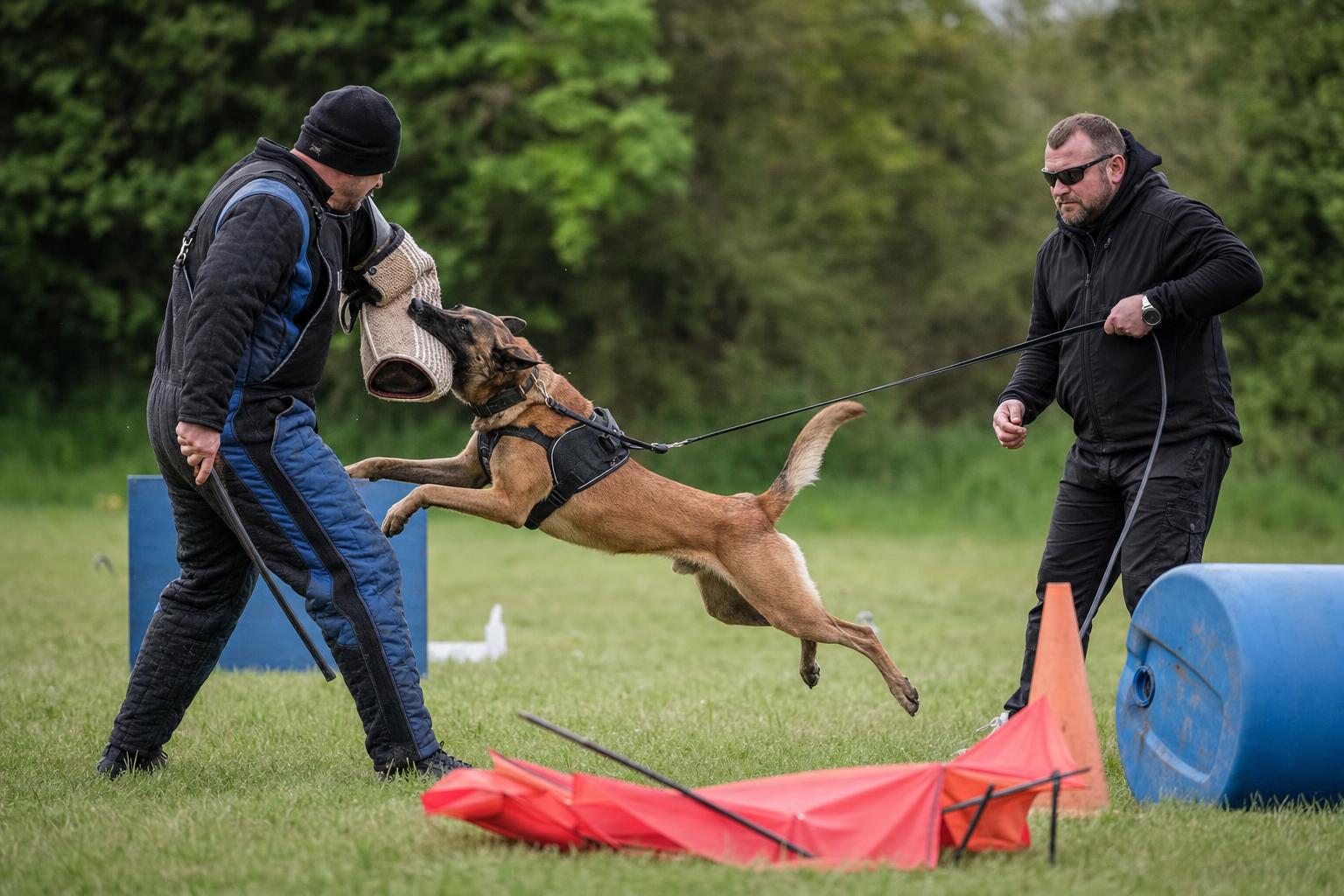
PSA is a protection-sport pathway designed to test a dog’s control, stability, and working drive in scenarios that feel more like real life than a traditional field routine. The exercises are still governed by rules and safety standards, but the setups often include environmental pressure: unusual props, distractions, handler movement, and situations that demand the dog stay engaged without spiraling. The defining feature is that the dog is expected to think. It is not enough to be intense. The dog must discriminate, respond to the handler, and perform with clear criteria while the world is deliberately made a little messy.
A strong team begins with obedience that actually holds. PSA obedience is not a warm-up; it is part of the test. You want a dog that can heel with focus, recall with speed, and perform positions and stays while arousal is high. That means the dog learns how to transition—drive up, drive down—without conflict. Many training plans emphasize engagement games, clean markers, and predictable reinforcement, because a dog that is unclear becomes frantic under pressure. The handler also has to develop consistent mechanics. PSA punishes sloppy cues. A late cue can create a wrong choice, and a wrong choice can snowball when the dog is already excited. The work forces handlers to be honest about timing and about what they have truly trained.
The protection pieces are designed to reveal temperament and control. Dogs may be asked to guard a helper, respond to threats that change quickly, and perform outs and recalls under pressure. The dog must stay in the fight when appropriate, but also show restraint when the picture says restraint. This is where training philosophy matters. A dog developed with clarity and confidence can take pressure and still listen. A dog developed with conflict often looks powerful at first, then breaks down when stressed. Good decoys and good training teams prioritize safety and fairness: clean presentations, clear criteria, and no shortcuts that create dangerous habits. The out is trained as a skill, not as a negotiation. The dog is taught that releasing leads to the next job, and that staying connected to the handler is part of winning.
PSA attracts people who want a modern, challenging venue for working dogs, and it can be a good fit for dogs with strong prey and defense drives when they are trained thoughtfully. It is also not for everyone. The training load is heavy, the standards are high, and the margin for error is small. But when it is done well, you see something impressive: a dog that can explode into action, then turn it off on cue, then re-engage with purpose—without confusion or drama. It becomes a showcase of temperament, conditioning, and communication. The best teams look calm even when the scenario is loud, because the dog is not guessing. The dog knows the job, and the handler knows exactly what they are asking for.