French Ring
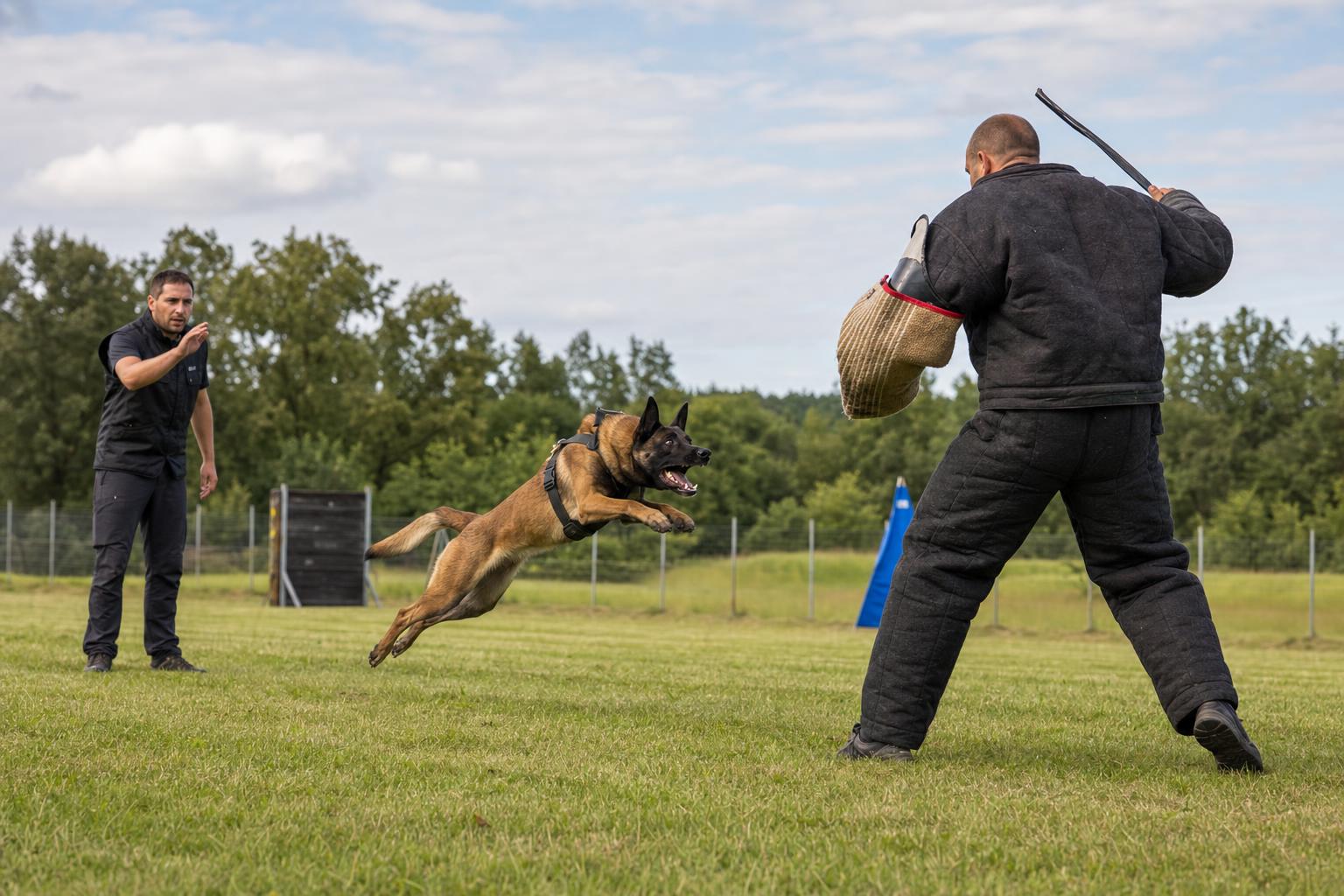
French Ring is a protection sport known for precision, athleticism, and the way it blends high drive with very clear control. The work is performed on a field with a decoy (often called the helper), and the dog is asked to execute sequences that test obedience and protection skills in a tightly defined format. The sport has a reputation for being demanding, not because it tries to scare the dog for entertainment, but because it requires a dog that can remain confident, fast, and accurate while encountering pressure and distractions. When it is done correctly, it is a display of training craft: clarity, timing, and a dog that can think at speed.
The obedience elements include heeling with attention, positions, recalls, and steadiness under distraction. These are not casual exercises. The dog is expected to perform cleanly while managing arousal, and the handler is expected to provide minimal, consistent cues. Training often looks like polishing: build a behavior, add speed, then add proofing, then add ring-specific rules. Dogs learn to show engagement without losing posture. Handlers learn to maintain the same picture in practice that they will present in trial. The sport rewards dogs that are animated and confident, but it also demands stability. A dog that is frantic will leak points everywhere.
The protection sequences in French Ring are athletic and technical. Dogs may be asked to perform sends, holds, guards, and controlled engagements, and they must release instantly on cue. There are also exercises that test steadiness around food, objects, and decoy movement. The helper’s work is part of what makes the sport unique: the decoy uses a stick and a sleeve, and the presentation includes pressure and motion that can vary, but it remains within rules designed to keep the picture fair and to evaluate the dog’s nerve and training. A well-prepared dog shows full commitment, clean targeting, and immediate compliance on the out. That last part matters. The out is not a side quest. It is a core skill, and training it well tends to create safer, clearer dogs.
French Ring also has a culture of detail. People care about grips, about guarding behavior, about precise lines and fast, clean obedience. Training plans often include conditioning, because the work is physically intense: sprinting, jumping, quick turns, and sudden stops. They also include careful arousal control, because the dog must be able to wait, then explode, then stop on cue, then wait again. When a team succeeds, it does not look like the handler is wrestling with a powerful animal. It looks like partnership. The dog is powerful, yes—but the power is organized. The dog understands the rules of the game and has confidence inside them. For many working breeds, that blend of drive, clarity, and control is the real appeal.