
Narcotics Detection
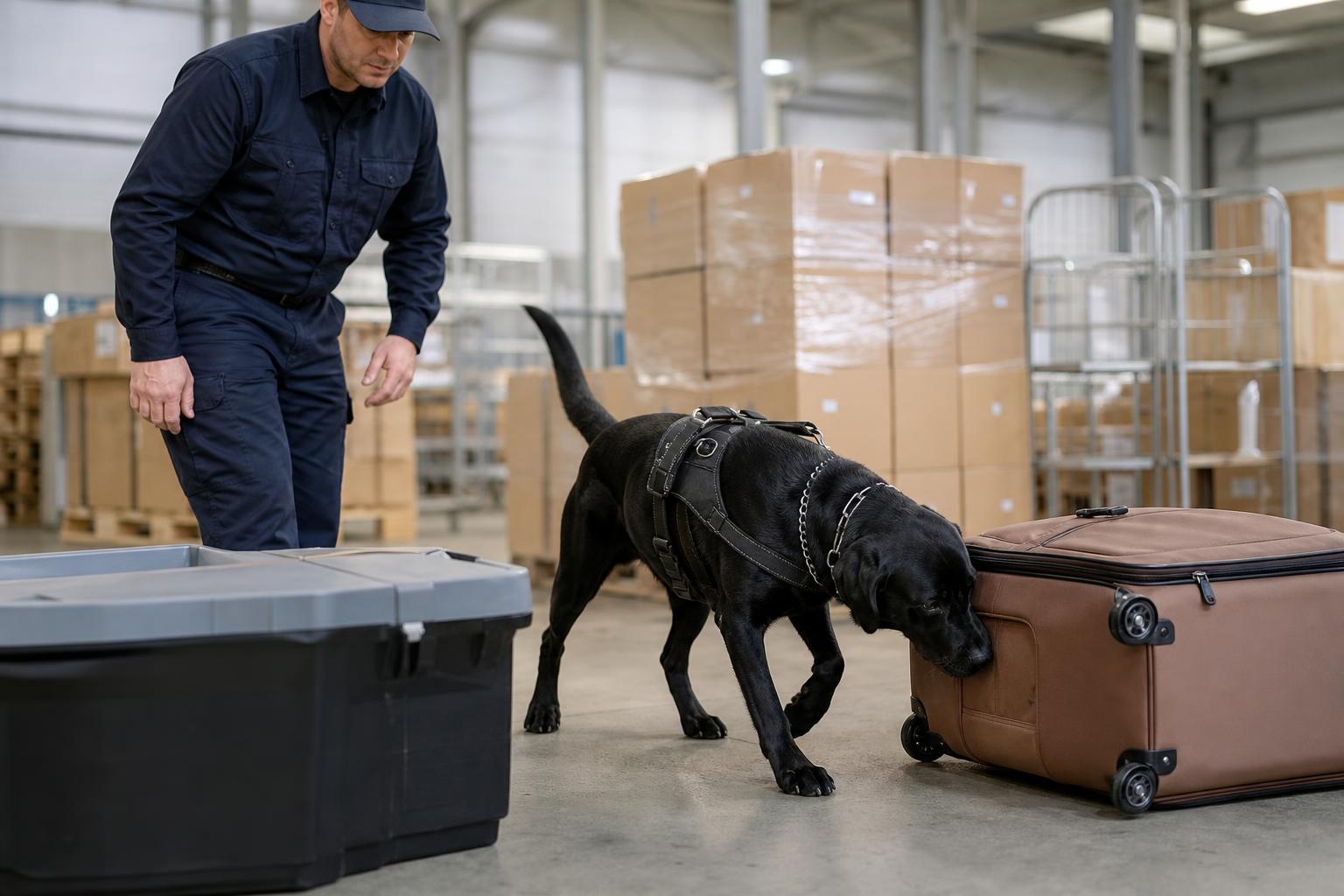
Narcotics detection is the work of training a dog to locate specific controlled substances by odor and to communicate the find in a clear, trained way. In professional contexts it supports law enforcement, security, and institutional safety programs; in training contexts it is also a model example of how to build reliable odor recognition and a consistent indication. The dog’s job is not to make legal decisions. The dog’s job is to hunt for a target scent and tell the handler, “It’s here,” with accuracy and consistency. That sounds straightforward, but it requires careful training so the dog does not develop false alerts, does not become handler-dependent, and can work in a wide range of environments.
Training usually starts with imprinting: pairing the target odor with a high-value reward until the dog actively seeks the odor. From there, the dog learns search behavior—how to work methodically in rooms, vehicles, luggage, lockers, or open areas. The handler learns operational skills: how to set search patterns, how to manage the leash, and how to avoid unintentionally cueing the dog. Because dogs are excellent at reading people, preventing handler influence is a major theme. Good teams train blind setups, rotate environments, and maintain strict criteria for reinforcement. The dog is rewarded for correct indications and not rewarded for guesses, and the dog learns that persistence is valuable but only accuracy pays.
Environmental proofing is where the work becomes real. Odor can drift with airflow, stick to surfaces, be masked by other smells, or be present in trace amounts. Dogs train in hot cars, cold warehouses, noisy hallways, crowded events, and cramped storage areas. They also train around distracting odors—food, perfumes, cleaning chemicals—so they learn discrimination rather than general excitement. Many programs also build stamina and neutrality: the dog must remain focused without becoming frantic, and must be safe around people and other animals. A stable dog that can search calmly for long periods is often more effective than a dog that burns out quickly.
High-quality narcotics detection training is as much about integrity as it is about drive. A dog that “alerts” because it wants to be right is not helpful. A dog that hunts until it finds odor and then gives a confident, trained indication is. The best teams look smooth and quiet: the dog searches with purpose, the handler observes carefully, and the indication is clear enough that there is no argument about what happened. Whether you’re describing professional deployment or the underlying training craft, the heart of the work is the same—odor is information, the dog is the sensor, and the training is what turns instinct into reliable performance.