
Boar/Hog Hunting
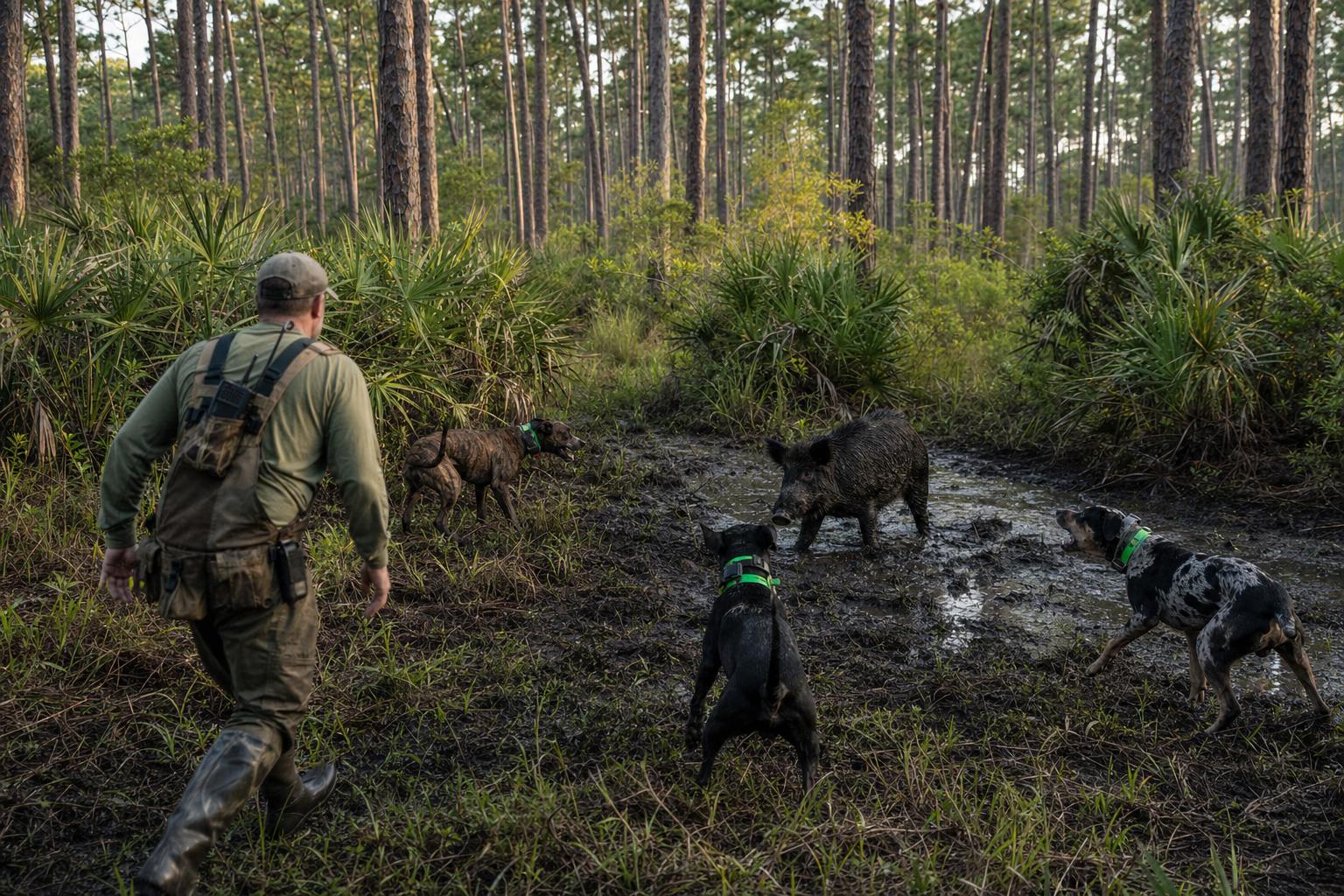
Hog hunting with dogs is a rugged and highly demanding style of hunting that uses trained dogs to locate, pursue, bay, and sometimes physically catch feral hogs in thick, difficult terrain. Practiced throughout the southern United States and other regions with large wild hog populations, this hunting tradition combines teamwork, strategy, and specialized canine roles to manage one of the most destructive and dangerous game animals in North America.
The hunt typically begins with bay dogs ranging through swamps, pine thickets, river bottoms, palmetto flats, or cutover timber searching for fresh hog scent. Once the dogs locate hogs, they begin pressuring the animals by barking, circling, and holding them in place without making direct contact. This is known as “baying” the hog. Skilled bay dogs use intelligence and agility to avoid injury while keeping the hog focused and stationary until the hunter arrives.
In many hog-hunting setups, catch dogs are then released to physically seize the hog, usually by the ear or head, allowing hunters to safely control and dispatch or capture the animal. Catch dogs must be extremely strong, disciplined, and courageous, as feral hogs possess sharp tusks and can inflict severe injuries in close combat. Protective cut collars and chest vests are commonly used to help reduce the risk of injury during these encounters.
Successful hog hunting requires dogs with very different skill sets working together as a coordinated team. Bay dogs often emphasize nose, endurance, speed, and intelligence, while catch dogs rely more heavily on strength, grit, and controlled aggression. Popular bay dog breeds and crosses include Black Mouth Cur, Catahoula Leopard Dog, Mountain Cur, and running hound crosses. Common catch dogs include American Bulldog, American Pit Bull Terrier, and Dogo Argentino.
Modern hog hunters often use GPS tracking collars and radio telemetry systems to monitor dogs across large tracts of rough country, especially during nighttime hunts when hog activity is highest. Despite advances in technology, success still depends heavily on experienced dogs capable of handling dangerous game under unpredictable conditions.
For many hunters, hog hunting with dogs represents tradition, adrenaline, and the ultimate test of teamwork between hunter and canine. The work demands courage, control, and trust from both dogs and handlers, making it one of the most intense and physically challenging forms of hunting with dogs practiced today.