Mantrailing
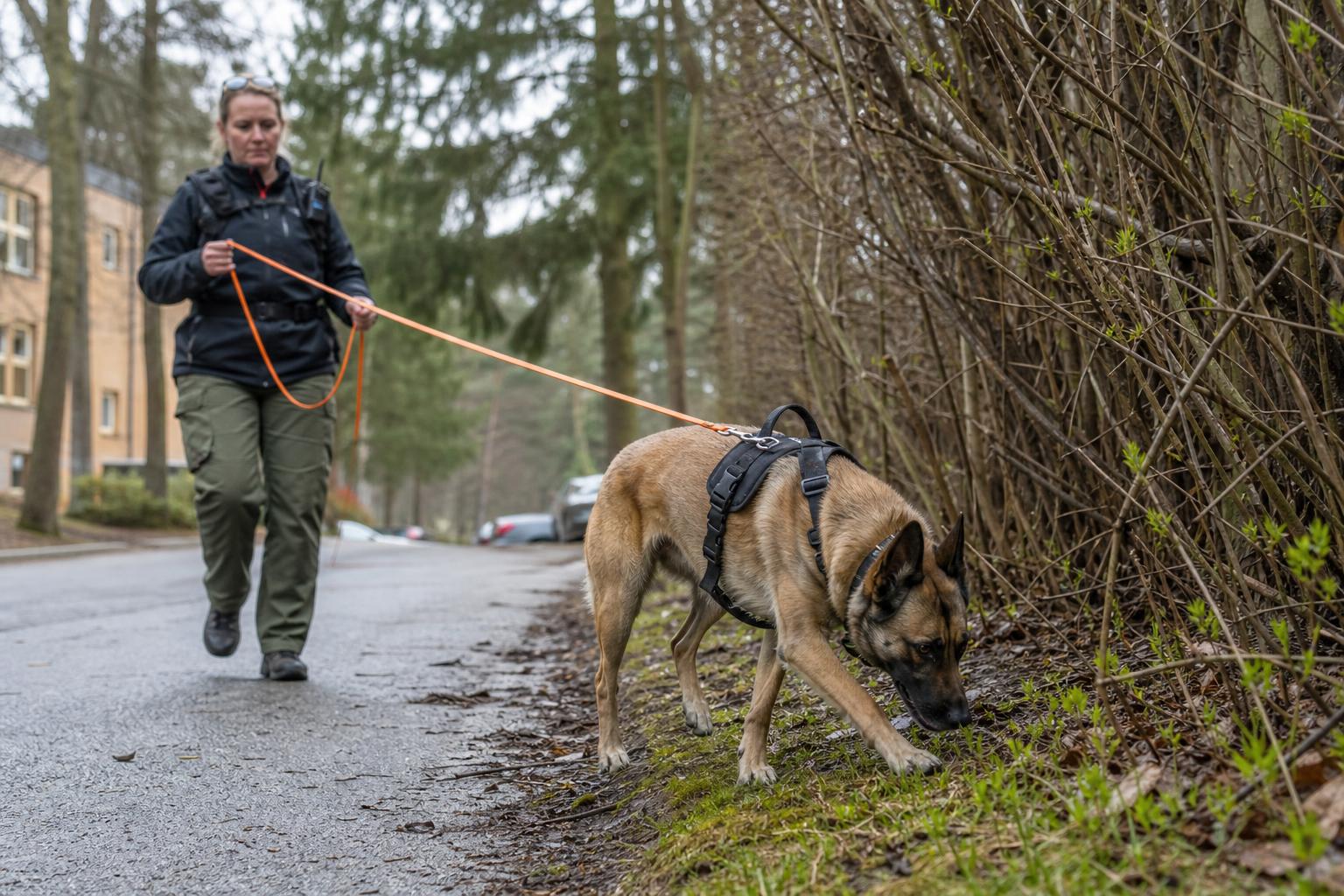
Mantrailing is the art of teaching a dog to locate a specific person by scent and follow that individual’s odor through the real world. It can look simple—dog on a long line, nose down, moving forward—until you try it in a parking lot after a rain, or on a busy sidewalk where hundreds of people have walked, or across a field where the wind has been rolling scent around for hours. What makes it unique is the “specific person” part. The dog isn’t just finding any human scent; it’s hunting for one target scent among many, and the handler’s job is to support the dog without steering it into guesses. This work rewards patient observation. A good dog’s body language becomes a map: the way the head lifts at a scent pool, the way the breathing changes when odor is stronger, the way the pace tightens at a turn or a crossing. Over time, teams build a language where the dog says, “I have it,” “I lost it,” “I’m sorting,” or “I’m not sure,” and the handler learns how to respond without adding confusion.
Training usually starts with easy wins that build confidence and make the scent picture obvious. You might begin with short trails in clean grass, with the target person walking in a straight line and hiding somewhere that produces a huge reward—food, a toy, praise, play, whatever lights the dog up. The dog learns that following the target odor leads to a jackpot and that the target odor is worth hunting. From there, the complexity grows. Trails get longer. The time gap increases. Surfaces change from grass to dirt to pavement. Cross-tracks appear. The target person walks past tempting distractions. The dog is asked to start from a scent article—an item that carries the target’s odor—and to commit to that odor picture before moving out. A lot of teams also teach a “negative” lesson early: sometimes the target is not present. That matters because a dog that has never experienced a blank or an unsuccessful trail can begin to invent answers when it feels pressure. Reliable work depends on honesty. It’s better for a dog to say, through behavior, “I don’t have it,” than to drag the handler confidently in the wrong direction.
As trails move into real environments, the problems become interesting. Wind pushes scent across roads and into doorways. Heat lifts odor and changes how it travels. Rain dampens scent on the ground but can also preserve it longer in some conditions. Busy areas create scent soup—layers of overlapping human odor that the dog must sort. The dog might overshoot a corner because odor drifts past it, then swing back and re-acquire. It might cast side to side when it’s searching for the strongest line. It might suddenly lift its head and follow airborne scent rather than ground scent. None of that is “bad behavior”; it is the dog working. The handler’s job is to keep the line quiet, keep body language neutral, and avoid leading. That’s harder than it sounds. Humans want to help, and helping often looks like pressure: tightening the line, stepping toward a direction, calling the dog’s name, repeating cues. Good handling is closer to good listening. You keep the dog safe, you keep the dog moving, and you give the dog room to solve the scent puzzle. Then you reinforce the right outcomes: staying in odor, committing to the target, and working through losses without quitting.
Done well, mantrailing produces a dog that is both confident and thoughtful. The dog learns persistence—keep searching even when it gets hard—but also learns flexibility—switch strategies when the odor picture changes. It’s physically demanding in a moderate way (lots of walking, some pulling, occasional bursts) and mentally demanding in a big way. That mental work is why many dogs come home satisfied, not wired. For handlers, it’s humbling and addictive: you learn to trust an animal’s sensory world and to accept that you can’t always predict the path. You also learn to be systematic—taking notes on wind, weather, time, surfaces, and the dog’s behavior—because the details explain the outcome. Whether your end goal is sport, practical trailing, or simply giving a dog a job that matches its instincts, the payoff is the same: a partnership where the dog leads with its nose and the human supports with calm, clear decisions. It doesn’t need to look heroic to be impressive. When a dog quietly solves a messy scent picture and takes you to the right place, it feels like watching intelligence in motion.