
Airedale
Basics
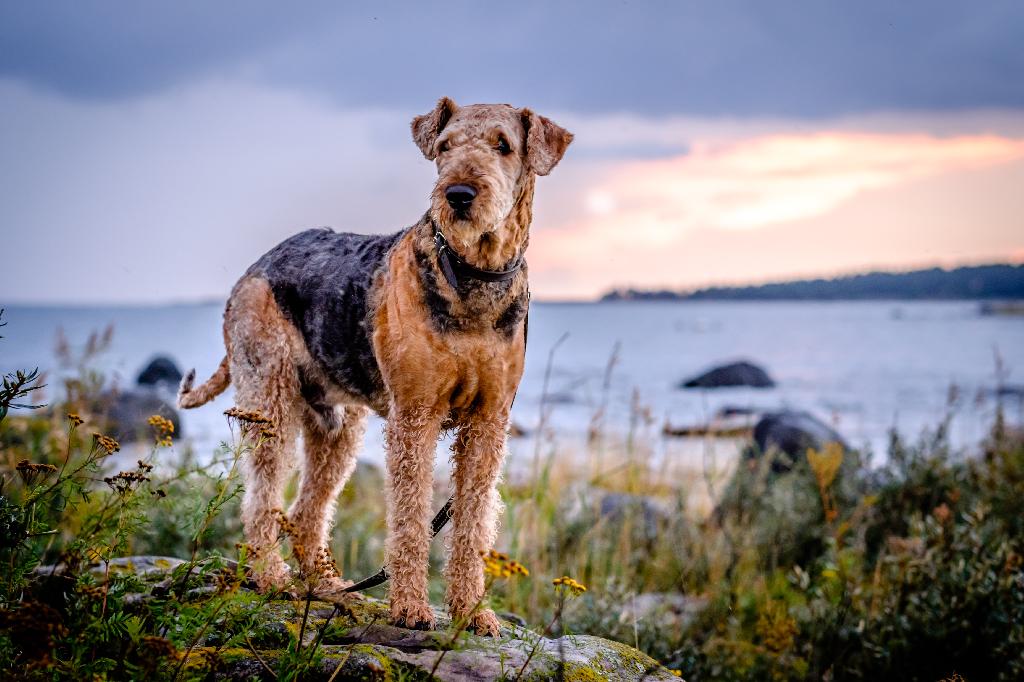
The Airedale Terrier originated in Yorkshire, England, and is often nicknamed the “King of Terriers” because it is traditionally the largest terrier breed. It was developed as a versatile working dog, capable of hunting, retrieving, and general farm or sporting work.
In modern homes, Airedales are typically energetic companions with a strong, problem-solving streak. They tend to do best with owners who enjoy daily training and activity rather than a purely low-key pet experience.
Description
The Airedale Terrier, often referred to as the "King of Terriers," is the largest of the terrier breeds and has a rich history rooted in the Aire Valley of Yorkshire, England. Developed in the mid-19th century, the Airedale was originally bred by working-class families who needed a versatile and robust dog for hunting, guarding, and companionship. The breed's ancestors include the Old English Black and Tan Terrier (now extinct) and the Otterhound, resulting in a dog that combined the tenacity and agility of a terrier with the scenting ability and strength of a hound. The Airedale quickly became a favorite for hunting small game like rats and rabbits and larger quarry such as otters and badgers.
In addition to its role as a hunter, the Airedale Terrier was highly valued as a working dog in other capacities. During World War I, Airedales served as messengers, sentries, and ambulance dogs for the British military, demonstrating remarkable courage and intelligence. Their loyalty and resilience in difficult conditions earned them a reputation as reliable and capable companions in times of crisis. Stories of their bravery during the war further cemented the breed’s status as a national treasure.
The Airedale’s versatility extended beyond the battlefield. In the early 20th century, the breed gained popularity in North America, where it was used for police work, farm tasks, and as a family protector. The American Kennel Club (AKC) officially recognized the Airedale Terrier in 1888, and its popularity surged in the United States, with notable figures such as President Warren G. Harding owning Airedales.
Today, the Airedale Terrier is celebrated for its intelligence, athleticism, and distinctive appearance, marked by a wiry, tan-and-black coat and a confident stance. While it remains a capable working dog, it is also cherished as a loyal and lively family companion. The breed’s rich history as a hunter, worker, and protector reflects its enduring appeal and versatility, making it a favorite among dog enthusiasts worldwide.
History
The Airedale Terrier, often called the "King of Terriers," originated in the Aire Valley of Yorkshire, England, during the mid-19th century. This versatile breed was developed by working-class people who needed a hardy, intelligent dog to hunt vermin, assist in fishing, and serve as a general-purpose working dog. Airedales were primarily bred by crossing the now-extinct Old English Black and Tan Terrier (an early form of terrier) with the Otterhound, resulting in a dog with a keen sense of smell, a wiry coat, and a sturdy build. Additional crossings with other breeds, such as the Irish Terrier, may have contributed to their development.
The Airedale Terrier quickly gained a reputation for its adaptability and courage. Originally used for hunting otters and rats along the rivers of Yorkshire, the breed excelled in water and on land, showcasing its versatility. By the late 19th century, the Airedale had transitioned from being solely a working-class hunting dog to becoming a popular participant in dog shows. It was officially recognized by the Kennel Club of England in 1886, marking its rise in prominence as both a working and show breed.
The Airedale's intelligence and trainability made it a valuable asset during World War I, where it served as a messenger dog, sentry, and search-and-rescue animal for the British military. Its bravery under fire earned the breed widespread admiration, and stories of Airedales delivering messages through treacherous conditions or rescuing wounded soldiers became legendary. The breed’s service during the war helped solidify its status as a symbol of loyalty and resilience.
In modern times, the Airedale Terrier continues to be celebrated for its versatility and charm. While it is no longer used extensively as a hunting or war dog, it thrives as a family companion, show dog, and occasional working dog in fields like search-and-rescue. Its playful yet independent temperament and distinctive appearance, with a wiry coat and expressive eyes, have ensured its enduring popularity. The Airedale remains a proud representative of its terrier heritage and a testament to the ingenuity of its creators in 19th-century Yorkshire.
Appearance
Airedales are muscular, athletic terriers with a hard, dense, wiry “broken” coat. The classic outline includes a long, flat head, a straight back, and a confident carriage; the breed is built for movement and endurance rather than bulk.
Coat color is commonly described as a black or grizzle saddle with tan on the head and legs. The wiry coat is designed to lie close to the body, and it’s usually maintained through regular grooming (often hand stripping for a traditional texture, or clipping for convenience).
Colors
• Black and Tan
Health
Airedales are generally considered robust, but, like many medium-to-large breeds, some conditions are commonly reported in the population. These can include orthopedic concerns (such as hip issues) and skin or allergy-type problems in some lines.
A veterinarian can help tailor preventive care to the individual dog’s age and activity level. If working with a breeder, ask what health screening is performed and what issues have appeared in close relatives; for rescues, ask about any known medical history and current evaluations.
Care
Airedales need regular exercise plus something to do with their brains: training games, scent work, and interactive play are often a good fit. Without outlets, they may create their own entertainment through digging, chewing, or nuisance barking.
Grooming is a consistent requirement. Routine brushing helps prevent matting and keeps debris out of the coat, and most owners schedule periodic grooming sessions to keep the jacket tidy and comfortable. Basic care like nail trims and dental hygiene is also important, especially for active dogs that can wear pads and nails unevenly.
Training
Training tends to go best when it’s structured, upbeat, and varied. Airedales are often fast learners, but they can become bored with repetitive drills; short sessions with clear goals usually work better than long “obedience marathons.”
Priorities often include recall foundations, impulse control around wildlife and other dogs, and calm handling for grooming. Positive reinforcement (food, toys, access to play) typically produces better reliability than harsh corrections, especially with an intelligent terrier that notices unfairness.
Temperament
Breed standards commonly describe the Airedale as outgoing, confident, courageous, and intelligent—alert at all times without being needlessly aggressive. Many individuals are playful and social, but also independent enough to test boundaries if rules are unclear.
Because they are terriers, they may be quick to chase and can be intense with small animals if not carefully managed. Early socialization and ongoing training help them develop polite greetings, appropriate dog-to-dog manners, and an “off switch” in busy households.
Lifestyle
Airedales often thrive in active homes that can provide daily exercise and regular training. They can live in many environments, but they do best when they have consistent rules, enrichment, and time with their people rather than long periods of boredom.
They may be a good match for families with respectful children who understand dog boundaries. For multi-pet households, introductions should be thoughtful and supervised, especially with cats or small animals, since terrier chase instincts can be strong.
Ownership
Before committing, consider the breed’s combination of energy, size, and grooming needs. Airedales are not typically “set-and-forget” dogs; they benefit from owners who enjoy teaching manners, providing enrichment, and keeping up with coat maintenance.
Look for sources that can support temperament stability—reputable breeders who socialize puppies well, or rescues that can describe behavior in foster homes. Plan for training early (including leash skills and recall foundations) and for routine grooming costs over the dog’s lifetime.
Interesting Facts
• The Airedale Terrier developed in the River Aire valley in Yorkshire, England.
• It is traditionally called the “King of Terriers” because it is the largest terrier breed.
• Breed standards describe a hard, dense, wiry coat and an outgoing, confident temperament.
• The coat is often maintained by hand stripping or regular clipping on a schedule.
• The breed has historically been used in a wide variety of working roles (hunting, farm work, and service roles).