
Alaskan Malamute
Basics
The Alaskan Malamute is a powerful Arctic sled dog developed for strength and endurance rather than speed. Historically, it was used to haul heavy freight over long distances in harsh conditions, and that working heritage still shows up in the breed’s build and drive.
In family life, Malamutes are typically people-oriented companions that do best with active owners. They’re not usually a “low-energy” choice; they thrive when they have consistent exercise, training, and safe ways to use their strength.
Description
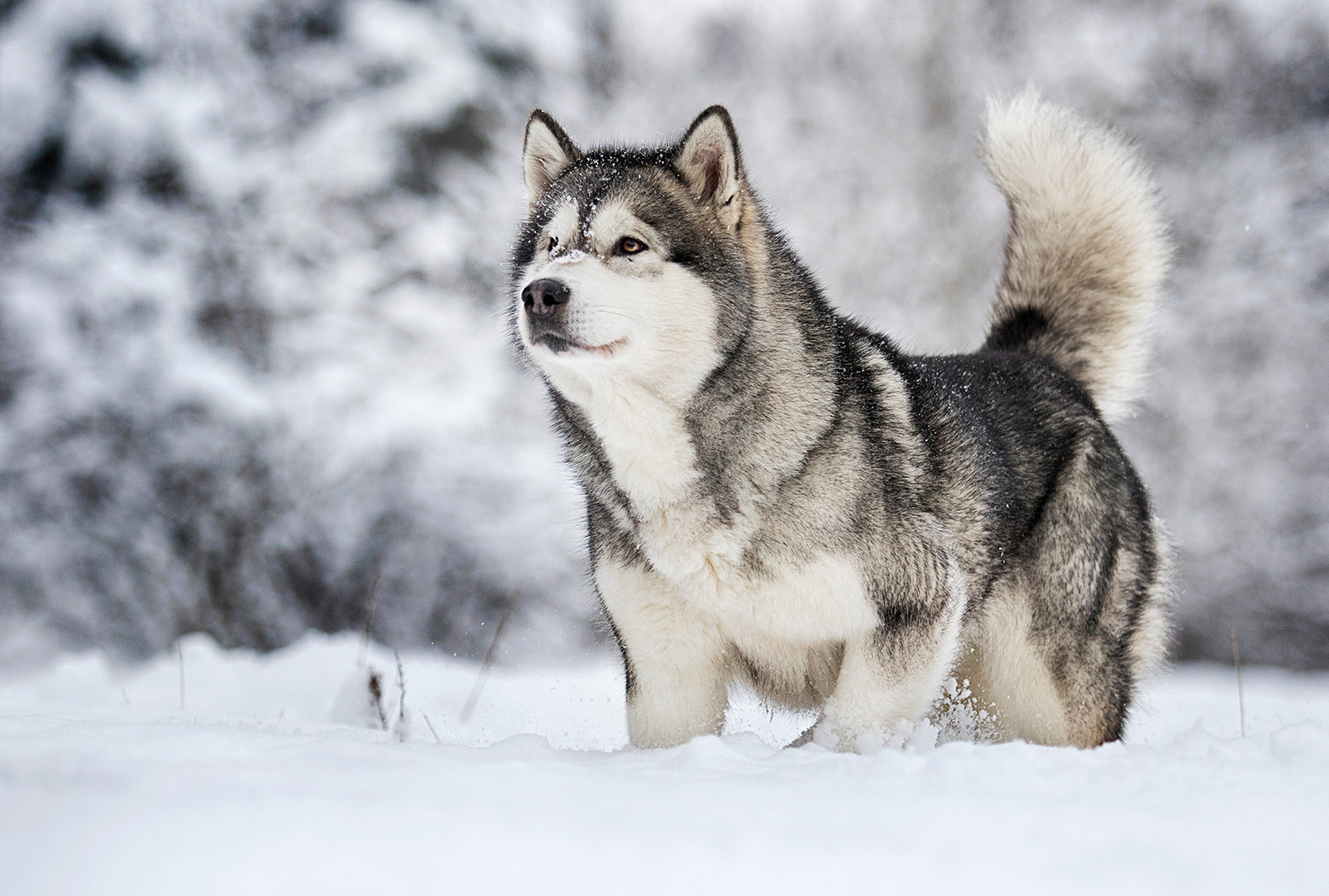
The Alaskan Malamute is a large, powerful dog breed originally bred for strength and endurance, developed by the native Inupiat people of Alaska to haul heavy loads over long distances in harsh, cold conditions. Known for its wolf-like appearance, the Malamute has a thick, double coat that comes in various colors, and a bushy tail carried over its back. Typically standing 23–25 inches tall and weighing between 75–100 pounds, they are large, sturdy, and striking dogs.
Malamutes are friendly, loyal, and affectionate with their families, making them excellent companions. They are also independent and can be stubborn, which can make training a challenge, so they are best suited for experienced dog owners. Highly energetic, they require plenty of exercise and mental stimulation to stay happy and healthy, excelling in activities like hiking, running, or pulling sleds.
While generally healthy, Alaskan Malamutes are prone to conditions like hip dysplasia and hypothyroidism, and their thick coat requires regular grooming, especially during shedding seasons. Malamutes are not ideal for hot climates, as they can be sensitive to heat.
With their strong work ethic and endurance, the Alaskan Malamute is an excellent choice for active families or individuals who can meet their physical and mental needs, but they may not be the best fit for first-time dog owners or those in smaller living spaces.
History
The Alaskan Malamute is one of the oldest and most powerful Arctic sled dogs, with a history that dates back thousands of years. The breed originated with the Mahlemut people, an Inuit tribe who settled in the rugged, icy regions of Alaska. These indigenous people relied on the Malamute for survival, using the dogs to pull heavy sleds over long distances, hunt large game such as seals and bears, and assist in hauling supplies. The breed's strength, endurance, and ability to thrive in harsh, subzero conditions made it an invaluable companion in the unforgiving Arctic environment.
The Alaskan Malamute's lineage remained relatively pure for centuries due to the isolation of the Mahlemut people and their deep reliance on the dogs. Unlike other sled dogs that were bred for speed, the Malamute was specifically bred for power and stamina, capable of carrying heavy loads over long stretches of frozen terrain. Their loyalty and strong bond with humans further solidified their role as working partners and members of the family.
During the late 19th and early 20th centuries, the Alaskan Malamute became more widely known beyond its native region. The Klondike Gold Rush of the 1890s brought an influx of prospectors to Alaska, many of whom relied on sled dogs like the Malamute to navigate the treacherous terrain. However, the breed faced challenges during this period as crossbreeding with faster dogs became common, threatening the purity of the Malamute lineage. Fortunately, dedicated breeders began working to preserve the original traits of the breed, ensuring its survival.
The Alaskan Malamute's importance was further cemented during World War II, when the breed was used for military purposes, including search-and-rescue missions and hauling heavy supplies in snowy, remote environments. Their rugged reliability and adaptability made them a crucial asset to the U.S. military in Arctic operations. In 1935, the American Kennel Club (AKC) officially recognized the breed, marking a significant step in its formal preservation and promotion.
Today, the Alaskan Malamute remains a symbol of strength, loyalty, and endurance. While they are no longer primarily used for heavy sled work, they continue to excel in activities such as sledding, weight-pulling, and other canine sports. Known for their affectionate nature and imposing presence, Alaskan Malamutes are cherished as family companions and as living reminders of their storied past in one of the harshest environments on Earth.
Appearance
Malamutes are large, sturdy dogs with substantial bone, a broad head, and a dense double coat. The FCI standard describes a natural range of size but highlights a desirable freighting size and an overall impression of power and soundness.
The coat consists of a coarse guard coat over a dense, oily/woolly undercoat, with longer hair on the shoulders/neck and a plumed tail. Typical colors include combinations of white with gray, sable, black, or red; many individuals have bold facial markings.
Colors
• Black & White
• Grey & White
• Red & White
• Sable & White
• Seal & White
• White & Chocolate
Health
Alaskan Malamutes are often described as hardy, but several health issues are commonly reported in the breed. These can include orthopedic problems (such as hip or elbow dysplasia) and certain inherited eye conditions.
Work with a veterinarian on preventive care and weight management, since excess weight can add strain to joints. If buying from a breeder, ask about health testing and what conditions have been seen in related dogs; for rescues, ask what screening has been done and what is known about history.
Care
Malamutes need regular, substantial exercise—often more than a quick neighborhood walk. Hiking, pulling sports (where appropriate), structured play, and training games can all help meet their needs, and many do best with a job-like routine.
Coat care is also significant. They shed year-round and often blow coat seasonally, requiring frequent brushing to manage undercoat. Because they’re a cold-weather breed, warm climates may require extra attention to heat management (shade, water, and avoiding intense exercise in the heat).
Training
Training works best when it’s consistent and motivating. Many Malamutes learn quickly, but they may test boundaries; clear rules and positive reinforcement help build reliable cooperation without escalating conflict.
Priorities often include loose-leash walking (they are natural pullers), recall foundations, and calm behavior around visitors. Ongoing training and enrichment are usually more effective than trying to “train it all once” during puppyhood.
Temperament
Breed standards commonly describe the Alaskan Malamute as affectionate, friendly, loyal, and devoted, generally not a “one-person” dog. Many are social with people and enjoy interaction, though they can be strong, enthusiastic, and sometimes stubborn.
Because of their size and drive, good manners matter: calm greetings, leash skills, and impulse control make life easier. Some Malamutes can be selective with other dogs, so early socialization and thoughtful management are especially important in multi-dog settings.
Lifestyle
Malamutes often thrive in households that can give them daily activity and clear structure. They may be affectionate couch companions after exercise, but many will become restless if their physical and mental needs are consistently under-met.
They’re usually better suited to homes with secure fencing and enough space to manage a large, strong dog. Because they can be vocal and energetic, apartment living can work for some individuals, but it often requires an especially committed exercise routine and considerate neighbor management.
Ownership
Before bringing one home, plan for the realities of a powerful working breed: training time, safe containment, and equipment that can handle pulling strength. Many owners benefit from classes focused on leash skills and cooperative handling.
Choose breeders or rescues that emphasize temperament and health screening, and be prepared for seasonal shedding and grooming demands. If you’re interested in the breed’s original purpose, exploring appropriate dog sports can be a rewarding way to meet their needs.
Interesting Facts
• The Alaskan Malamute was developed for heavy freighting and is bred for strength and endurance.
• Breed standards emphasize a dense double coat and an efficient, tireless gait.
• Many Malamutes are friendly and people-oriented rather than “one-person” dogs.
• They commonly have strong pulling instincts and benefit from leash training early.
• The breed is an official state dog of Alaska.