
Australian Cattle Dog
Basics
The Australian Cattle Dog (ACD) is a tough, intelligent herding breed created to move cattle over long distances and harsh terrain. It’s compact, durable, and famously quick-thinking—traits that make it a standout working partner and a demanding companion.
Most ACDs thrive with owners who enjoy training and daily activity. When their brains and bodies are underused, they often invent their own jobs, which can look like barking, chasing, or “organizing” the household.
Description
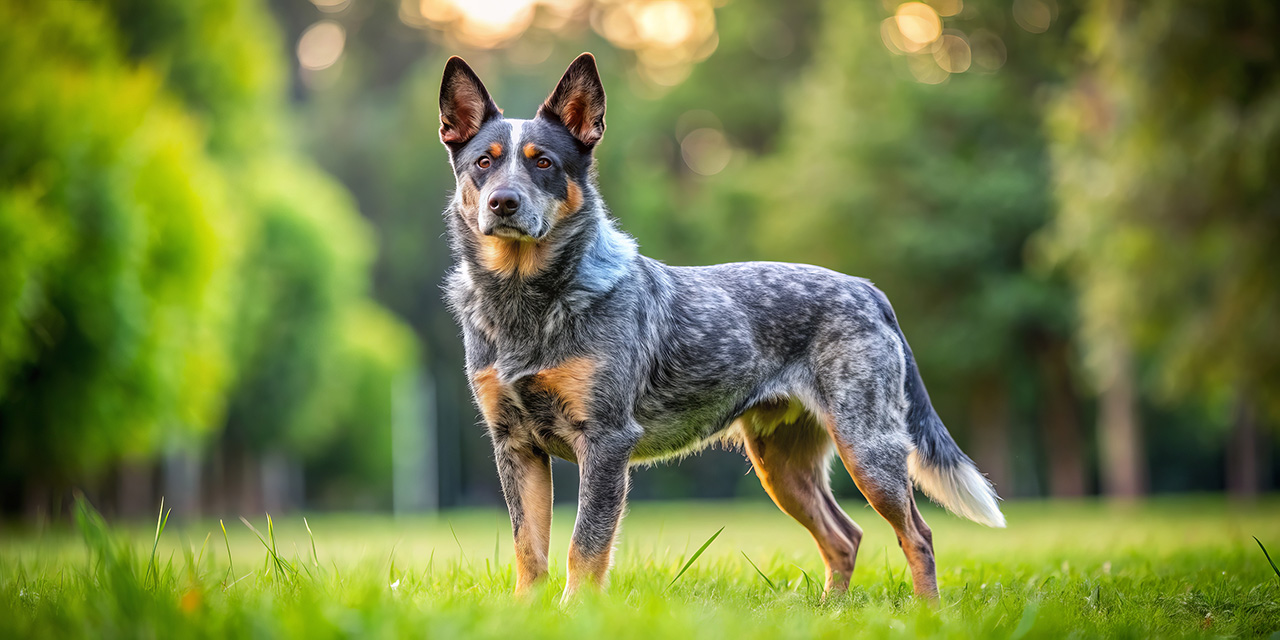
The Australian Cattle Dog, also known as the Blue Heeler or Queensland Heeler, is a hardworking and highly intelligent herding breed developed in Australia to drive cattle across rugged terrain. Known for its strength, agility, and stamina, this medium-sized breed is incredibly resilient and well-suited to challenging work, making it a favorite among ranchers and farmers. Australian Cattle Dogs are recognizable by their short, dense coat that can be blue or red-speckled, with distinctive mottling or ticking.
Bred to be independent problem-solvers, Australian Cattle Dogs are highly trainable and excel in activities requiring focus and physical endurance, such as herding, agility, and obedience competitions. Their high energy levels mean they need ample exercise and mental stimulation, making them best suited to active homes or working environments.
While they are loyal and protective of their families, Australian Cattle Dogs can be wary of strangers and have a strong instinct to herd, which can sometimes extend to people and other pets. They form strong bonds with their owners and thrive in homes where they have a job or role, making them excellent companions for those who can meet their physical and mental needs.
History
The Australian Cattle Dog, often affectionately called the “Blue Heeler” or “Red Heeler,” is a relatively young breed by canine historical standards, yet it has become an iconic symbol of Australia’s rugged spirit. Its development began in the early to mid-19th century, as European settlers established cattle ranches across the vast and challenging Australian outback. Traditional European herding breeds like the Old English Sheepdog and Scottish Collie were not ideally suited for the harsh climate, the massive distances, and the often-unruly cattle that needed herding. Ranchers needed a dog that could handle the heat, tolerate sparse conditions, and expertly drive semi-feral cattle without excessive barking or aggression.
A key figure in the Australian Cattle Dog’s creation was Thomas Hall, a cattleman in New South Wales who, around the 1830s, crossed imported herding dogs (likely a type of smooth-coated blue merle Collie) with dingoes, the wild canines native to Australia. These early “Hall’s Heelers” proved remarkably adept at quietly yet firmly nipping at the heels of cattle to move them along. Their dingo ancestry contributed stamina, resilience, and keen instincts, allowing them to excel on expansive, arid ranchlands. Over subsequent decades, other breeders further refined the Hall’s Heeler by adding bloodlines from breeds like the Dalmatian (for affinity with horses and loyalty to handlers) and perhaps the Black and Tan Kelpie or other working collies.
By the late 19th century, the Australian Cattle Dog had largely taken on the form recognized today: a compact, muscular, and highly intelligent herding dog. Breeders continued to emphasize function over form, selecting for an agile, durable dog capable of handling large herds with minimal supervision. Their speckled coats in shades of blue or red both provided camouflage in the bush and gave rise to the nicknames “Blue Heeler” and “Red Heeler.” The dogs’ distinct working style—crouching low and biting at the heels of cattle—reflects a unique adaptation to the Australian environment and the behavior of bush-bred herds.
Recognition of the breed evolved gradually. Early names included “Queensland Heeler” and “Hall’s Heeler,” but as the dogs spread beyond Queensland and gained popularity across Australia, they came to be collectively known as the Australian Cattle Dog. The breed was eventually standardized in the early 20th century, and major kennel clubs began to recognize it globally later in the century: the Australian National Kennel Council (ANKC) recognized the breed in 1903, and the American Kennel Club (AKC) followed in 1980. Today, the Australian Cattle Dog is celebrated worldwide for its intelligence, athleticism, and unwavering loyalty, remaining an indispensable worker on ranches and farms while also thriving as a beloved companion for active families.
Appearance
Australian Cattle Dogs are strong, compact, and symmetrical, built for agility, power, and endurance rather than height. They should look hard-muscled and athletic, able to accelerate, pivot, and work all day.
They have a weather-resistant double coat: a short, dense undercoat with a hard, close topcoat. The typical colors are blue (mottled/speckled) or red speckle, with specific markings described in breed standards.
Colors
• Blue
• Blue Mottled
• Blue Speckled
• Red
• Red Mottled
• Red Speckled
Health
Australian Cattle Dogs are generally robust, but they’re athletic dogs who can overdo it if you let them. Keep them lean, build conditioning gradually, and talk with your veterinarian about appropriate screening based on your dog’s pedigree (eyes, hips, etc.).
Because they’re so driven, prevention is practical: warm-ups before intense play, rest days, and prompt attention to limping or stiffness. Regular checkups and good parasite prevention round out a sensible health plan.
Care
Plan on substantial daily exercise plus mental work. Long walks aren’t enough by themselves for many individuals—training sessions, tug with rules, scent games, agility-style obstacles, or herding outlets can make a big difference.
Coat care is easy most of the year (weekly brushing), with heavier shedding seasonally. Keep up with nails, teeth, and ear checks, and pay attention to paw wear and minor strains if your dog is doing high-impact activity.
Training
Training is where the ACD shines—if you’re consistent and fair. Start early with impulse control (leave it, settle, mat work) and polite behavior around moving things, because chasing and heel-nipping are instinctive tools for a cattle dog.
Use rewards-based methods, clear boundaries, and short, focused sessions. Many ACDs benefit from a “job” routine—daily skills practice, sport training, or structured tasks—so they don’t default to self-assigned guard duty.
Temperament
A well-bred ACD is typically alert, watchful, courageous, and intensely devoted to its work and people. Loyalty and protectiveness are common, and many are naturally suspicious of strangers—an expected trait that needs good socialization and clear handling.
They’re also highly problem-solving and can be pushy or nippy if not taught appropriate outlets and manners. With structure, many become exceptionally reliable partners, but they’re rarely a “go-with-the-flow” dog.
Lifestyle
This breed is best suited to an active household that enjoys training and structure. They often excel in dog sports, working roles, and homes where they can be included in daily tasks rather than left to entertain themselves.
They can live in smaller spaces if their exercise and enrichment needs are met, but they typically do poorly with long periods of inactivity. Early socialization and thoughtful management help them handle visitors and busy environments calmly.
Ownership
An ACD is a great fit for people who want a smart, engaged partner and are willing to teach boundaries. Expect to manage chewing, chasing, and barking tendencies early, and be proactive about giving the dog appropriate outlets.
When selecting a puppy or adult, look for stable nerves and a temperament that matches your goals (sport, farm work, or companion). Ask about reactivity, handler focus, and how the dog behaves around children, other pets, and strangers.
Interesting Facts
- Bred to control and move cattle; endurance and quick reactions are core traits.
- Compact, muscular build with a weather-resistant double coat.
- Typical colors are blue mottled/speckled or red speckle.
- Often loyal and protective, with a natural suspicion of strangers.
- Needs daily mental work as much as physical exercise.
- Can be prone to chasing/heel-nipping behaviors without early training.