
Australian Shepherd
Description
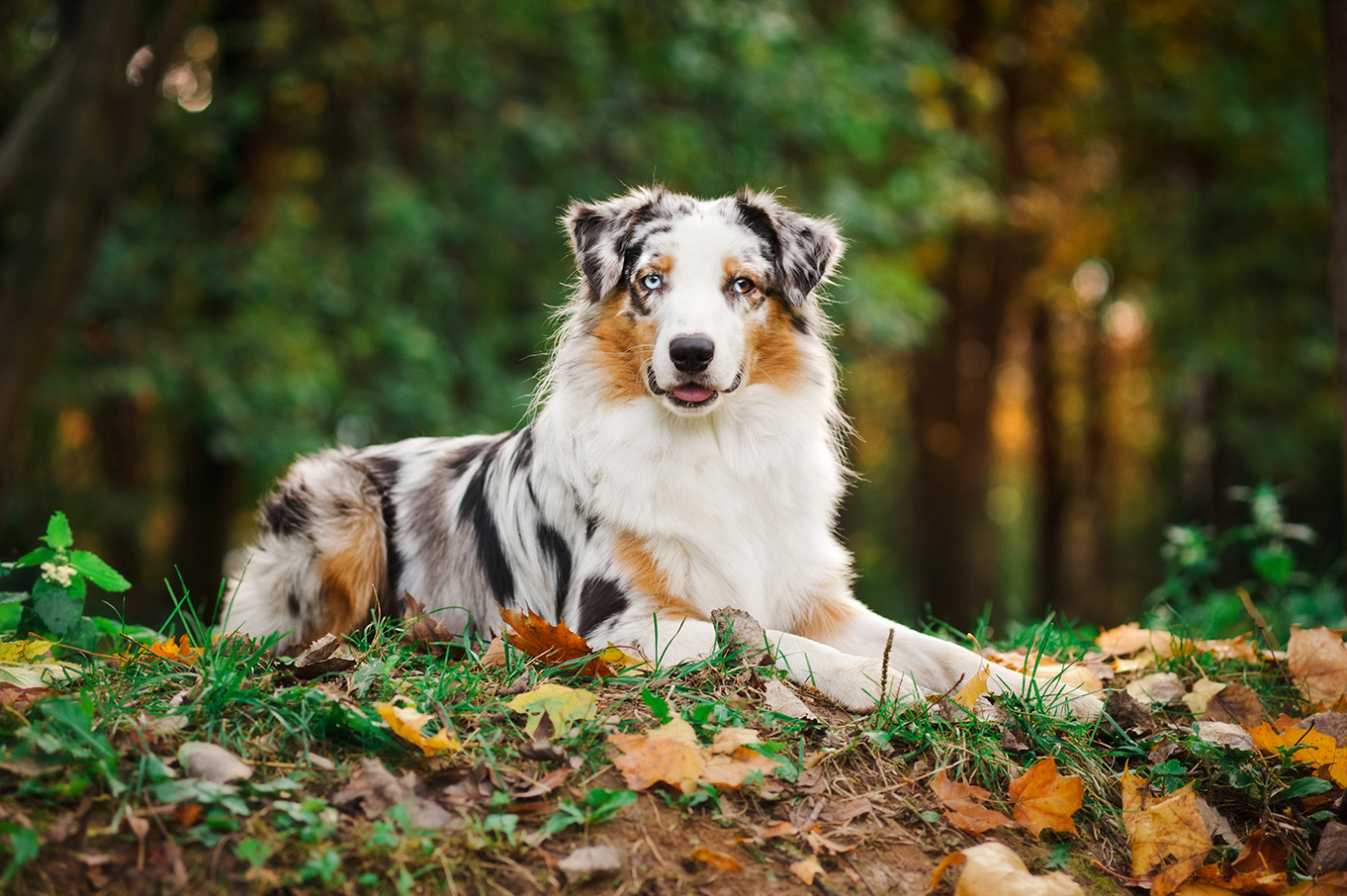
The Australian Shepherd, often called the "Aussie," is a highly energetic and intelligent herding dog known for its agility, versatility, and strong work ethic. Despite the name, the breed was actually developed in the United States to work on ranches and farms, particularly in the western regions, where it became a favorite among cowboys and farmers. Australian Shepherds are medium-sized with a distinctive coat that comes in a variety of colors, including blue merle, red merle, black, and red, often with white or tan markings. They also have expressive eyes that can be blue, brown, or even both colors.
Australian Shepherds are prized for their intelligence, trainability, and natural herding instincts, making them ideal working dogs and popular in dog sports like agility, obedience, and frisbee. They form strong bonds with their families and are known for their loyal and affectionate nature, although they can be a bit reserved with strangers. Due to their high energy levels and need for mental stimulation, Aussies are best suited for active households where they can have a job or activity, such as running, hiking, or training exercises. With proper training and regular exercise, Australian Shepherds make wonderful companions for those who appreciate their lively, loyal, and hardworking nature.
History
The name “Australian Shepherd” is something of a misnomer for this versatile herding breed. While the Australian Shepherd’s recent ancestry does include sheepdogs that passed through Australia, the breed as we know it today actually developed in the western United States. Its roots can be traced back to the late 19th and early 20th centuries, when ranchers in states like California, Colorado, and Idaho were in need of a smart, agile, and hardworking dog that could handle various livestock—especially sheep—in rugged terrain.
Some of the breed’s forebears were believed to have come from the Basque region of Europe, where shepherds had used nimble dogs for centuries. These Basque shepherds migrated to Australia, working on sheep stations before eventually relocating to the American West. The dogs they brought with them—perhaps mixed with other European herding dogs encountered along the way—gave rise to the early foundation of what would become the Australian Shepherd. Over time, Western ranchers continued to refine these dogs, selectively breeding for intelligence, stamina, and a natural instinct to herd.
By the mid-20th century, the Australian Shepherd had become a fixture on American ranches and rodeos. Their aptitude for herding, combined with their trainability, made them invaluable working partners. Word of the “little blue dogs,” as some called them, spread among livestock owners, and their popularity began to grow. It wasn’t until after World War II, however, that the breed found broader recognition outside the ranching community. Rodeo performances and trick-dog exhibitions, including those by Jay Sisler and his Aussies, introduced the breed’s remarkable athleticism and intelligence to audiences across the country.
In 1957, the first Australian Shepherd registry was established to preserve the breed’s working heritage. These efforts culminated in the American Kennel Club (AKC) granting official recognition to the Australian Shepherd in 1993. Despite the relatively late formal recognition, the Aussie’s star continued to rise, particularly as a companion animal and competitive dog in agility, obedience, and other sports. Today, the Australian Shepherd retains its strong herding instinct and work ethic, while its engaging personality and striking appearance have made it a beloved family dog around the world.
Colors
• Black
• Black Tri-Color
• Blue Merle
• Merle
• Red
• Red Merle
• Red Tricolor