
Azawakh
Basics
The Azawakh is a tall, refined sighthound from the Sahel region of West Africa. Developed by nomadic peoples as a hunting and guardian companion, it was built for speed, endurance, and efficiency in hot, arid conditions.
In modern homes, Azawakh tend to bond closely with their family and keep a dignified distance with strangers. They’re athletic but not usually busy all day—think “sprinter with an off switch,” provided their exercise and mental needs are met.
Description
The Azawakh is a sleek, elegant, and athletic hound breed that originates from the Sahel region of West Africa, particularly in countries like Mali, Niger, and Burkina Faso. Traditionally used by nomadic tribes for hunting game such as gazelles, antelope, and hares, the Azawakh is prized for its speed, agility, and endurance. It is also known for its deep bond with its owners and has been used as both a hunting partner and a guard dog.
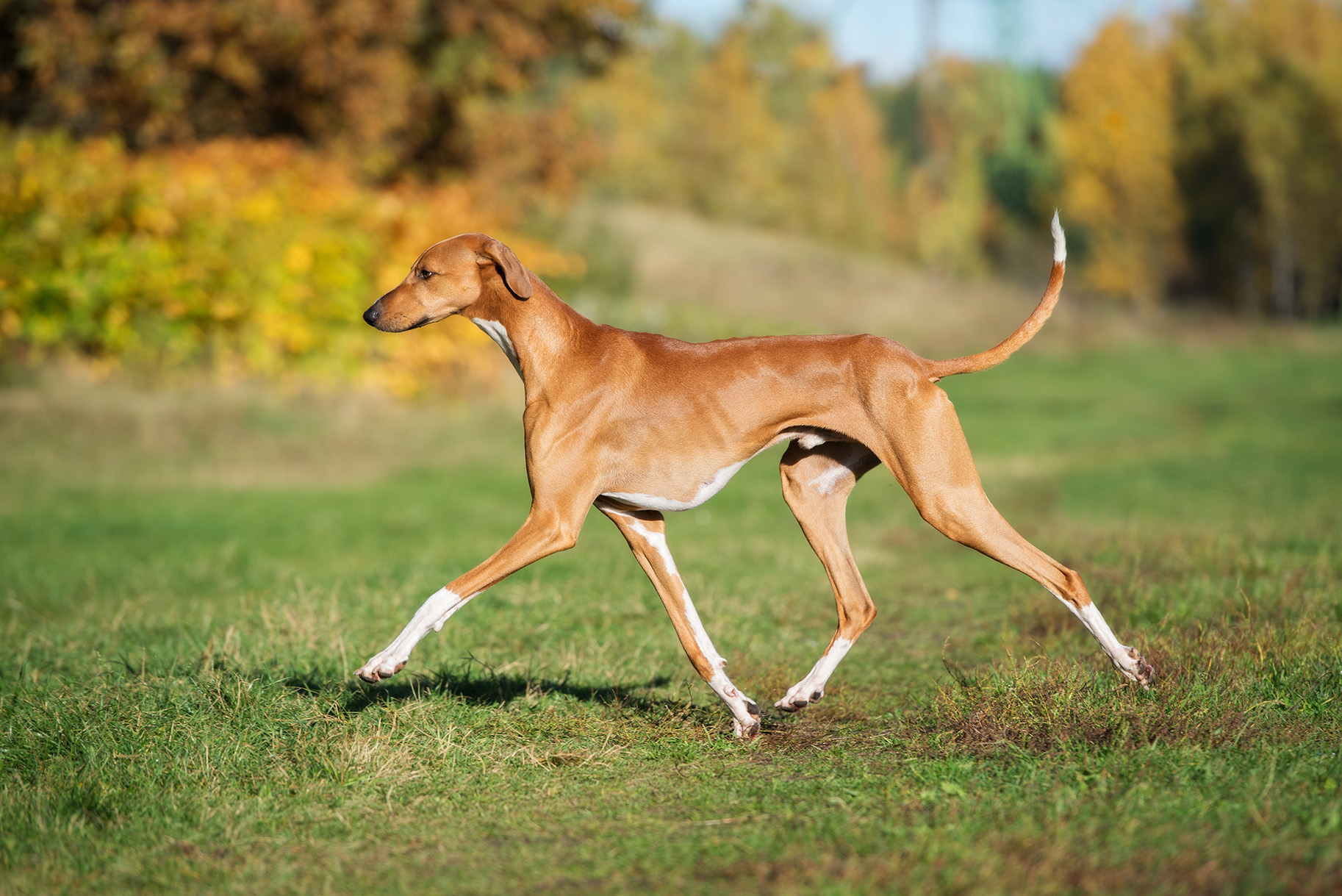
Physically, the Azawakh is a medium to large-sized dog with a long, lean body built for speed. It has a short, fine coat that comes in a variety of colors, including fawn, red, brindle, black, and blue, often with white markings. The breed's long legs, narrow chest, and deep-set eyes give it a distinctive, elegant appearance. The Azawakh’s tail is typically long and carried low, with a slight curve.
The Azawakh is known for being independent and reserved, often forming strong attachments to its family. While it may be aloof or distant with strangers, it is usually affectionate and loyal to those it knows. Despite its hunting background, the Azawakh is generally gentle, calm, and quiet in the home, making it an excellent companion for experienced dog owners who can appreciate its more reserved nature.
Due to its strong prey drive, the Azawakh requires careful training and early socialization, especially around other animals. It is intelligent and can be trained, but it may be independent or stubborn at times. Regular exercise is essential for this breed, as it has high energy levels and enjoys running at high speeds, making it well-suited for active families or individuals who can provide space and the opportunity for exercise.
The Azawakh is not typically recommended for apartment living due to its need for space to run and roam. However, with the right environment and consistent training, the Azawakh can make a loyal, affectionate, and graceful companion. Its unique combination of elegance, independence, and speed makes it a distinctive and cherished breed among those who are familiar with its needs.
History
The Azawakh is an elegant and ancient sighthound originating from the Sahel region of West Africa, specifically areas that encompass present-day Mali, Niger, and Burkina Faso. For centuries, this lean yet hardy breed has been closely associated with the nomadic Tuareg and other pastoralist peoples of the region. Known locally by various names, including *Idii n’ illeli* (sighthound of the free people), the Azawakh was bred to hunt gazelle and hare in the vast arid expanses of the Sahara and Sahel. Beyond its prowess as a swift hunter, the Azawakh was also used as a guard dog, protecting campsites and livestock from intruders and predators.
The breed’s form and temperament reflect its demanding environment. The Azawakh needed the endurance and speed to chase game over long distances across scorching, open desert, and the resilience to withstand extreme temperatures, sparse vegetation, and limited water sources. Their close relationship with the people of the region extended beyond work duties; they lived among the nomads, often sleeping in tents at night. This deep bond gave the Azawakh a protective, somewhat aloof character, strongly attached to its family but wary of strangers.
European explorers and military personnel stationed in West Africa first encountered the Azawakh in the mid-20th century. Intrigued by the breed’s striking appearance and athletic capabilities, a few enthusiasts began importing them into Europe, particularly France, in the 1970s. Over the following decades, small breeding programs aimed to preserve the Azawakh’s natural characteristics and working instincts. The Fédération Cynologique Internationale (FCI) recognized the breed in 1981, and the American Kennel Club (AKC) granted full recognition to the Azawakh in 2019.
Today, the Azawakh remains relatively rare outside its homeland. Within the West African nomadic communities, it continues to serve as a dedicated hunter and protector, while in Europe and North America, it is primarily kept as a companion and show dog. Despite modern settings, many Azawakh retain strong hunting instincts and require ample exercise and mental stimulation. They stand as a living testament to their ancient role in one of the world’s harshest environments, reflecting both the beauty and fortitude of the cultures and landscapes that shaped them.
Appearance
Azawakh are unmistakably leggy and elegant, with a lean outline and fine skin that can make their musculature and bone structure more visible than in many breeds. In proportion, the breed is typically taller than it is long, contributing to that airy, high-on-leg silhouette.
The coat is very short and fine, and the belly may be sparsely coated. Colors and markings vary widely by registry/standard, but overall the look is smooth, dry, and athletic rather than heavy or bulky.
Colors
• Black
• Blue
• Blue & Black
• Blue Fawn
• Brindle
• Brown
• Clear Sand
• Cream
• Dark Fawn
• Fawn
• Gray
• Grizzle
• Red
• Sandy
• White
Health
Azawakh are generally an athletic, functional breed, but like all dogs they benefit from thoughtful preventive care and careful breeding selection. Work with a veterinarian and a responsible breeder who can discuss health history and appropriate screening for their lines.
Because the breed is very lean, dosing for medications (including anesthesia/sedation) should be approached carefully and tailored to the individual dog. Also take common, sensible precautions for deep-chested, fast-eating athletes—use measured meals, avoid hard exertion immediately around feeding, and know the signs of emergency conditions such as bloat.
Care
Grooming needs are low: a soft brush or grooming mitt and the occasional bath usually keep the short coat tidy. Because their skin is fine and the coat is sparse, they’re more prone to feeling cold and to minor scrapes—many owners use a coat in cool weather and choose play areas thoughtfully.
Daily care should emphasize nails, teeth, and paw condition, especially for active runners. Provide a comfortable, padded resting place; these lean-bodied dogs appreciate soft bedding and may develop pressure points if they always lie on hard surfaces.
Training
Azawakh are intelligent and observant, but they’re rarely robotic about repetition. Training tends to go best when it’s calm, consistent, and reward-based, with short sessions that end on success rather than drilling the same cue.
Early socialization is particularly important: introduce new people, places, sounds, and handling in a controlled, positive way. For safety, prioritize a reliable recall foundation and strong leash skills, while still assuming that a sudden chase trigger can override training in open areas.
Temperament
An Azawakh is often described as loyal, sensitive, and selectively affectionate—deeply devoted to people it accepts, and reserved with newcomers. This isn’t usually a “love everyone instantly” breed; calm, polite neutrality around strangers is common when the dog is well socialized.
Their sighthound instincts can be strong, so they may be quick to notice motion and eager to chase. Many also retain a natural watchfulness, which can translate into alert barking or protective behavior if not guided early with good experiences and clear household routines.
Lifestyle
This breed fits best with people who can provide real exercise and a predictable, low-drama home. They typically enjoy daily walks plus opportunities to run in a safely enclosed area; many thrive with lure coursing or other controlled sprint sports.
Indoors, most Azawakh prefer to be close to their people and may choose a favorite spot to lounge for long stretches. They’re not ideal for a household that expects a dog to greet guests enthusiastically, or for environments where they’ll be repeatedly overwhelmed by constant new handling without choice or decompression time.
Ownership
Plan on managing a sighthound: secure fencing, leash use in unfenced spaces, and thoughtful introductions with small animals. A strong prey drive doesn’t mean they can’t live with other pets, but it does mean you should supervise, set boundaries, and avoid risky situations.
Choose breeders and rescues who prioritize stable temperament and sound structure, and who will be honest about the breed’s reserved nature. If you want a companion that is elegant, athletic, and deeply bonded to its family—and you’re comfortable earning trust rather than expecting instant friendliness—an Azawakh can be a remarkable partner.
Interesting Facts
• Origin: Sahel region of West Africa (including areas such as Mali, Niger, and Burkina Faso).
• Type: Sighthound—built for speed and efficient running.
• Coat: Very short and fine; grooming is generally minimal.
• Social style: Often reserved with strangers and closely attached to its own people.
• Management: Usually needs secure fencing/leash habits due to chase instincts.
• Climate: Thin coat/skin often means they prefer warmth and soft resting spots.