
Basset Bleu de Gascogne
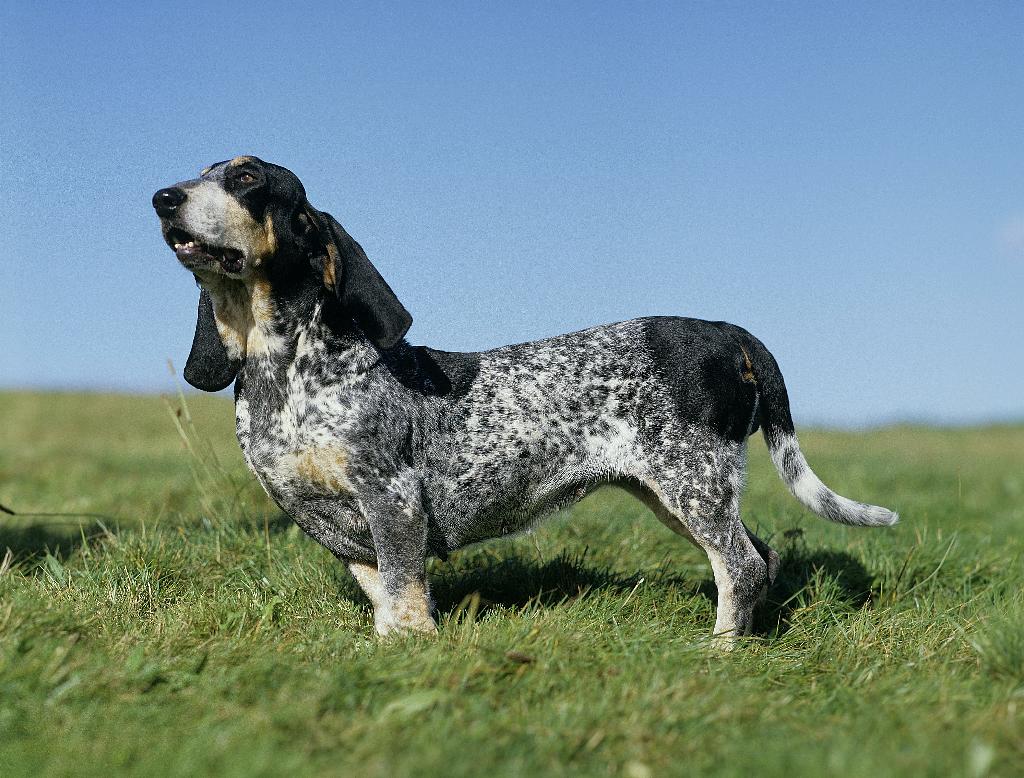
Basics
The Basset Bleu de Gascogne is a French scenthound “basset” developed for hunting on foot, prized for a fine nose, an expressive voice, and steady persistence on trail. While compact in height, it’s built for real field endurance and purposeful movement.
In the home, they’re often described as affectionate and cheerful, but they remain scent hounds: they need daily activity, plenty of sniffing time, and patient training that accounts for their independent streak.
Description
The Basset Bleu de Gascogne is a French scent hound known for its distinctive blue-and-white coat, long ears, and excellent tracking abilities. This breed is a member of the larger Basset family and was originally developed for hunting in the Gascony region of southwestern France. It was used primarily to hunt small game, such as rabbits and hares, as well as larger game like wild boar, due to its strong nose and steady pursuit.
Physically, the Basset Bleu de Gascogne is a medium-sized dog with a muscular yet compact body. It has a distinctive coat that is short and smooth, featuring a unique blue mottled pattern with tan markings, which is one of the breed's most recognizable traits. Its long, drooping ears and sad, soulful eyes add to its characteristic appearance, giving it a somewhat melancholy expression. The breed has a broad head and a deep, resonant voice, often used when tracking or announcing its presence.
The Basset Bleu de Gascogne is known for its friendly and affectionate nature. While it may appear reserved or independent when hunting, it is typically very loyal and loving with its family. The breed is social and tends to get along well with other dogs, though it may have a strong prey drive, so supervision is advised in multi-pet households. Due to its hunting background, the Basset Bleu de Gascogne requires regular exercise and mental stimulation to stay content and healthy.
Training the Basset Bleu de Gascogne can be challenging, as it can be somewhat independent and stubborn, especially when focused on a scent trail. However, with consistent, patient training and positive reinforcement, it can be a well-behaved and obedient companion. Early socialization is also important to ensure it is well-mannered around strangers and other animals.
The Basset Bleu de Gascogne thrives in active environments where it has space to exercise and explore, and it is well-suited for families who enjoy outdoor activities, particularly those involving hunting or hiking. With proper training and care, the Basset Bleu de Gascogne makes a loyal, affectionate, and distinctive companion, known for its keen tracking skills and loving nature.
History
The Basset Bleu de Gascogne is a French scenthound with deep historical roots tracing back to the Grand Bleu de Gascogne lineage in the region of Gascony in southwestern France. The word “basset” indicates its short-legged stature, a trait purposely developed for hunting in dense brush and on smaller properties where a lower, more methodical approach was advantageous. The “bleu” designation refers to the breed’s distinctive mottled coat, a bluish pattern created by intermingling black and white hairs. Early references to short-legged “blue” hounds appear as far back as the Middle Ages, when regional hunters valued these dogs for their keen noses and steady trailing capabilities.
Originally bred to track small game such as rabbit and hare, the Basset Bleu de Gascogne gained local popularity for its ability to work in packs or as a solo dog, making it useful for a variety of hunting styles and terrains. As hunting traditions evolved in France, the breed faced a period of decline, particularly in the 19th century when larger and faster hounds were favored for different quarry. By the early 20th century, their numbers had dwindled significantly, and the breed approached near-extinction. Thankfully, dedicated French breeders recognized the Basset Bleu de Gascogne’s cultural and historical importance, and they worked to revive and standardize its bloodlines.
The two World Wars further disrupted breeding programs, as did socioeconomic changes that reduced the overall demand for specialized hunting dogs. Nevertheless, a small but passionate group of enthusiasts continued to preserve the Basset Bleu de Gascogne, ensuring that its gentle temperament, distinctive coat, and strong scenthound instincts remained intact. These revival efforts bore fruit in the mid-20th century, leading to the re-establishment of a stable breeding population and formal recognition of the breed by French and international kennel clubs.
Today, the Basset Bleu de Gascogne remains relatively rare, even in its homeland. Known for its friendly disposition and melodic bay, it still excels in tracking small game, though it has also found a niche as a companion animal for those who appreciate its unique looks and history. Modern breed clubs continue to promote responsible breeding, safeguarding the future of this storied French hound so that it can be enjoyed by future generations of hunters and dog lovers alike.
Appearance
This breed is low-set but well-proportioned, with a long head, very low-set long ears, and a serious, gentle expression. The coat is short, fairly dense, and semi-thick.
Typical height in the FCI standard is 34–38 cm at the withers. The coat color is the breed’s hallmark: mottled black and white giving a “slate blue” effect, with black patches and tan points often present.
Colors
• Black & White
• Blue Ticked
• Tricolored
• White w/Tick
Health
The FCI standard stresses soundness for function. Owners should focus on keeping the dog lean and fit, and on routine veterinary care.
Pay particular attention to ear hygiene and overall conditioning. Because they’re enthusiastic workers, pace exercise increases and watch for overuse in very young or out-of-condition dogs.
Care
These are working hounds who need daily exercise: brisk walks, hiking, and scent games are ideal. Keep them safely contained—many will follow scent without noticing distance.
Coat care is easy: weekly brushing and occasional baths. Regular ear care is important (long ears + outdoor use), and nails and teeth should be maintained routinely.
Training
Use reward-based training with high-value food and short sessions. Build recall carefully with long lines, because scent hounds can “tune out” when on a trail.
Scent enrichment (tracking games, food trails, hide-and-seek) pairs well with obedience work and helps maintain a cooperative relationship without fighting their instincts.
Temperament
FCI describes the Basset Bleu as active, agile, lively, and affectionate, with a pack-working style and a notable voice. SCC also highlights a calm, affectionate nature and adaptability when given enough exercise.
Because they’re driven by scent, distractions outdoors can be intense. Consistent routines and enrichment that involves scent work help them settle well at home.
Lifestyle
Basset Bleu de Gascogne can adapt to many living situations if their daily exercise and sniffing needs are met. They’re typically happiest with a predictable routine and opportunities to use their nose.
They often enjoy canine company and can do well in multi-dog homes, but they still require individual training and one-on-one time.
Ownership
This breed suits owners who like hounds and don’t mind a bit of independence and voice. Plan for secure fencing, consistent exercise, and training that’s more patient than forceful.
Choose breeders who emphasize working-appropriate structure, stable temperament, and responsible health practices; specialty rescues may also place adults well-suited to hound-savvy homes.
Interesting Facts
• FCI height range: 34–38 cm at the withers (FCI Standard No. 35).
• Color: mottled black and white creating a slate-blue effect; black patches and tan points are typical (FCI).
• Used as a scent hound for hunting with the gun; often for rabbit and hare (FCI).
• SCC describes it as calm and affectionate, adapting well when given enough exercise.
• Known for a beautiful howling voice and very fine nose (FCI).