
Bavarian Mountain Hound
Basics
The Bavarian Mountain Hound (also called the Bavarian Mountain Scent Hound) is a medium-sized scent hound developed to track wounded game, especially in steep, mountainous terrain. Modern breed standards describe a balanced, moderately light but powerful dog built for endurance and sure-footed movement.
This is a specialist working breed at heart. In a home, most Bavarians do best with owners who enjoy structured activity and can give the dog consistent outlets for its nose, drive, and stamina—rather than expecting a laid‑back “easy” pet.
Description
The Bavarian Mountain Hound is a highly skilled and versatile scent hound, originally bred in Germany for tracking and hunting in mountainous terrain. Known for its exceptional tracking abilities, especially in difficult conditions, this breed was traditionally used to track wounded large game, such as deer and wild boar, due to its strong sense of smell and determination. It is a reliable working dog that has gained recognition for its endurance, intelligence, and loyalty.
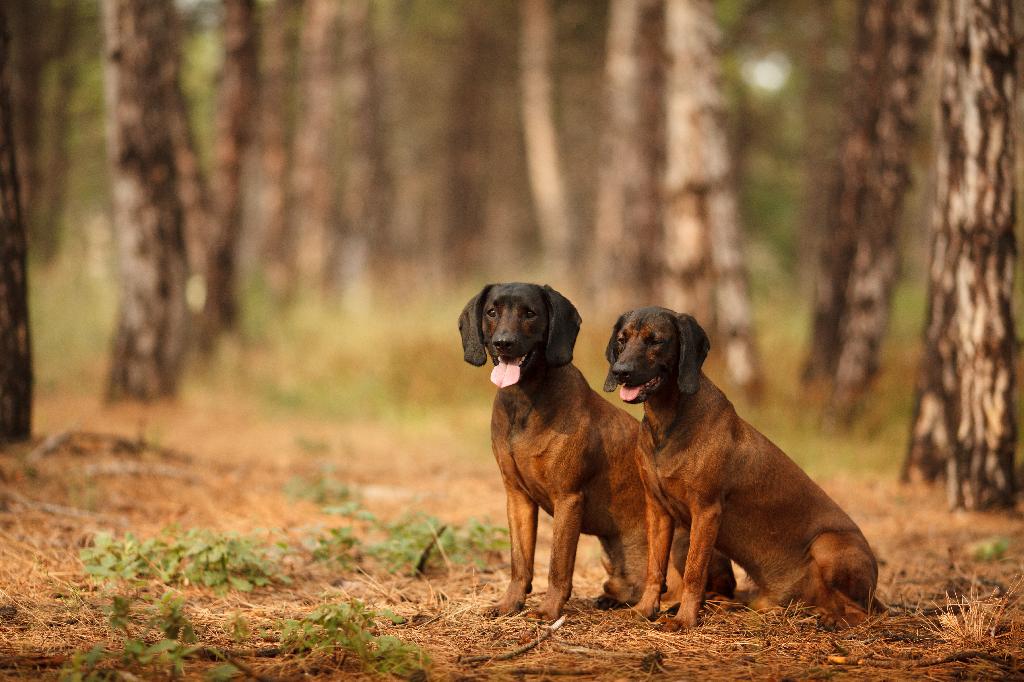
Physically, the Bavarian Mountain Hound is a medium-sized dog with a muscular, athletic build, designed for stamina and agility in rugged terrain. It has a short, dense coat that is usually reddish-brown or a combination of tan and black with a lighter mask on the face. The breed's eyes are often dark and expressive, contributing to its alert and focused appearance. Its ears are medium-sized and slightly floppy, further enhancing its expressive face.
Temperament-wise, the Bavarian Mountain Hound is known for its calm, steady, and determined nature. It is independent and focused when working, but with its family, it is affectionate, loyal, and gentle. While it can be reserved with strangers, the Bavarian Mountain Hound is generally good with children and other pets when properly socialized. Due to its hunting instincts, it may be more reserved or cautious around unfamiliar people or animals, but it is never aggressive.
Training the Bavarian Mountain Hound can be somewhat challenging due to its independent streak, which is common among scent hounds. However, it is intelligent and responds well to consistent, positive reinforcement. Early socialization and training are important to ensure that it develops into a well-behaved and balanced companion.
The Bavarian Mountain Hound is a high-energy breed that requires regular exercise to stay healthy and happy. It thrives in environments where it can be mentally and physically engaged, particularly with activities that tap into its natural hunting and tracking instincts. It is best suited for active families or individuals who can provide the dog with ample space to roam and explore, as well as opportunities for scent work and outdoor adventures.
In summary, the Bavarian Mountain Hound is a dedicated, intelligent, and loyal breed that makes an excellent working dog and companion for experienced owners who appreciate its strong hunting drive and need for mental stimulation. With proper care, training, and attention, it can be a wonderful and devoted member of the family.
History
The Bavarian Mountain Hound, known in its homeland as the Bayerischer Gebirgsschweißhund, was developed in the mountainous regions of southern Germany to track and trail wounded game. Its origins date back to the 19th century, when hunters and gamekeepers in the Bavarian Alps sought a specialized scenthound capable of following faint blood trails over steep, rugged terrain. To achieve this, they selectively crossed the larger and heavier Hanoverian Scenthound (Hannoverscher Schweißhund) with lighter, more agile Alpine hounds. The resulting dog combined the Hanoverian’s powerful scenting ability and diligence with the agility and sure-footedness necessary to navigate the rocky environments of Bavaria.
As hunting practices modernized in the late 1800s, the need for a specialized tracking dog became even more pressing. The Bavarian Mountain Hound fit the bill perfectly: it was smaller than its Hanoverian forebear, making it more suitable for narrow mountain paths, yet it retained the deep-rooted instinct to track wounded game over long distances. These dogs were often handled by professional gamekeepers, or Revierjäger, who managed large hunting estates and needed reliable dogs that could work independently with steady focus. Over time, the breed’s reputation for relentless tracking and calm, loyal temperament spread, leading to increased demand throughout Bavaria and beyond.
In the early 20th century, the Bavarian Mountain Hound caught the attention of hunters across Germany, eventually prompting efforts to safeguard its bloodlines. The formation of breed clubs and the establishment of formal standards helped preserve the Hound’s unique characteristics. Recognized by the Fédération Cynologique Internationale (FCI), the breed has continued to maintain a following among hunters throughout Europe, who prize its unwavering dedication to following a scent trail. Although still relatively rare outside of continental Europe, the Bavarian Mountain Hound has found enthusiasts in other parts of the world as well, drawn by its history, work ethic, and unwavering devotion to its handler.
Appearance
Bavarians are medium-sized hounds with a body that is slightly longer than tall, a topline that rises gently toward the rear, and strong, athletic muscle without heaviness. Movement is meant to be light and springy with good reach and drive.
The head is broad and slightly arched with a well-defined stop and a muzzle that is broad and never pointed. Ears are medium length, heavy and broad with rounded tips, hanging flat to the head. Eyes are medium, typically dark brown, with a clear, alert expression.
Coat is dense, close-fitting, and moderately harsh, finer on the head and ears. Breed-standard colors are in the red/tan/fawn family (often with darker muzzle/ears), sometimes with black hairs or brindling; a small, light patch on the chest may be permitted.
Colors
• Black Brindle
• Brindle
• Brown Brindle
• Fawn
• Red
• Reddish Brown
Health
As an athletic breed built for endurance, the Bavarian Mountain Hound should be physically sound and able to move efficiently. Responsible breeding and thoughtful conditioning (steady fitness, appropriate surfaces, avoiding repetitive high-impact jumping in young dogs) help protect joints and soft tissue.
Hip health is a common focus in many kennel club recommendations for the breed, and prospective owners should ask breeders about hip screening results and the health history of close relatives. Like many drop-eared hounds, they can also be prone to ear irritation if ears aren’t kept clean and dry.
No online profile can replace veterinary guidance: choose a breeder who prioritizes health testing and good temperament, keep your dog at a healthy weight, and schedule regular vet checks so problems are caught early.
Care
Exercise and enrichment are the center of Bavarian care. Plan for daily, meaningful activity—long walks, hiking, tracking games, and scent-based puzzles—rather than short, repetitive outings. A bored Bavarian is more likely to vocalize, roam, or invent “jobs.”
Grooming is usually straightforward: the dense, close coat benefits from weekly brushing to remove dead hair and dirt. Check and clean the ears regularly (their hanging ear shape can trap moisture), keep nails short, and maintain dental hygiene.
Feed a high-quality diet appropriate for an athletic, medium-sized dog and monitor body condition closely. In working and high-activity dogs, keeping them lean and well-muscled supports long-term soundness; your veterinarian can help tailor calories to workload and life stage.
Training
Training should be calm, consistent, and rewards-based. Bavarians tend to respond best when you make the “right” choice easy and valuable, and when training sessions stay short, clear, and purposeful.
Because scent can override everything else, start early with foundations that keep the dog safe: leash manners, a reliable recall or emergency stop, and impulse-control around wildlife smells. Many owners find a long line and structured sniffing time are more realistic than expecting off-leash reliability in unfenced areas.
If you want to lean into the breed’s strengths, tracking and nosework-style activities are ideal. They give the dog an appropriate outlet, build teamwork, and often improve everyday behavior by reducing frustration and unmet drive.
Temperament
Breed standards commonly describe the Bavarian Mountain Hound as calm, biddable, and devoted to its owner, with a self-assured demeanor and a reserved attitude toward strangers. They are not meant to be shy or aggressive.
Because the breed was developed for focused, persistent tracking, many individuals have a strong “work mindset”: they can be independent while following scent, yet thrive on a close working relationship with their handler. They often do best with clear routines, fair boundaries, and purposeful engagement.
With adequate socialization, many are steady in the home, but they typically aren’t a match for households looking for an easygoing, low-drive companion. Their instincts and sensitivity to scent make management (leash skills, recall, secure fencing) especially important.
Lifestyle
This breed generally fits best with an active lifestyle. Bavarians often excel with owners who hike, trail-run (once mature), or spend time outdoors and can incorporate scent work into daily life.
They are usually not ideal for apartment living unless the owner is exceptionally committed to exercise and enrichment, because their working drive and persistence can show up as restlessness or roaming attempts. A secure yard is helpful, but it doesn’t replace structured time with you.
They tend to do well when they have a “job,” whether that’s tracking, nosework, or structured training. Quiet time matters too: after adequate activity, many will settle calmly indoors, especially if they have a predictable routine.
Ownership
Before choosing a Bavarian Mountain Hound, be honest about time and management. This is a breed that typically needs daily engagement, patient training, and strong containment (secure fencing, doors/gates habits, and often leashed outings) because following scent is deeply rewarding for them.
Look for breeders and rescues who emphasize stable temperament, working ability (or appropriate pet placement), and health screening. Ask about early socialization, exposure to household life, and what the breeder expects from owners as the dog matures.
For the right person, Bavarians can be intensely loyal and satisfying to live with—especially if you enjoy training and outdoor activity. For a first-time owner who wants an easy, off-leash “park dog,” they can be a frustrating mismatch.
Interesting Facts
- Developed as a scent hound for tracking wounded game in mountainous terrain.
- Medium-sized, slightly longer than tall, with an athletic, endurance-focused build.
- Temperament is commonly described as calm and devoted, but reserved with strangers.
- Dense, close coat; typical colors are in the red/tan/fawn range, often with a darker muzzle.
- Often happiest with scent-based “jobs” like tracking and nosework-style activities.