
Bernese Mountain Dog
Basics
The Bernese Mountain Dog (“Berner”) is a large, tri-colored working breed developed in Switzerland as an all-purpose farm dog—able to drover livestock, guard property, and pull carts. Today they’re best known as devoted family companions with a steady, good-natured temperament and an easygoing presence in the home.
Despite their size, Berners are not typically frantic athletes. Most do well with moderate daily exercise and plenty of time near their people. They mature slowly, both physically and mentally, and many keep a puppyish sweetness well into adulthood.
Because of their heavy coat and build, they’re often happiest in cooler weather and can struggle in heat. A Berner is a wonderful match for a family that wants a gentle giant and can accommodate the breed’s grooming, training, and health stewardship needs.
Description
The Bernese Mountain Dog is a large, powerful, and affectionate breed originally from the Swiss Alps. Traditionally used as a farm dog, the Bernese Mountain Dog was bred for herding cattle, pulling carts, and guarding property. Known for its calm demeanor, loyalty, and versatility, the breed has become a popular companion dog and a favorite for families.
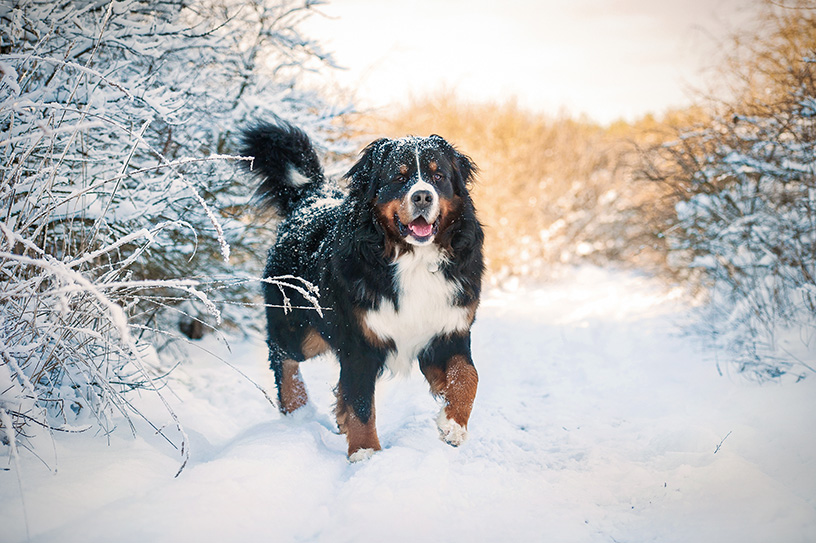
Physically, the Bernese Mountain Dog is a striking dog with a robust, muscular build and a distinctive tri-color coat. Its thick, medium-length coat is typically black with white and tan markings, giving it a majestic and beautiful appearance. The breed has a broad, square-shaped head, expressive eyes, and a long, bushy tail. Despite its large size, the Bernese Mountain Dog carries itself with a graceful and dignified presence.
The Bernese Mountain Dog is known for its gentle, affectionate nature. It is friendly and good-natured, often forming strong bonds with its family members, including children, and is typically good with other pets. Though it is generally calm indoors, the breed enjoys outdoor activities and is happiest when it can engage in regular exercise, such as hiking, walking, or playing.
Training the Bernese Mountain Dog is usually straightforward, as it is intelligent and eager to please, though it can be a bit independent at times. Early socialization is important to ensure the dog is comfortable around other people, animals, and new situations.
Due to its large size, the Bernese Mountain Dog requires regular exercise to stay healthy and avoid obesity, but it is not an overly energetic breed and is content with moderate activity. The breed’s thick coat also requires regular grooming to prevent matting and maintain its health.
Overall, the Bernese Mountain Dog is a loyal, calm, and affectionate breed, making it a wonderful family companion. With the right care, training, and exercise, the Bernese Mountain Dog is a loving and devoted pet that thrives in a home where it is given attention, space, and opportunities for outdoor activities.
History
The Bernese Mountain Dog, known in its homeland as the *Berner Sennenhund*, is one of four ancient Swiss mountain dog breeds—alongside the Appenzeller, Entlebucher, and Greater Swiss Mountain Dog. Its origins trace back hundreds, if not thousands, of years to the canton of Bern in west-central Switzerland. Ancestors of the Bernese may have been brought to the region by Roman legions, where they interbred with local farm dogs, creating a hearty, large-bodied dog designed to handle a variety of tasks in the Alpine environment. Early Bernese Mountain Dogs served as all-purpose farm companions: they hauled milk and cheese carts to local markets, guarded livestock, and watched over homesteads. The breed’s thick, tricolored coat provided insulation against Switzerland’s mountainous climate, while its calm, gentle nature made it a trusted member of the farming family.
Despite their utility, Bernese Mountain Dogs faced a decline in popularity during the late 19th century, as industrialization reduced the need for robust farm dogs. Seeing the breed’s numbers dwindle, a Swiss cynologist named Professor Albert Heim spearheaded efforts to save and standardize the Bernese Mountain Dog, as well as other native Swiss breeds. Through the formation of local clubs and dedicated breeding programs, the Bernese was preserved and started appearing at dog shows in Europe. Its sweet, even temperament and striking tri-color coat attracted attention beyond the working farm environment.
By the early 20th century, the Bernese Mountain Dog began to gain international recognition, particularly in Great Britain and the United States. The American Kennel Club (AKC) officially recognized the breed in 1937. Over the following decades, the Bernese transitioned from a predominantly working farm dog to a cherished family companion known for its gentle nature and readiness to please. While still capable of carting and obedience work, today’s Bernese Mountain Dog is more likely to be found competing in dog sports, working as a therapy dog, or simply enjoying life as a devoted household pet. Its enduring appeal lies in the combination of striking good looks, rich agricultural heritage, and a famously affectionate disposition.
Appearance
Bernese Mountain Dogs are sturdy, balanced, and powerfully built without looking coarse. The hallmark look is a thick, moderately long double coat and a striking tri-color pattern: a jet-black base with rich rust markings and clear white accents.
The head is broad with a kind, intelligent expression and dark brown eyes; ears are medium and triangular, carried close to the head at rest. The chest is deep and capacious, reflecting the breed’s historical role as a drover and draft dog.
Overall, a correct Berner should look capable of real work—strong enough to pull and steady enough to move livestock—while still agile and sound on its feet.
Colors
• Black & Rust
• Black & White
• Black Rust & White
• Black Tan & White
• Rust & White
Health
Health stewardship is a major part of Berner ownership. The breed club notes that while some Berners live into their teens, too many die young, and efforts to improve both lifespan and quality of life are ongoing.
When choosing a puppy, seek breeders who openly share health history and use available tools to reduce risk—orthopedic and eye screening where appropriate, and transparent discussion of cancer and other serious issues seen in the breed. Many owners and breeders also contribute to large health databases (such as Berner-Garde) to track outcomes and inform breeding decisions.
On the day-to-day side, keep your Berner lean, stay current on preventive care, and talk with your veterinarian early about joint support and realistic exercise as your dog ages. Prompt attention to new lumps, changes in energy, or appetite is especially important in a breed where serious disease can progress quickly.
Care
Plan on routine grooming. The Berner’s thick double coat sheds consistently and can shed heavily seasonally, so brushing at least weekly (and more during shedding periods) helps manage loose coat and prevents tangles.
Exercise needs are moderate: daily walks plus some play, training games, or light hikes are often enough for adults. In warm climates or summer months, schedule activity for cooler parts of the day and provide shade and water—many Berners overheat more easily than short-coated breeds.
Nutrition and growth management matter for a large, slow-maturing dog. Feeding an appropriate large-breed puppy diet, keeping your dog lean, and avoiding excessive high-impact exercise during growth can support long-term joint comfort.
Training
Training should start early simply because a friendly, untrained 100-pound dog is hard to manage. Focus first on manners that keep everyone safe: loose-leash walking, reliable recall, calm greetings, and a solid “stay” and “leave it.”
Berners typically learn well with reward-based methods and consistent routines. Keep sessions short, upbeat, and frequent, and make sure the dog understands the “why” (what behavior earns the reward) rather than drilling endlessly.
Given their draft heritage, many enjoy structured jobs like carting, pulling, rally, obedience, or therapy work. A little purposeful training goes a long way toward making a Berner the calm, well-mannered house companion people hope for.
Temperament
Most Bernese Mountain Dogs are affectionate, gentle, and people-oriented. They tend to bond strongly with their family and usually prefer to be close to the household activity rather than left outdoors or isolated.
They’re commonly described as self-confident and good-natured, though many are naturally a bit aloof with strangers at first. Early socialization helps them stay calm and polite in busy environments, especially given their large size.
Because they can be sensitive, harsh handling often backfires. Clear expectations, patient repetition, and positive reinforcement usually produce the best results—and help preserve that classic Berner steadiness.
Lifestyle
Bernese Mountain Dogs often do best as indoor family dogs with regular outdoor time. They usually want to be where the people are, and many become unhappy if left alone for long stretches without companionship or enrichment.
Space is helpful, but temperament and routine matter more than square footage. Even in a smaller home, a Berner can do well if they get daily walks, some training, and a cool, comfortable place to relax.
They’re typically more comfortable in cooler climates and seasons. If you live somewhere hot, plan for air conditioning, careful summer scheduling, and realistic expectations about midday activity.
Ownership
A Berner is a great fit if you want a large, affectionate dog with a calm, steady vibe—and you’re ready for the realities of big-dog care: grooming, training, and higher medical risk. Their size also means costs (food, medications, preventive care) tend to be higher than with smaller breeds.
Look for a responsible breeder who can explain their health approach, share documentation, and discuss longevity in their lines. Ask what they’re doing to improve lifespan, and whether they participate in health tracking resources and breed-club guidance.
If adopting, choose an organization that can describe the dog’s temperament and handling comfort. With thoughtful training and routine, Berners can be wonderful family companions, but they still need structure to grow into polite, safe adults.
Interesting Facts
• Swiss “Sennenhund” farm dog developed for droving, guarding, and cart pulling.
• Signature tri-color coat: jet black base with rich rust and clear white markings.
• Generally gentle, affectionate, and steady; often a bit reserved with strangers at first.
• Moderate exercise needs, but many do poorly in hot weather due to their heavy coat.
• Regular brushing is needed; shedding is typically heavy, especially seasonally.
• Breed-club health efforts emphasize improving lifespan and tracking health outcomes (e.g., via Berner-Garde).