
Biewer Terrier
Basics
The Biewer Terrier is a small, longhaired, tri-colored toy terrier developed from Yorkshire Terrier lines and refined to breed true as its own distinct type. It was created as a companion first and foremost—an affectionate lap dog with the confidence and curiosity you’d expect from a terrier, wrapped in a silky show coat.
In day-to-day life, Biewers are typically bright, people-focused, and eager to be included. They do best as indoor companions with regular interaction and light daily exercise, and they often keep a playful, “puppyish” attitude well into adulthood.
Description
The Biewer Terrier is a small, elegant toy breed known for its striking tri-colored coat, cheerful personality, and affectionate nature. A descendant of the Yorkshire Terrier, the Biewer Terrier is a distinct breed that stands out for its unique appearance and playful temperament. Typically weighing between 4 and 8 pounds and standing about 7 to 11 inches tall, this breed has a compact, fine-boned structure and a long, silky coat that adds to its charm.
One of the most distinctive features of the Biewer Terrier is its tricolor coat, which typically includes a combination of white, blue, and gold. The breed’s coat is hypoallergenic and requires regular grooming to maintain its luxurious appearance, but it sheds minimally, making it an excellent choice for allergy sufferers. Biewer Terriers are known for their bright, expressive eyes and perky, alert ears, which reflect their lively and curious personality.
Biewer Terriers are affectionate and devoted companions, forming strong bonds with their families. They are playful and energetic, enjoying interactive games and short walks, but they are also happy to relax and cuddle with their owners. Their intelligence and eagerness to please make them easy to train, though their terrier heritage can sometimes result in a stubborn streak. Early socialization is important to help them grow into confident and well-behaved dogs.
This breed is well-suited to apartment living due to its small size but is equally at home in larger households. Biewer Terriers get along well with children and other pets, provided they are treated gently. Their adaptable nature and friendly demeanor make them a favorite choice for individuals and families seeking a small dog with a big personality.
With their combination of beauty, intelligence, and loving temperament, Biewer Terriers continue to capture the hearts of dog lovers around the world. Their unique history and undeniable charm make them a delightful addition to any home.
History
The Biewer Terrier is a relatively new breed with origins in Germany, where it was developed in the 1980s. The breed’s history began when Werner and Gertrud Biewer, Yorkshire Terrier breeders, discovered a unique puppy in one of their litters. This puppy, born in 1984, had an unusual tri-colored coat featuring white, blue, and gold, which set it apart from the traditional Yorkshire Terrier. The Biewers were captivated by this distinctive appearance and decided to develop a new breed with these unique traits.
To create the Biewer Terrier, the Biewers selectively bred Yorkshire Terriers that carried the recessive piebald gene responsible for the tri-colored coat. Over time, they refined the breed’s characteristics, focusing on maintaining its elegant appearance, silky coat, and charming personality. The new breed quickly gained attention and affection, initially referred to as the Biewer Yorkshire Terrier à la Pom Pon, reflecting its luxurious and fluffy coat.
In the following years, the Biewer Terrier gained popularity in Europe and eventually made its way to the United States. American breeders embraced the breed and worked to standardize its characteristics further, emphasizing its unique coat pattern, friendly temperament, and small, sturdy build. Through genetic testing and careful breeding practices, the Biewer Terrier was established as a distinct breed rather than a variation of the Yorkshire Terrier.
In 2021, the American Kennel Club (AKC) officially recognized the Biewer Terrier as a separate breed, marking a significant milestone in its development. Today, the Biewer Terrier is celebrated for its beauty, intelligence, and affectionate nature. Its journey from a unique puppy in Germany to an internationally recognized breed highlights its charm and appeal, making it a beloved companion for dog enthusiasts worldwide.
Appearance
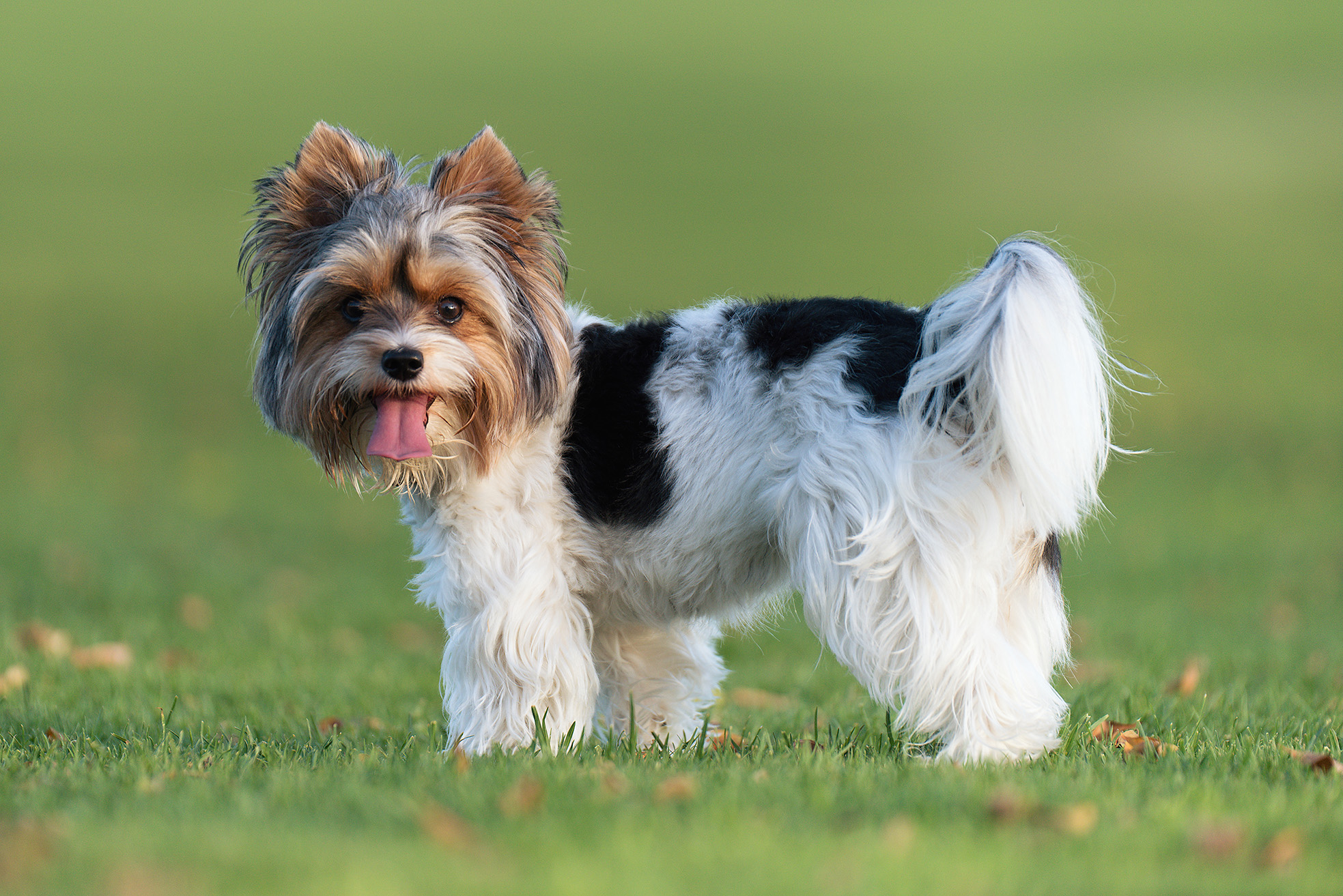
Biewer Terriers are fine- to medium-boned, elegant, and toy-sized, with a level topline and a silhouette that can look square while still being slightly longer than tall. The head is softly rounded with a moderate stop, dark eyes, small upright ears, and a neat terrier expression.
The hallmark is the coat: long, straight, and flowing with a soft, silky texture and no undercoat. In a full coat, the hair parts down the middle and drapes evenly on both sides. Coloring is characteristically tri-color, with black or blue and white on the body and gold/tan trim on the head, giving the breed its distinctive, high-contrast look.
Colors
• Black Tan & White
• Blue Tan & White
• Chocolate Tan & White
Health
As with many toy breeds, Biewer Terriers benefit from proactive dental care and careful weight management. Small dogs can also be prone to orthopedic issues like kneecap (patella) problems, so maintaining a lean body condition and minimizing repeated jumping from furniture can help reduce strain.
Responsible breeders should be able to discuss health screening, family history, and long-term soundness. For owners, the best health strategy is a stable routine: quality nutrition, regular veterinary visits, dental hygiene, and grooming that prevents skin irritation beneath mats.
Care
Coat care is the main commitment. A full-length coat requires frequent brushing and combing to prevent tangles and breakage, plus regular bathing and thorough drying to keep the hair clean and lightweight. Many pet owners keep the coat trimmed to a shorter, practical length, which reduces daily maintenance while still preserving the breed’s silky look.
Beyond grooming, plan for routine dental care, nail trims, and ear cleaning. Because they’re small, teeth can crowd and tartar can build quickly, so tooth brushing is a high-value habit. Moderate daily exercise and weight control also matter, since extra pounds are hard on tiny frames.
Training
Biewers are typically quick to pick up household routines and basic cues when training is positive and consistent. Short sessions with rewards (treats, toys, praise) work best; harsh corrections can make a sensitive toy dog shut down or become defensive.
Focus early on house-training, polite leash skills, and “quiet” and “settle” cues to manage alert barking. Gentle socialization—car rides, friendly visitors, grooming handling, and calm dog introductions—helps shape a confident adult who’s easy to live with and easy to groom.
Temperament
Most Biewer Terriers are loyal, devoted little companions who enjoy being close to their family. They’re often described as fun-loving and upbeat, with a confident terrier sparkle but usually a gentler, more companion-oriented edge than many working terriers.
They can be alert and opinionated, especially about strange noises or visitors, so early socialization and a calm greeting routine are helpful. With consistent handling, they’re typically friendly household dogs who enjoy games, toys, and attention without needing intense exercise.
Lifestyle
This is an indoor companion well-suited to apartments and smaller homes. A couple of short walks, brief training sessions, and indoor play typically meet their needs, and many are happiest when they can follow their person around the house.
Because they’re small and can be easily injured, they do best with safe spaces, ramps or steps for furniture if needed, and supervision around larger dogs. They generally enjoy travel and outings when well-socialized, but they’re not a breed that thrives on being left alone for long stretches without enrichment.
Ownership
Choose a Biewer Terrier if you want an affectionate, portable companion and you’re willing to commit to grooming—either maintaining a longer coat or keeping a tidy pet trim with regular brushing. They tend to bond closely and appreciate a calm, consistent household where their small size is respected.
Look for breeders or rescues who can explain coat care, temperament, and health priorities, and who handle puppies extensively so grooming and veterinary care feel normal. With good socialization and routine maintenance, a Biewer can be a charming, devoted “little shadow” with a bright terrier spirit.
Interesting Facts
- Developed in Germany from Yorkshire Terrier lines; UKC notes origins around 1984 with Mr. and Mrs. Biewer.
- UKC recognized the Biewer Terrier on January 1, 2016.
- Coat is long, straight, silky, and lacks an undercoat; it is typically parted down the middle.
- UKC preferred weight range is about 4–8 lb.
- Distinctive tri-color pattern: black/blue and white with gold/tan trim on the head.