
Border Terrier
Basics
The Border Terrier is a small, tough working terrier that was developed on the border of England and Scotland to go to ground after fox while still being leggy enough to keep up with horses. Modern Borders keep that ‘no‑frills’ durability and are often happiest when they get both daily exercise and a job to do—whether that’s hiking, nose work, barn hunt, or simply being an energetic family companion.
In the home they’re typically affectionate and people-oriented, but they’re still terriers: curious, independent-minded, and quick to investigate anything that moves. A secure yard, consistent routines, and appropriate outlets for digging and chasing make life with a Border much easier.
Description
The Border Terrier is a small, lively, and affectionate breed originally developed in England for hunting foxes and small game. Known for its feisty personality, agility, and strong prey drive, the Border Terrier was bred to work alongside hunters and was capable of navigating rough terrain and dense underbrush while chasing game.
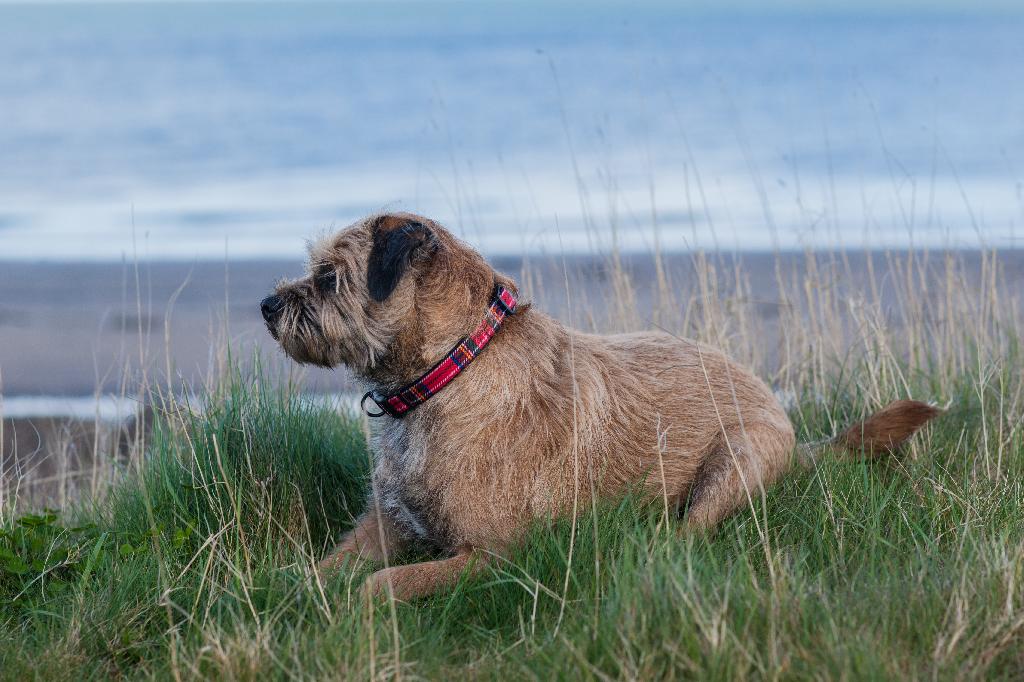
Physically, the Border Terrier is compact and sturdy, with a rectangular body shape and a rough, wiry coat. Its coat comes in various colors, including red, grizzle and tan, blue and tan, and others. The breed’s expressive eyes, small ears, and distinctive facial expression give it a charming and endearing appearance. Border Terriers typically weigh around 10 pounds and stand about 10 inches tall at the shoulder, making them one of the smaller terrier breeds.
In terms of temperament, Border Terriers are known for their affectionate and friendly nature. They are typically good with children and other pets, especially if socialized from a young age. Despite their small size, Border Terriers have a bold, confident demeanor and are often described as "big dogs in small bodies." They are intelligent and eager to please but can also be independent and stubborn, which can make training a challenge at times.
Border Terriers are generally easy to train, especially when positive reinforcement methods are used. However, they require consistent training to prevent undesirable behaviors, such as chasing small animals, due to their strong prey drive. They enjoy regular mental stimulation and physical activity, such as walks, playtime, or puzzle games, to keep them engaged.
The Border Terrier’s wiry coat requires regular grooming to prevent matting, and it benefits from occasional hand-stripping to maintain its texture and appearance. The breed is relatively low-maintenance compared to other terriers but still needs attention to its coat and overall care.
Overall, the Border Terrier is a loving, energetic, and intelligent breed that makes an excellent companion for active families or individuals. Its small size, friendly nature, and lively personality make it well-suited for both city and country living, as long as it receives the attention, training, and exercise it needs.
History
The Border Terrier originated in the rugged border country between England and Scotland, where farmers needed a small yet tough dog to help protect livestock from predators such as foxes. Dating back to the 18th century, these “border” terriers were bred to be agile enough to chase foxes and other vermin out of their dens, yet sturdy and determined in their pursuit. Their long legs—relative to other small terriers—enabled them to keep up with horses during foxhunts, while their small, flexible bodies allowed them to follow prey into tight spaces. Over time, local hunters and farmers came to value the dogs for their endurance, intelligence, and fearless demeanor despite their modest size.
By the late 19th and early 20th centuries, the Border Terrier’s reliable work ethic had caught the attention of foxhunts and sporting clubs throughout the region. The breed began to make appearances at dog shows, spurring greater interest in establishing breed standards. In 1920, the Kennel Club (UK) officially recognized the Border Terrier, marking a shift toward more formalized breeding programs. The breed’s popularity then began to spread beyond the borderlands, eventually reaching other parts of Europe and North America.
Even after this formal recognition, Border Terriers remained primarily working dogs for many years, continuing to serve on farms and foxhunts. However, their friendly and energetic nature soon earned them a place as beloved companions and family pets. The American Kennel Club (AKC) recognized the Border Terrier in 1930, and enthusiasts formed dedicated clubs to promote responsible breeding and preserve the breed’s distinctive characteristics. Today, the Border Terrier is celebrated worldwide for its blend of playful spirit, hardiness, and loyalty—qualities that trace back to its origins on the challenging terrain of the Anglo-Scottish border.
Appearance
Border Terriers are built for endurance and squeezing through tight places: a narrow, deep body that can be ‘spanned’ behind the shoulders, moderate bone, and enough leg to travel all day. The head is a hallmark—often described as ‘otter-like’—with a keen expression and small V-shaped drop ears.
The coat is a close-fitting, harsh, wiry jacket with a dense undercoat designed to shed weather and bramble. Typical colors include red, wheaten, grizzle and tan, and blue and tan. Many owners keep the outline natural-looking with light hand-stripping or careful tidying rather than heavy sculpting.
Colors
• Black & Red
• Black & Tan
• Black Grizzle
• Blue
• Blue & Tan
• Blue Grizzle
• Grizzle
• Grizzle & Tan
• Red
• Red Grizzle
• Red Grizzle & Tan
• Tan
• Wheaton
Health
Border Terriers are generally sturdy, but responsible breeding and screening still matter. Like many purebreds, they can be affected by inherited conditions; in the UK, DNA testing is available for spongiform leucoencephalomyelopathy (SLEM), a serious neurological disease, and prospective owners should ask breeders about test results and family history.
Maintain a lean body condition—these dogs are enthusiastic eaters and extra weight stresses joints and heart over time. Regular veterinary care, parasite prevention, and prompt attention to itching, GI upset, or exercise intolerance help catch issues early. When choosing a puppy, look for a breeder who emphasizes temperament, health testing, and lifelong support.
Care
Coat care is more about texture than length. A weekly comb-through to remove debris and prevent matting plus periodic hand-stripping (or a terrier-knowledgeable groomer) helps maintain the harsh, weather-resistant coat; clipping can soften the coat over time. Check ears, trim nails, and keep teeth brushed—small, active dogs still benefit from consistent dental care.
Borders do best with daily activity: brisk walks plus off-leash running in safe areas, scent games, and short training sessions. Because they were bred to chase and follow quarry, prioritize a secure fence and practice recall, but don’t assume recall will override a strong prey drive in the moment.
Training
Training a Border Terrier goes best when it’s upbeat, structured, and reward-based. They’re intelligent and often learn quickly, but they can be independent; repetition without variety usually leads to ‘selective hearing.’ Keep sessions short, end on success, and rotate rewards (food, toys, sniff breaks).
Start with foundation skills—name response, recall games, leash manners, and a reliable ‘leave it.’ Terriers thrive when they can use their nose, so classes or sports like agility and scent work can channel that intensity into teamwork. Management (gates, long lines, enrichment) is a practical part of training for this breed.
Temperament
A good Border Terrier is alert, upbeat, and game—bred to work independently yet remain biddable enough to function in a pack and around people. With their family they’re usually affectionate and friendly, often enjoying being close to their humans after they’ve had a chance to burn energy.
They can be bold with new situations and may test boundaries, especially in adolescence. Early socialization helps prevent over-excitability with small animals, and thoughtful introductions support harmony with other dogs. Like many terriers, they tend to be vocal when excited and can develop nuisance barking if under-stimulated.
Lifestyle
Border Terriers can adapt to city, suburb, or country life as long as they get enough daily movement and mental work. They’re small enough for many living situations, but they are not low-energy; a bored Border may dig, bark, or go looking for mischief.
They tend to enjoy being included—walks, errands, and family time—more than being left alone for long stretches. If your schedule includes frequent long workdays, plan for a midday walker, interactive enrichment, or dog sports on evenings/weekends to keep them balanced.
Ownership
The best Border Terrier homes are committed to management and enrichment: secure fencing, supervised outdoor time, and training that respects the breed’s instincts. Expect some level of prey drive and a willingness to investigate holes, scent trails, and squirrels; setting clear boundaries early prevents a lot of frustration.
When searching for a dog, prioritize ethical breeders or breed-savvy rescues that can match you with an individual temperament. Ask about health screening (including SLEM where applicable), early socialization practices, and what grooming approach the breeder recommends for coat maintenance.
Interesting Facts
- Developed in the border country between England and Scotland as a working terrier that could follow horses and go to ground.
- Distinctive ‘otter-like’ head and a narrow, deep body traditionally described as able to be “spanned” behind the shoulders.
- Harsh, wiry outer coat with a dense undercoat; often maintained with hand-stripping to preserve texture.
- UKC recognition: 1948.
- Common accepted colors include red, wheaten, grizzle and tan, and blue and tan.
- UK breeding guidance includes DNA testing availability for SLEM (spongiform leucoencephalomyelopathy).