
Boxer
Basics
The Boxer is a medium-sized, square-built working breed known for its athletic body, people-focused nature, and enthusiastic approach to life. Historically developed as a versatile utility and guardian type, the modern Boxer is most often a family companion—still alert and protective, but typically happiest when included in daily household activity.
Boxers are usually affectionate “shadow dogs” who want to be near their people. Their combination of strength, playfulness, and sensitivity makes them a great match for owners who enjoy training and exercise, and who can provide calm boundaries so the dog’s exuberance doesn’t turn into unruly behavior.
Description
The Boxer is a medium to large-sized, energetic, and playful breed known for its athletic build, intelligence, and loyal nature. Originating in Germany, the Boxer was initially bred as a hunting and working dog, used for tasks such as guarding, herding, and even as a messenger dog in wartime. Today, it is a popular family companion and versatile working breed.
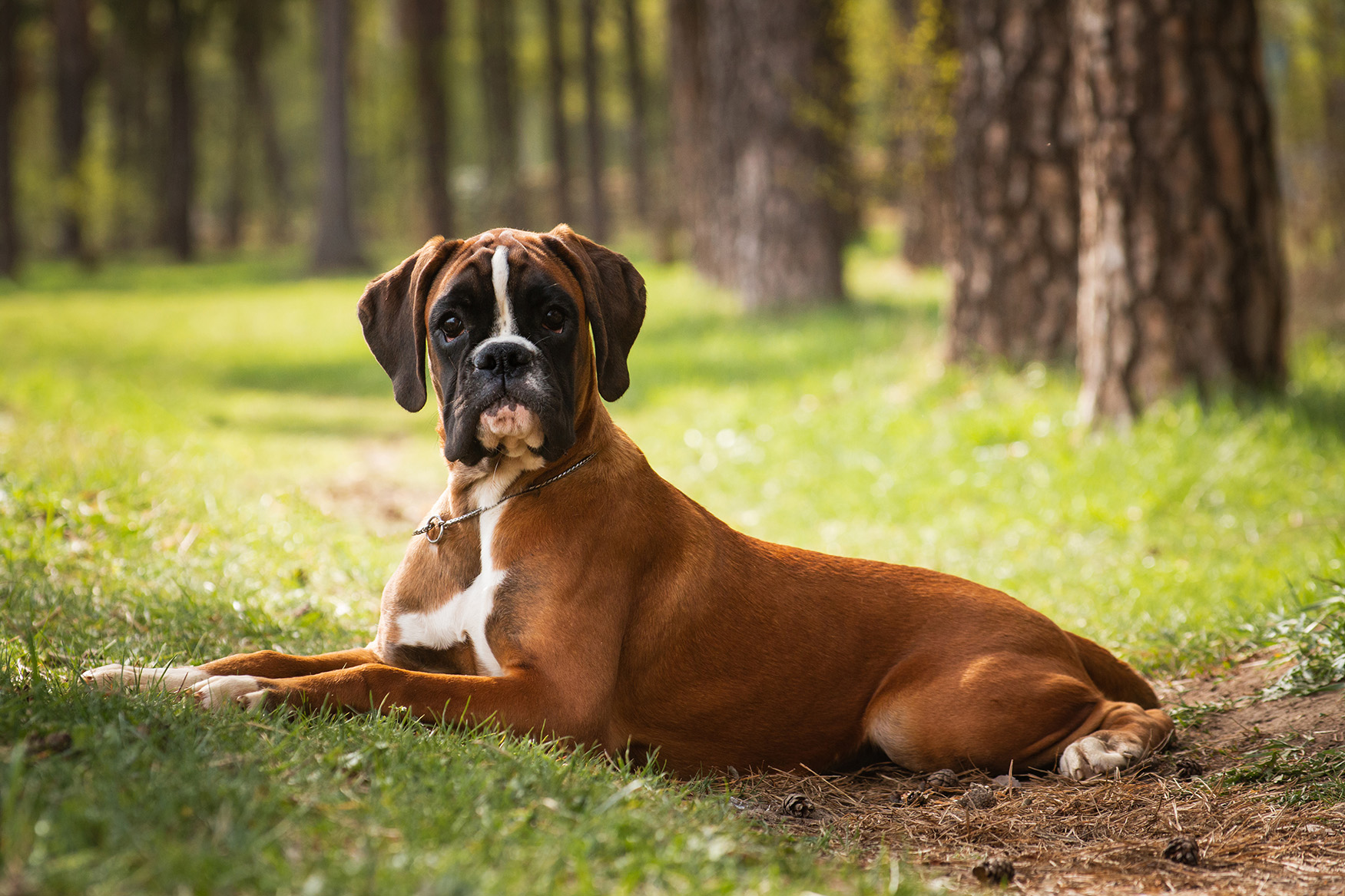
Physically, Boxers are muscular and well-proportioned, with a distinctive square-shaped head, strong jaws, and a broad chest. Their short, smooth coat typically comes in fawn, brindle, or white, often with black facial markings and white accents. Their expressive faces and playful demeanor make them particularly endearing.
Boxers are known for their high energy, friendly temperament, and strong bond with their families. They are affectionate, good with children, and protective, making them excellent family dogs and reliable watchdogs. However, their exuberant personality means they need plenty of exercise and mental stimulation to stay happy and well-behaved. Without proper outlets for their energy, they may develop undesirable behaviors.
Training a Boxer is typically rewarding, as they are intelligent and eager to please. However, they can also be strong-willed and excitable, so consistent, positive reinforcement training is essential. Early socialization helps ensure they are confident and well-mannered around strangers and other animals.
The breed thrives in active households where they can participate in physical activities such as walking, running, or playtime. Boxers are also known for their clownish behavior and love to entertain their families. They adapt well to various living situations but require regular exercise to prevent boredom.
Overall, the Boxer is a loving, energetic, and loyal breed, making it an excellent choice for active families or individuals who can provide the time, training, and exercise it needs. With the right care, the Boxer is a devoted and entertaining companion.
History
The Boxer is a medium-to-large working dog that originated in Germany toward the end of the 19th century. Its principal ancestor was the German *Bullenbeisser* (which literally translates to "bull biter"), a strong and agile mastiff-type breed used historically for big-game hunting. As the need for large hunting dogs waned, German breeders began crossing the Bullenbeisser with other breeds—including early Bulldogs—to create a more refined and versatile dog. The resulting canine combined the muscular build and tenacity of its forebears with a more tractable nature, setting the foundations for the modern Boxer.
Early enthusiasts of the emerging breed developed the first Boxer breed standard in Munich in the late 1890s. The breed started gaining traction thanks to its adaptability and trainability; Boxers served as utility dogs in police, military, and guard work, earning a reputation for courage and loyalty. The name “Boxer” likely stems from the breed’s playful tendency to use its front paws in a sparring-like motion. Though this is partly folklore, it reflects the dog’s energetic, sometimes clownish nature.
Boxers first arrived in the United States in the early 20th century. The American Kennel Club (AKC) officially recognized the breed in 1904. However, it wasn’t until after World War II—when soldiers returning from Europe brought Boxers back home—that the breed’s popularity truly soared. Their affectionate temperament, short coat, and expressive face made them appealing family companions as well as versatile working dogs.
Today, the Boxer remains a favorite across the globe, cherished for its exuberant personality, intelligence, and steadfast devotion to family. While they can still excel in protection and performance roles, most modern Boxers serve as beloved household pets. Yet, the breed’s athleticism and spirit hearken back to its robust Bullenbeisser heritage, reminding us of its original working roots.
Appearance
A Boxer should look like a well-conditioned athlete: smooth-coated, medium-sized, strongly muscled, and distinctly square in outline. The head is a defining feature, with a broad, deep muzzle and an undershot jaw that contributes to the breed’s characteristic expression.
Coat care is simple because the coat is short, glossy, and tight to the body. Common colors are fawn and brindle, often with white markings; many standards allow white markings up to a limited portion of the body. Overall, the impression is one of nobility and power without heaviness.
Colors
• Brindle
• Fawn
• White
Health
Boxers have several well-recognized inherited health concerns, so health screening is a major part of responsible breeding and ownership. Breed-club screening recommendations commonly include orthopedic evaluation (hips/elbows) and thyroid testing.
Cardiac screening is especially emphasized in Boxers, including evaluation for aortic/subaortic stenosis and Boxer cardiomyopathy; some programs recommend tools like Doppler echocardiography and Holter monitoring in breeding dogs. Many breeders also use DNA testing for conditions such as ARVC (arrhythmogenic right ventricular cardiomyopathy) and degenerative myelopathy. For pet owners, routine veterinary exams and early investigation of fainting episodes, exercise intolerance, coughing, or abnormal heart rhythms are important.
Care
The Boxer’s short coat is low-maintenance: routine brushing helps control shedding, and baths are usually only needed when the dog gets dirty. Pay extra attention to nails, teeth, and ear checks, and keep an eye on skin folds (if present) for irritation.
Because Boxers have a relatively short muzzle and an athletic, “all gas” personality, heat management matters. Avoid hard exercise in hot/humid weather, provide shade and water, and watch for overheating. Daily care is less about grooming time and more about meeting the breed’s exercise and supervision needs.
Training
Start training early, keep it positive, and make it part of everyday life. Boxers often learn quickly and respond well to clear rules, reward-based methods, and short sessions that keep things fun.
Focus on impulse control (waiting at doors, polite greetings, leash manners) as much as “commands,” since many Boxers are naturally bouncy and social. Ongoing training is also a great outlet for their energy—obedience, rally, scent games, agility foundations, and structured play all help shape a steady adult dog.
Temperament
Boxers are typically lively, loyal to their family, and confident, with a natural guarding instinct. They’re often friendly and silly at play, yet quick to take their “watchdog job” seriously when something seems off.
They tend to be biddable and enjoy working with their person, but they can also be impulsive if under-exercised or under-trained. A stable Boxer is even-tempered and self-assured—enthusiastic, not chaotic—so early socialization and consistent routines make a big difference.
Lifestyle
Boxers are high-energy, people-oriented dogs who do best when they get daily exercise plus real interaction. Long walks, play sessions, training games, and safe off-leash running (where appropriate) help prevent the classic Boxer “boredom behaviors” like jumping, chewing, and rowdy indoor zoomies.
They usually want to be inside with the family rather than living outdoors. A Boxer can adapt to apartment living if exercise needs are met, but they are rarely suited to a low-activity household or long days alone with minimal stimulation.
Ownership
A Boxer is a great fit for someone who wants an affectionate, athletic companion and is ready to invest time in training manners. Their strength and enthusiasm mean owners should be comfortable handling a powerful dog politely around guests, kids, and other dogs.
When choosing a Boxer, prioritize temperament and health screening. Work with breeders or rescues who can discuss cardiac evaluations and other recommended tests, and who match the dog to your lifestyle. Plan for ongoing training (especially adolescence) and be realistic about exercise, supervision, and heat safety.
Interesting Facts
- Medium-sized, square-built, smooth-coated “athlete” with strong bone and visible muscle.
- Typically fawn or brindle; white markings are common and accepted within limits in some standards.
- Known for being loyal and family-focused, with a playful personality and guarding instinct.
- Training should emphasize impulse control and polite greetings due to their natural exuberance.
- Breed health screening commonly highlights heart evaluations (including for aortic stenosis and Boxer cardiomyopathy) plus hips/elbows and thyroid.
- Short muzzle means heat management is important—Boxers can overheat quickly during hard exercise.