Braque du Bourbonnais
Basics
The Braque du Bourbonnais is a medium-sized French pointing dog (chien d’arrêt) developed in the Bourbonnais region for hunters who work on foot. In the field it’s bred to search with its head up for scent and to hold a steady, useful point; at home it’s typically described as gentle and affectionate, which is why many people like it as a family companion for a hunting household.
The modern breed nearly disappeared in the mid-20th century after overly strict selection goals (especially around coat color and very short tails) reduced numbers dramatically. A dedicated group of breeders restarted the population in the 1970s, and the breed is now established again as a versatile pointing dog.
Expect a dog that wants daily purpose: real outdoor work, structured exercise, and time with its people. This is not a “run once a week” breed—its best qualities show up when it can use its nose, stay engaged, and live as part of the family.
Description
The Braque du Bourbonnais is a versatile and affectionate pointing dog from France, known for its exceptional hunting skills and close bond with its family. This medium-sized breed has been prized since the 16th century for its ability to locate and retrieve game in a variety of terrains.
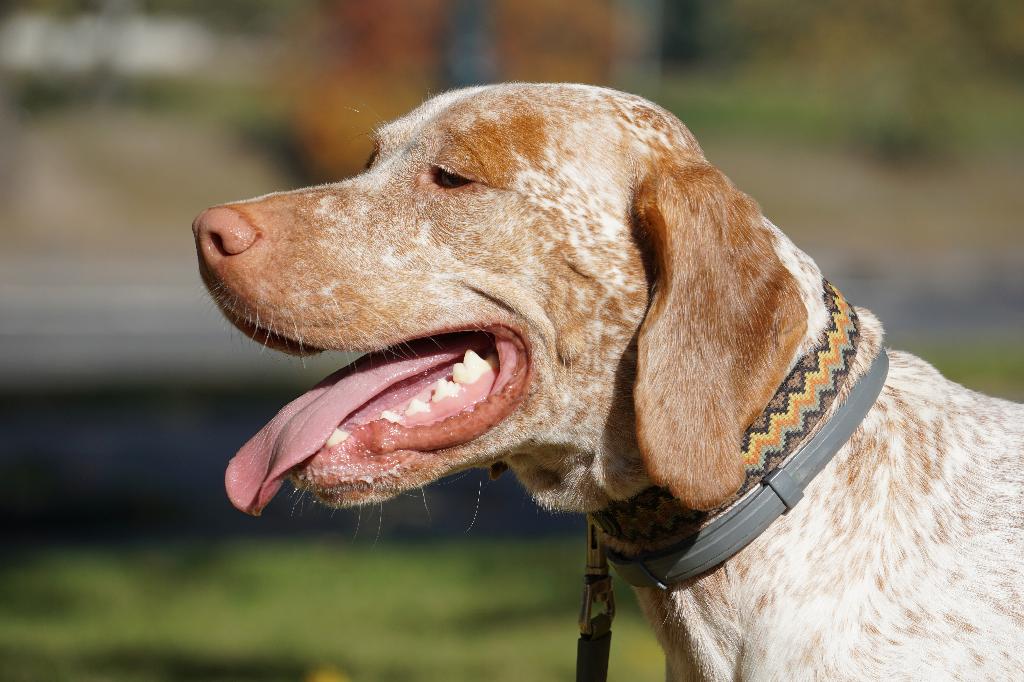
Physically, the Braque du Bourbonnais has a muscular, athletic build with a short, fine coat. Its coat is typically white with liver or fawn ticking, giving it a roan or speckled appearance. The breed’s distinctive short tail, often natural or docked, complements its streamlined, elegant look. Its expressive eyes and soft facial expression convey its gentle temperament.
The Braque du Bourbonnais is known for being loyal, intelligent, and adaptable. It forms strong bonds with its family, is typically good with children, and works well with other dogs. In the field, it is an enthusiastic and tireless hunter, showing both endurance and a keen nose for tracking.
Training this breed is usually straightforward, as it is intelligent and eager to please. Early socialization and positive reinforcement are key to shaping a well-mannered and confident dog. The breed thrives with regular physical activity and mental stimulation, making it an excellent choice for active families or hunters.
Overall, the Braque du Bourbonnais is a versatile, hardworking, and loving breed that excels both in hunting and as a devoted family companion. Its gentle temperament and adaptability make it a great match for owners who can meet its exercise and training needs.
History
The Braque du Bourbonnais is a pointing breed with deep roots in the Bourbonnais province of central France, where it has been cherished by local hunters for centuries. Historical references to this gundog date back to the 16th century, and it was historically renowned for its exceptional pointing ability, docile temperament, and a distinctive roan or speckled coat—often described as “faded lilac” or “peach blossom.” These traits made the Braque du Bourbonnais a favorite of rural hunters seeking a versatile companion for quail, partridge, and other upland game. Like other French pointing breeds, it evolved through selective breeding, emphasizing a strong nose, natural pointing instinct, and a biddable personality that would make it both effective in the field and amenable at home.
However, the breed faced a sharp decline in the early to mid-20th century. Various factors—ranging from world wars that reduced dog populations to shifting hunting practices—threatened its survival. Compounding these issues was the emphasis on an overly stringent coat standard in the breed’s early clubs, which caused many otherwise capable dogs to be excluded from the gene pool. By the 1960s, the Braque du Bourbonnais was on the brink of extinction, sustained only by a few scattered lines kept by dedicated French hunters.
Thankfully, revival efforts led by passionate breeders and enthusiasts gained momentum in the late 20th century. They broadened the breeding criteria while remaining true to the dog’s original working characteristics, allowing more dogs to be recognized as proper Braque du Bourbonnais. Through these concerted efforts, the breed regained numbers and regained its reputation as a skilled, affectionate gundog. International recognition followed, with kennel clubs like the Fédération Cynologique Internationale (FCI) including the Braque du Bourbonnais in its registers. Today, although still relatively uncommon compared to some other continental pointing breeds, it continues to win admirers worldwide for its gentle nature, keen hunting instincts, and historic ties to the rustic heartlands of France.
Appearance
The Braque du Bourbonnais is compact, muscular, and robust without being heavy, giving a sturdy yet somewhat elegant outline. Breed type is often described as “braccoid,” with a distinctive head shape sometimes called “pear-shaped,” and a balanced body where the length is about equal to (or slightly longer than) the height.
The coat is short, fine, and dense. Color is white with fine ticking/speckling ("mottling") in liver/brown or fawn tones; the overall look can read as lightly roaned, with only limited larger patches allowed.
Size is moderate: males are typically about 51–57 cm (20–22.5 in) at the withers and females about 48–55 cm (19–21.5 in). Some dogs are naturally bobtailed; where docking is restricted, a natural long tail is carried below the topline when standing.
Colors
• Chestnut
• Fawn
Health
The Braque du Bourbonnais is generally a hardy, rustic hunting breed, but like all purebred dogs it can be affected by inherited issues that responsible breeders screen for. Prospective owners should ask what health testing is performed in the breeding program and request documentation where applicable.
As an active pointing dog, it’s important to protect orthopedic health through good conditioning, maintaining a lean body condition, and avoiding excessive repetitive impact while the dog is still growing. Regular veterinary exams, parasite prevention, and dental care support long-term working ability.
Field work adds practical risks—cuts, foxtails/foreign bodies, ear irritation, and tick exposure—so owners should build a habit of post-hunt checks and prompt care for minor injuries before they become major problems.
Care
Coat care is straightforward. A weekly brush or grooming mitt usually removes dead hair and keeps the short coat tidy; more frequent brushing can help during seasonal shedding. Check ears regularly (especially for active field dogs) and keep nails trimmed to support sound movement.
This breed is athletic and compact, so conditioning matters. Provide daily activity that includes both aerobic exercise and nose work—long walks, off-leash running in safe areas, structured retrieves, and scent games. Field dogs should have their feet and skin checked after outings for burrs, cuts, and irritation.
Feed for lean muscle and adjust portions to workload; many individuals will happily overeat if allowed. Maintain a healthy body condition to reduce stress on joints and to support stamina during active seasons.
Training
Training should focus on channeling natural pointing and searching instincts into a cooperative hunting partner and a well-mannered companion. Start early with socialization, recall, leash skills, and calm house routines, then build steadiness and impulse control in gradually more distracting environments.
Most Braque du Bourbonnais respond best to upbeat, reward-based work: food, toys, and access to sniffing or retrieving can all be strong reinforcers. Keep sessions short and frequent, and prioritize clarity—this is an intelligent dog, but repetition without purpose can lead to checking out.
For hunting training, emphasize a systematic search pattern, reliable response to whistle/voice, and a solid “whoa/stand” foundation before adding pressure. Because many individuals are sensitive, avoid heavy-handed methods that can suppress drive or create worry in the field.
Temperament
In the home, the Braque du Bourbonnais is generally noted for being soft, affectionate, and people-oriented—more “close companion” than independent kennel dog. Many owners describe a calm, gentle demeanor indoors when the dog’s daily exercise and mental needs are met.
In hunting contexts, temperament shifts to focused intensity: the breed is expected to be passionate about game, adaptable across different terrain and quarry, and smart about using wind and scent. A confident, stable dog should show initiative while still working in cooperation with the handler.
Because they bond closely, they tend to do best with consistent routines and a handler who uses clear guidance rather than harsh corrections. They can become bored or unsettled if under-stimulated or left isolated for long periods.
Lifestyle
This breed is happiest in an active home that can provide daily exercise and meaningful engagement. A yard helps, but it isn’t a substitute for structured activity—most dogs still need real walks, training, and opportunities to use their nose.
They typically fit well into family life when given appropriate outlets, but they’re not ideal for owners who are away all day with little time for interaction. Many do best when they can be near their people, ride along, and participate in routines rather than being left to entertain themselves.
Because they’re bred for hunting on foot, their “sweet spot” is steady, moderate-to-high activity rather than nonstop intensity. The combination of field work plus calm off-switch at home is what many fans value most.
Ownership
Choose a Braque du Bourbonnais if you want a close-working pointing dog that can also be a gentle household companion. The best match is an owner who enjoys training, can offer daily exercise, and appreciates a dog that thrives on cooperation and proximity.
When evaluating breeders or rescues, look for stable temperaments, clear breeding goals (field ability and sound structure), and transparent health practices. Ask about how puppies are raised and socialized, what the parents are like in the house and in the field, and what support the breeder provides after placement.
Plan for the practical realities of an active sporting breed: time for training, secure areas for off-leash work, travel considerations, and a budget for veterinary care and quality nutrition. With that foundation, the breed can be an exceptionally rewarding partner.
Interesting Facts
- Origin: France (Bourbonnais region); classified by the FCI in Group 7 (pointing dogs).
- Purpose: a compact, foot-hunter’s pointing dog (chien d’arrêt) known for working cooperatively with a handler.
- Coat: short, fine, and dense; white base with finely speckled ticking in liver/brown or fawn.
- Size: typically ~19–22.5 in (48–57 cm) at the withers depending on sex.
- Tail: some dogs are naturally bobtailed; where docking is prohibited, a natural long tail is carried below the topline at rest.
- History note: the breed nearly vanished mid-century and was rebuilt by dedicated breeders starting in the 1970s.