
Briard
Basics
The Briard (Chien Berger de Brie) is an ancient French herding and guarding breed known for its rugged look, big heart, and independent working mind. Originally developed to manage and protect livestock, the Briard remains a true “thinking dog” that wants both a close bond with its people and meaningful daily activity.
In a home setting, Briards often thrive as companions who like to be near their family, but they are rarely a good fit for a hands-off routine. Their history as decision-making workers shows up as confidence and initiative—great qualities when guided well, challenging when rules are inconsistent.
Description
The Briard is a large, intelligent, and loyal herding dog from France, renowned for its versatility and protective nature. Originally bred to herd and guard sheep, the Briard is now a devoted family companion and capable working dog.
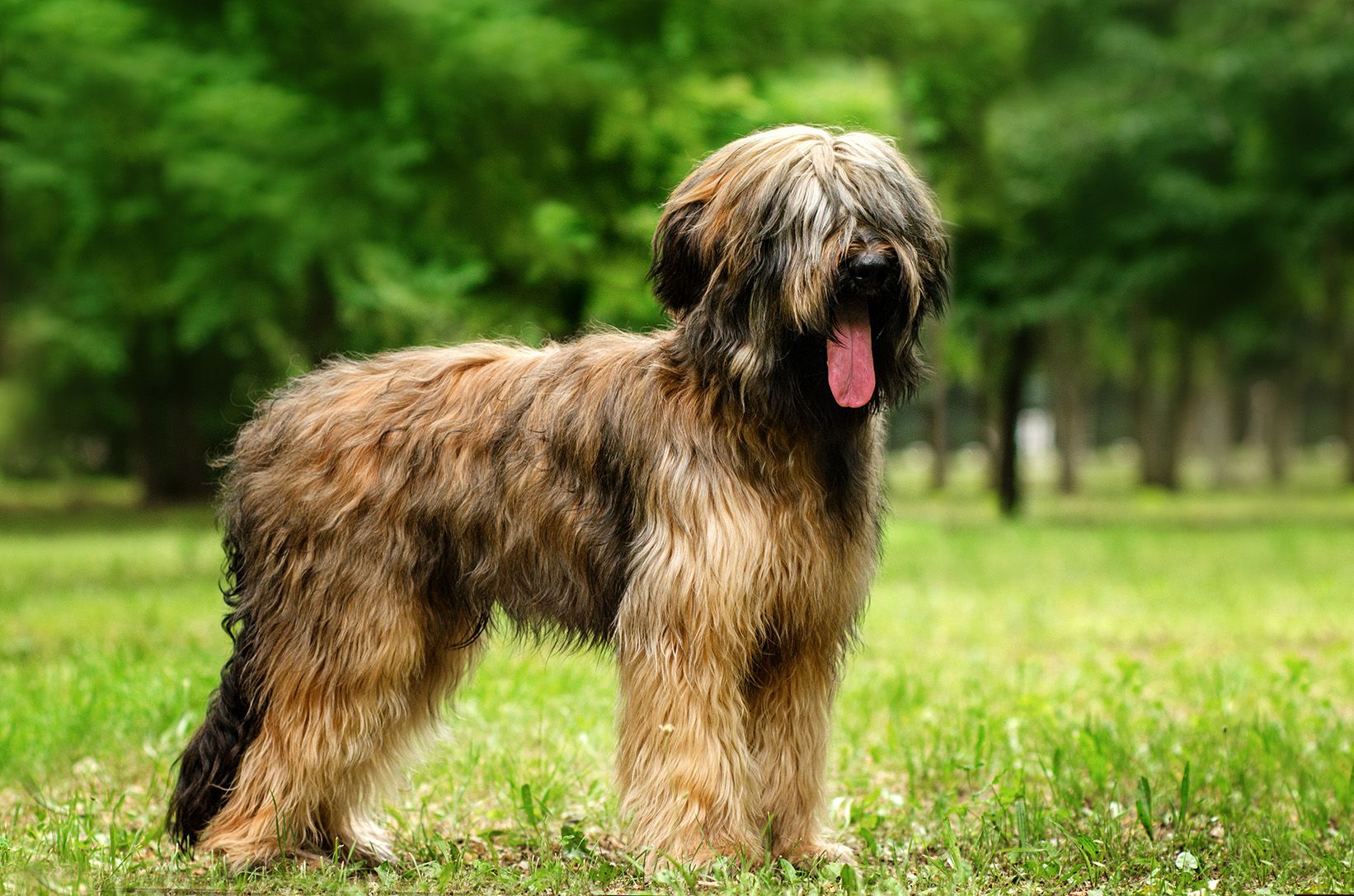
Physically, the Briard is robust and muscular with a distinctive long, wavy coat that provides protection in various weather conditions. Its coat comes in colors such as black, gray, or tawny. The breed is known for its expressive, dark eyes, often hidden by its shaggy fur, and a characteristic double dewclaw on each rear leg.
The Briard is affectionate, courageous, and highly devoted to its family. It is protective by nature, making it an excellent watchdog, but it is also gentle and playful with children. Though loving, the Briard can be independent and strong-willed, requiring consistent training and early socialization.
Training the Briard is rewarding due to its intelligence and eagerness to learn, though it needs a firm but kind handler. The breed thrives on mental stimulation and physical activity, excelling in obedience, agility, and herding tasks.
The Briard is best suited for active households, as it needs regular exercise and engagement to stay happy and well-behaved. Its dense coat requires regular grooming to prevent matting and maintain its appearance.
Overall, the Briard is a loyal, hardworking, and protective breed, ideal for families or individuals who can provide the exercise, training, and attention it needs. With the right care, it is a devoted and loving companion.
History
The Briard, also known in France as the Berger de Brie, is a centuries-old herding breed that hails from the Brie region just east of Paris. Though its precise origins are not fully documented, references to large, shaggy-haired French sheepdogs—likely forebears of the Briard—exist as far back as the Middle Ages. By the 18th and 19th centuries, such dogs were a familiar sight in the rural French countryside, where their intelligence, protective instincts, and weather-resistant coats made them indispensable in managing and guarding flocks of sheep. Early French writings and illustrations pay tribute to the breed’s endurance, describing dogs of Briard-like appearance diligently serving shepherds in the field.
Over time, the Briard secured an iconic status among French working dogs. Its aptitude for diverse tasks, from herding sheep to defending homesteads, meant it was employed extensively across various terrains and climates in France. During World War I, Briards gained additional recognition when the French military used them for messenger and medical assistance roles. Their keen senses and steady temperament made them well-suited to the chaos of the battlefield, assisting with finding wounded soldiers and carrying messages through treacherous conditions. These wartime efforts helped broaden the breed’s reputation beyond its pastoral roots.
In the 20th century, formal breed clubs and registries helped standardize the Briard’s appearance and temperament, leading to international recognition. The American Kennel Club (AKC) accepted the breed into its Herding Group in 1928, introducing the Briard to a wider circle of dog enthusiasts in the United States. Today, while many Briards enjoy life as family companions, they still carry the working instincts of their shepherding ancestors, excelling in tasks like obedience, herding trials, and search and rescue. Renowned for their loyalty, intelligence, and distinctive shaggy coats, Briards continue to stand as proud representatives of France’s rich canine heritage.
Appearance
Briards are medium-large, muscular, and well-proportioned with a distinctly rustic outline. Breed standards describe them as rugged and supple rather than heavy, with an effortless, ground-covering stride and an ability to turn quickly.
The coat is long and very dry, typically slightly wavy, with a fine, dense undercoat. Facial furnishings form a moustache, beard, and eyebrows that can lightly veil the eyes. A famous structural hallmark is the presence of double dewclaws on the hind legs, which many standards treat as essential to breed type.
Colors
• Black
• Black & Gray
• Black & Tawny
• Gray
• Tawny
• Tawny & Gray
• White
Health
Briards are often described as a relatively healthy breed, but they can have predictable risks seen in many medium-to-large working dogs. Hip dysplasia is one commonly discussed concern, so reputable breeders often document orthopedic evaluations.
Eye conditions are also noted in breed health discussions, and owners should take vision changes seriously and seek veterinary evaluation early. Like other deep-chested, athletic breeds, it’s also wise to learn the warning signs of bloat/GDV and to discuss prevention strategies with a veterinarian.
Care
Grooming is the price of admission. The long double coat needs routine line-brushing and combing to prevent mats, especially in high-friction areas (behind ears, armpits, groin, and along the legs). Many owners keep the coat tidy with careful trimming while maintaining a natural, functional look.
Beyond the coat, plan for regular nail care (including dewclaws), ear checks, and dental hygiene. Briards do best when they live as indoor family dogs with daily exercise, rather than being kept outdoors with minimal interaction.
Training
Briards usually learn quickly, but they respond best to training that respects their intelligence. Keep sessions short and purposeful, use reward-based methods, and avoid repetitive drilling—this breed tends to shut down or push back if training feels unfair or pointless.
Prioritize early socialization and real-life manners: calm greetings, leash skills, recall, and comfortable handling for grooming. Many Briards enjoy advanced outlets like herding-style work, tracking/scent games, obedience, and hiking—activities that let them “work with you,” not just exercise beside you.
Temperament
A good Briard is intelligent, lively, and generally fearless—neither timid nor needlessly aggressive. Many are affectionate and deeply loyal to the people they know, while staying reserved or cautious with strangers.
Because they were bred to work at a distance, Briards can show a streak of independence and may try to “organize” the household (including herding behaviors with kids). Early socialization, calm leadership, and plenty of constructive outlets help that instinct become a feature, not a problem.
Lifestyle
A Briard is happiest in a home where they get both physical exercise and mental work every day. Long walks, training games, structured play, and “jobs” like scent work or sport training help meet the breed’s need to think and move.
They generally prefer to be involved with their people and can struggle with long periods of isolation. A busy household can be a good fit if the dog is well-socialized and given clear rules, but owners should be ready to manage adolescent testing and the breed’s tendency to stay alert and opinionated.
Ownership
Briard ownership suits people who want a loyal partner with working instincts—and who are prepared for coat maintenance and consistent training. The breed’s size, strength, and protective tendencies mean it’s important to develop excellent manners early and to keep socialization going through adulthood.
When choosing a Briard, prioritize stable temperament and transparent health practices. Ask breeders about orthopedic and eye screening, and make sure you’re comfortable with the ongoing grooming workload (either DIY or professional). With the right match, Briards can be devoted family dogs and impressive, versatile teammates.
Interesting Facts
- Also known as the Chien Berger de Brie, an old French herding and guarding breed.
- Breed standards emphasize a rugged, supple build and an effortless, ground-covering gait.
- Long, very dry coat with a dense undercoat; moustache/beard/eyebrows are typical.
- Double dewclaws on the hind legs are a hallmark feature in many standards.
- Often reserved with strangers but loyal and affectionate with family; can show herding/guardian instincts.
- Commonly discussed health priorities include hips and eyes, plus awareness of bloat/GDV risks.