
Cairn Terrier
Basics
The Cairn Terrier is a small, tough “earthdog” developed in Scotland to hunt and dispatch vermin among rocky cairns and on the Highland moors. It’s one of the native Scottish terrier breeds, sharing early roots with several other Scottish terriers before becoming its own distinct type.
Modern Cairns are often cheerful, busy little companions: personable at home, alert as watchdogs, and always interested in what’s happening around them. They’re at their best with owners who enjoy an active, curious dog that wants to participate rather than just lounge.
Description
The Cairn Terrier is one of the oldest terrier breeds, originating in the rugged Highlands and Isle of Skye in Scotland. Bred to work independently in harsh conditions, the Cairn was developed to hunt vermin that hid among rock piles, stone walls, and cairns—man-made stacks of stones used as landmarks. This demanding work shaped a small but exceptionally tough dog with keen senses, quick reflexes, and fearless determination.
Compact and sturdy, the Cairn Terrier is built for agility and endurance rather than speed alone. Its harsh, weather-resistant coat and strong forequarters allowed it to dig, squeeze into tight spaces, and confront quarry underground. True to terrier form, the breed is alert, bold, and persistent, showing little hesitation when faced with a challenge far larger than itself.
In temperament, the Cairn Terrier is lively, intelligent, and confident, often displaying a cheerful curiosity alongside classic terrier independence. It tends to be affectionate with its family while remaining alert and watchful, making it both a capable working dog and an engaging companion. Consistent training and mental stimulation are important, as the breed’s intelligence and problem-solving instincts can quickly turn into mischief if underutilized.
Today, the Cairn Terrier is best known as a companion and show dog, but it retains strong working instincts and excels in activities such as earthdog trials, barn hunt, and agility. Its enduring popularity comes from its blend of hardiness, character, and adaptability—a small dog with a big personality shaped by centuries of practical, no-nonsense work in unforgiving terrain.
History
The Cairn Terrier’s history reaches back several centuries to the Scottish Highlands and the Isle of Skye, where it developed as a working farm and hunting dog. Early Cairns were not considered a distinct breed but were grouped among the small, rough-coated terriers used to control vermin. Their primary task was to hunt foxes, otters, and rodents that hid among stone piles—known as cairns—from which the breed takes its name.
These early terriers were bred strictly for function rather than appearance. Farmers and gamekeepers valued dogs that were tough, agile, and fearless enough to go to ground, flush quarry, and confront it in confined spaces. Coat color, size variations, and ear shape were of little concern as long as the dog could work all day in cold, wet, and rocky conditions. This practical selection produced a hardy and resilient terrier with strong digging instincts and remarkable determination.
In the late 19th and early 20th centuries, as dog shows became popular, efforts were made to separate the various Scottish terriers into distinct breeds. The Cairn Terrier was formally recognized as its own breed in 1912, distinguished from related breeds such as the Scottish Terrier and West Highland White Terrier. Even with formal recognition, early breed supporters emphasized preserving the Cairn’s working ability and natural, rugged character.
Today, the Cairn Terrier is best known as a companion dog, but its history as a true working earth dog remains central to its identity. The breed’s confidence, intelligence, and toughness are direct reflections of its origins, shaped by generations of practical use in one of the most demanding environments in Britain.
Appearance
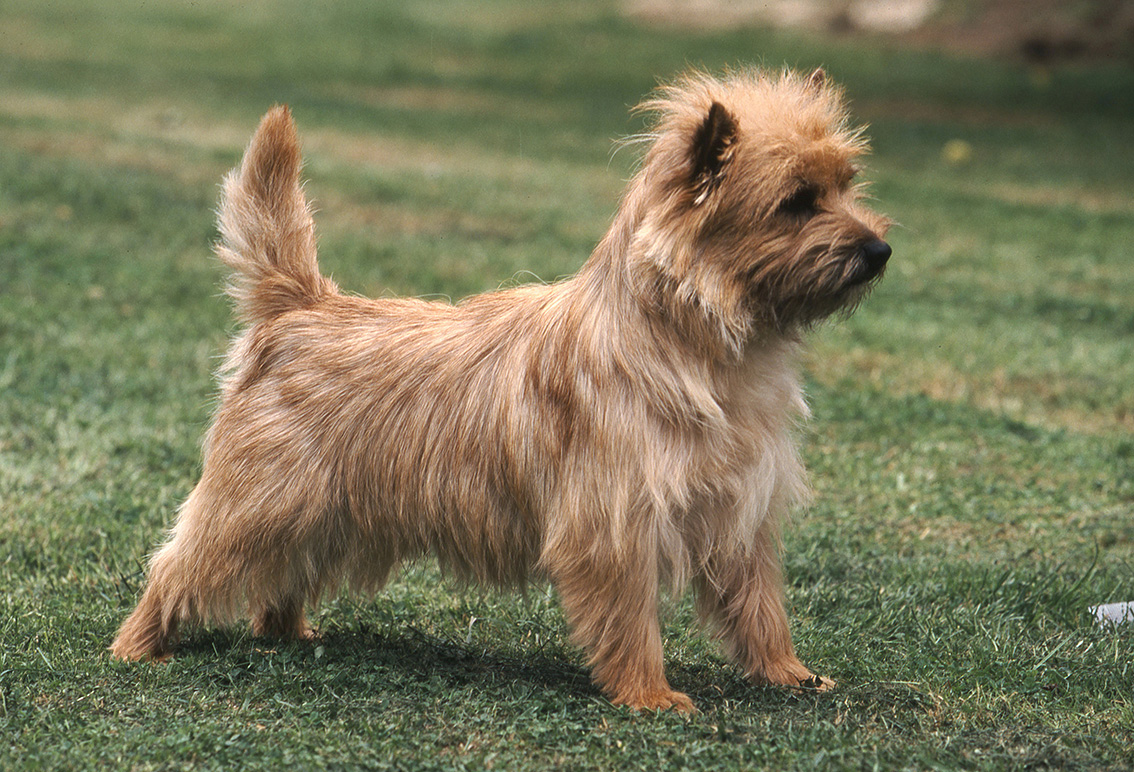
Cairn Terriers are compact, sturdy, and rugged rather than refined—built to squeeze into tight spaces and work in rough terrain. They carry a confident terrier posture with a foxlike expression, small ears, and a tail that’s typically carried gaily (but not curled over the back).
The coat is a key feature: a harsh, weather-resistant outer coat with a softer undercoat. Coat colors can vary widely (often including wheaten, red, brindle, gray, or cream shades), and the natural “shaggy” look is part of the breed’s charm.
Colors
• Black
• Black Brindle
• Brindle
• Cream
• Cream Brindle
• Gray
• Gray Brindle
• Red
• Red Brindle
• Red Wheaten
• Silver
• Silver Brindle
• Silver Wheaten
• Wheaten Brindle
• Wheaton
Health
Cairn Terriers are generally robust, but responsible breeding and screening still matter. Kennel-club guidance commonly recommends routine eye screening for breeding dogs, and owners should choose breeders who are transparent about health history and testing.
For day-to-day health, keep a Cairn lean, stay on top of dental care, and monitor skin/coat and ears—especially if the dog spends time outdoors in brush or tall grass. Regular veterinary checkups help catch issues early and keep an active terrier feeling good.
Care
Cairn grooming is more about consistency than complexity. Regular brushing and combing helps prevent mats, and many owners maintain the coat with hand-stripping or careful trimming to preserve the harsh texture; ear, nail, and dental care should be routine.
Exercise needs are moderate but real: daily walks plus play and training keep most Cairns content. Because many love to dig and explore, secure fencing and supervised yard time can prevent landscaping “projects” and unexpected escapes.
Training
Cairns are smart and learn quickly, but they do best with positive, engaging training rather than repetitive drilling. Short sessions, clear cues, and rewards that matter to the dog (treats, toys, or a chance to sniff) help build reliability.
Focus early on recall, impulse control, and polite leash skills—prey drive and terrier curiosity can make outdoor distractions intense. Many Cairns enjoy activities like rally, agility foundations, and scent games, which fit their quick brains and busy bodies.
Temperament
Cairns are typically described as happy, curious, and alert. They tend to be affectionate with their people, entertaining in their day-to-day antics, and quick to notice (and comment on) anything unusual.
Like most terriers, they can be independent and persistent, especially when something moves, squeaks, or smells interesting. Early socialization, clear boundaries, and giving them appropriate outlets for digging/chasing instincts help keep that bold personality fun rather than frustrating.
Lifestyle
Cairns can adapt to many living situations, including smaller homes, as long as they get daily exercise and attention. They generally enjoy being near their people and can become noisy or mischievous if bored or left to self-entertain.
A terrier-friendly lifestyle helps: safe chew outlets, training games, and clear rules about barking and digging. Households that enjoy walks, light hikes, and interactive play often find the Cairn a great match.
Ownership
Choosing a Cairn Terrier is choosing terrier traits on purpose: confident, inquisitive, sometimes stubborn, and often hilarious. The payoff is a lively companion that can be a fantastic small-dog partner for people who enjoy training and interaction.
Look for breeders and breed-club resources that emphasize preservation of the old working terrier type and stable temperament. If adopting, terrier-savvy rescues and honest foster notes can help you select a dog whose energy level and social comfort fit your household.
Interesting Facts
• Native Scottish terrier developed to hunt vermin among rocky “cairns” in the Highlands and Isle of Skye.
• Known for being happy, busy, curious, and alert—often an enthusiastic watchdog.
• Harsh, weather-resistant double coat; grooming focuses on preventing mats and maintaining texture.
• Many love to dig and explore, so secure fencing and supervised yard time matter.
• Terrier instincts can include a strong chase drive; early recall and impulse-control training are key.
• Breed-club/kennel-club health guidance commonly includes routine eye screening for breeding dogs.