
Cane Corso
Basics
The Cane Corso is a large, athletic Italian mastiff-type dog developed as a powerful farm and property guardian. Today, the breed is best known for being smart, trainable, and intensely devoted to its people—paired with a naturally protective instinct.
Because a Corso’s size and confidence amplify both good and bad habits, this breed is usually best in experienced hands. Early socialization, clear house rules, and ongoing training aren’t optional; they’re what turns a strong guardian into a stable, trustworthy companion.
Description
The Cane Corso is a powerful and ancient Italian mastiff breed with roots tracing back to the Roman Empire. Its ancestors were the *Canis Pugnax*, large Molosser dogs used by the Romans as war dogs and guardians. These early dogs were prized for their strength, courage, and loyalty, serving in battles and protecting their handlers. As the Roman Empire declined, the *Canis Pugnax* evolved to adapt to more utilitarian roles, such as guarding estates, hunting large game, and assisting in agricultural work. The name "Cane Corso" is derived from the Latin *cohors,* meaning "guardian" or "protector," reflecting the breed’s historical role as a guardian of livestock and property.
Throughout the Middle Ages and Renaissance, the Cane Corso was a fixture in rural Italy, particularly in the southern regions, where it was a versatile working dog. It excelled at hunting wild boar and other large game, as well as herding cattle and guarding farms. Despite its capabilities, the breed’s population began to decline in the 20th century due to industrialization and changes in agricultural practices. By the 1970s, the Cane Corso was on the brink of extinction, with only a few remaining in remote areas of Italy.
Dedicated breeders and enthusiasts undertook efforts to revive the Cane Corso in the late 20th century. These efforts focused on preserving the breed’s traditional traits of strength, intelligence, and loyalty while standardizing its appearance. The Cane Corso was officially recognized by the Italian Kennel Club (ENCI) in 1994 and later by the American Kennel Club (AKC) in 2010, further cementing its place as a beloved breed internationally.
Today, the Cane Corso is celebrated for its imposing presence, protective instincts, and gentle nature with its family. While it remains a capable working dog, it has also become a cherished companion for those who appreciate its intelligence and devotion. Its rich history, spanning from Roman war dogs to modern-day guardians, reflects the breed’s enduring strength and adaptability.
History
The Cane Corso is a majestic and powerful breed of dog with a rich history that dates back to ancient times. This Italian Mastiff traces its origins to the Roman Empire, where its ancestors were bred for their strength, courage, and versatility. The name "Cane Corso" is derived from the Latin *"cohors,"* meaning "guardian" or "protector," reflecting the breed's role as a guardian of property, livestock, and families. These dogs were often used in war and hunting large game, including wild boar, demonstrating their fearlessness and tenacity.
Following the fall of the Roman Empire, the Cane Corso adapted to the changing needs of rural Italian communities. They became invaluable working dogs, assisting farmers by herding cattle, guarding estates, and even pulling carts. The breed's adaptability and loyalty made it an indispensable part of rural life in southern Italy, particularly in regions like Apulia and Basilicata. Despite their critical role in agricultural communities, the breed's numbers began to dwindle in the 20th century due to the mechanization of farming and changes in rural lifestyles.
By the mid-20th century, the Cane Corso was on the brink of extinction. However, dedicated breed enthusiasts in Italy recognized the need to preserve this ancient lineage. In the 1970s, efforts were launched to revive the breed through careful breeding programs that adhered to traditional standards. These efforts proved successful, and the Cane Corso began to regain its popularity both in Italy and internationally.
In 1996, the Cane Corso was officially recognized by the Italian Kennel Club, and in 2010, the American Kennel Club (AKC) granted it full recognition. Today, the Cane Corso is celebrated worldwide for its intelligence, loyalty, and imposing presence. While it remains a capable working dog, the breed has also become a beloved companion and protector in family settings. Its enduring legacy is a testament to its remarkable qualities and the dedication of those who have worked to preserve this historic breed.
Appearance
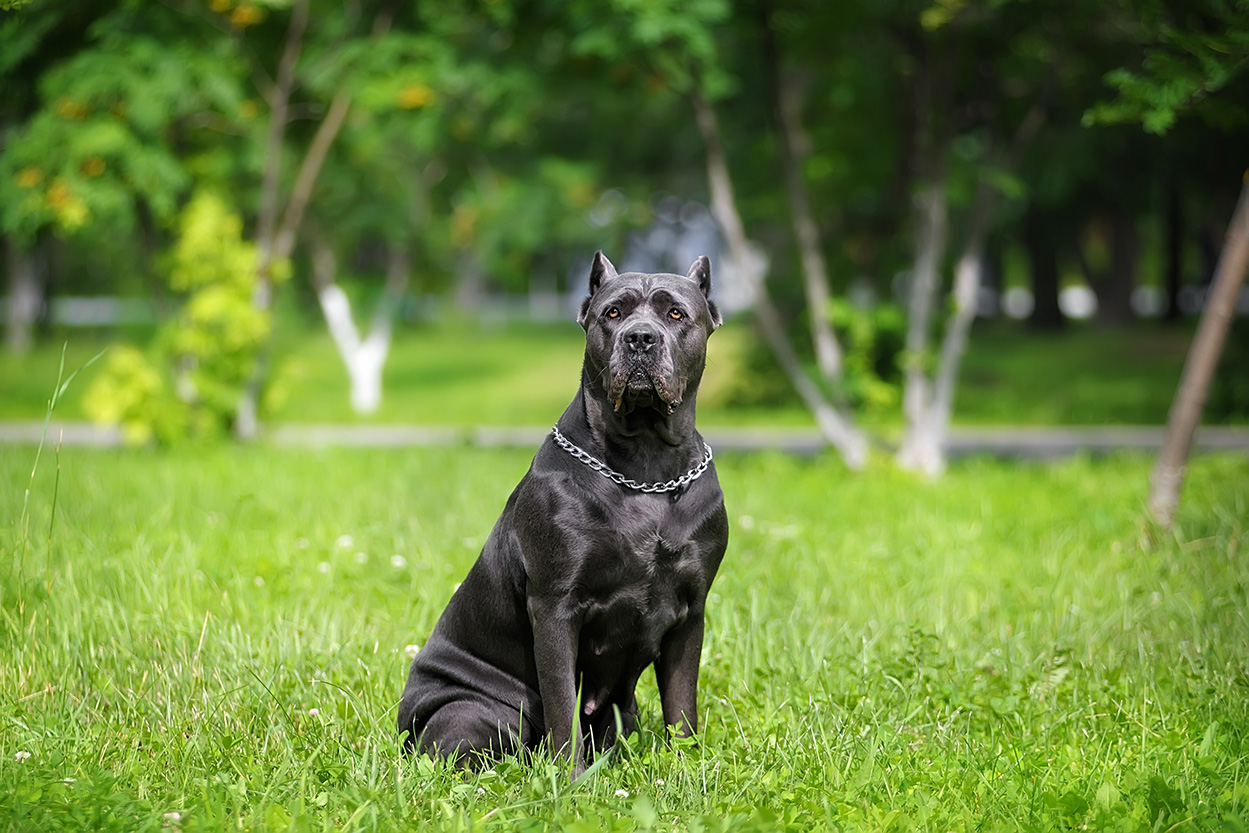
A Cane Corso is imposing without being bulky: muscular, balanced, and built to move with purpose. The head is broad with a strong muzzle, and the expression is typically alert and serious—this is a dog that looks like it means business.
The coat is short, dense, and low-maintenance, commonly seen in black, shades of gray, and fawn/red tones (often with brindling). While they’re not heavy coat shedders compared with double-coated breeds, they still shed year-round and benefit from routine brushing to keep the skin and coat healthy.
Colors
• Black
• Black Brindle
• Chestnut Brindle
• Fawn
• Gray
• Gray Brindle
• Red
Health
Cane Corsos are generally robust, but they share many health considerations common to large, deep-chested breeds. Owners should be alert to orthopedic wear-and-tear, keep the dog lean and well-conditioned, and discuss feeding/exercise routines with a veterinarian to reduce avoidable stress on joints.
When buying a puppy, choose breeders who document health testing and make temperament a priority. In a guardian breed, stability and soundness are just as important as looks, and responsible breeding practices are the best “health plan” you can purchase up front.
Care
Basic grooming is straightforward: weekly brushing, occasional baths, nail trims, and regular ear and dental care. Because they’re powerful dogs with heavy heads and bodies, owners should also prioritize good footing at home and safe exercise surfaces to reduce strain and injury risk.
Daily exercise should include both movement and mental work. A Corso that only "paces the yard" is often under-stimulated; structured walks, training, and purposeful games tend to produce a calmer, more manageable dog.
Training
Training should begin immediately and focus on impulse control, leash manners, and polite behavior around people and other dogs. Corsos can learn quickly, but they need a handler who is consistent and calm—harsh methods often create conflict, while wishy-washy handling creates a dog that makes its own rules.
Socialization is not about forcing friendliness; it’s about teaching neutrality. Controlled introductions, confident handling, and lots of practice with "place," "leave it," "wait," and a reliable recall (plus strong management when off-leash isn’t appropriate) are key skills for living safely with this breed.
Temperament
Well-bred, well-raised Corsos are typically steady with family, observant in new situations, and naturally suspicious of threats rather than randomly reactive. Many are affectionate at home, but they tend not to be “everyone’s best friend,” especially with unfamiliar visitors.
They usually do best with consistent leadership and calm routines. Without training and thoughtful exposure to people and environments, their guarding instincts can tip into over-protectiveness—so temperament management starts with socialization, boundaries, and teaching the dog how to relax.
Lifestyle
This breed typically thrives in a home that provides space, structure, and a confident routine. They can adapt to many climates, but they don’t do well as an "outside dog"—they want to be close to their people and to know what’s happening on their territory.
A Corso is also a management lifestyle: secure fencing, controlled access to doors and visitors, and clear rules about greetings. If you want a dog that welcomes everyone and needs minimal oversight, a Cane Corso is usually the wrong fit.
Ownership
Owning a Cane Corso carries real responsibility because of the dog’s power and guarding instincts. Plan for ongoing training (not a one-time puppy class), strong equipment, and a clear strategy for visitors, contractors, and public outings.
The best matches are owners who enjoy structure: consistent routines, boundaries, and proactive socialization. If you can provide that, the payoff can be an exceptionally loyal, stable companion and a serious home protector; if you can’t, it’s better to choose a breed with less guardian intensity.
Interesting Facts
• Large Italian mastiff-type guardian historically used for farm and property protection.
• Intelligent and trainable, but best suited to experienced owners.
• Naturally protective; early socialization and neutrality training are essential.
• Short, dense coat with modest grooming needs.
• Requires secure containment and structured routines around visitors.
• A lean, well-conditioned Corso is typically easier to live with and healthier long-term.