Cavachon
Basics
The Cavachon is a small companion dog created by crossing the Cavalier King Charles Spaniel with the Bichon Frise. Because it’s a mixed breed (sometimes first‑generation, sometimes bred back to a parent breed, and sometimes Cavachon-to-Cavachon), adults can vary quite a bit in size, coat type, and overall “look.”
Most Cavachons are bred for an easygoing, people-focused temperament and an adaptable household fit. They typically do best in a home that treats them like part of the daily routine rather than a dog that’s left alone for long stretches.
Description
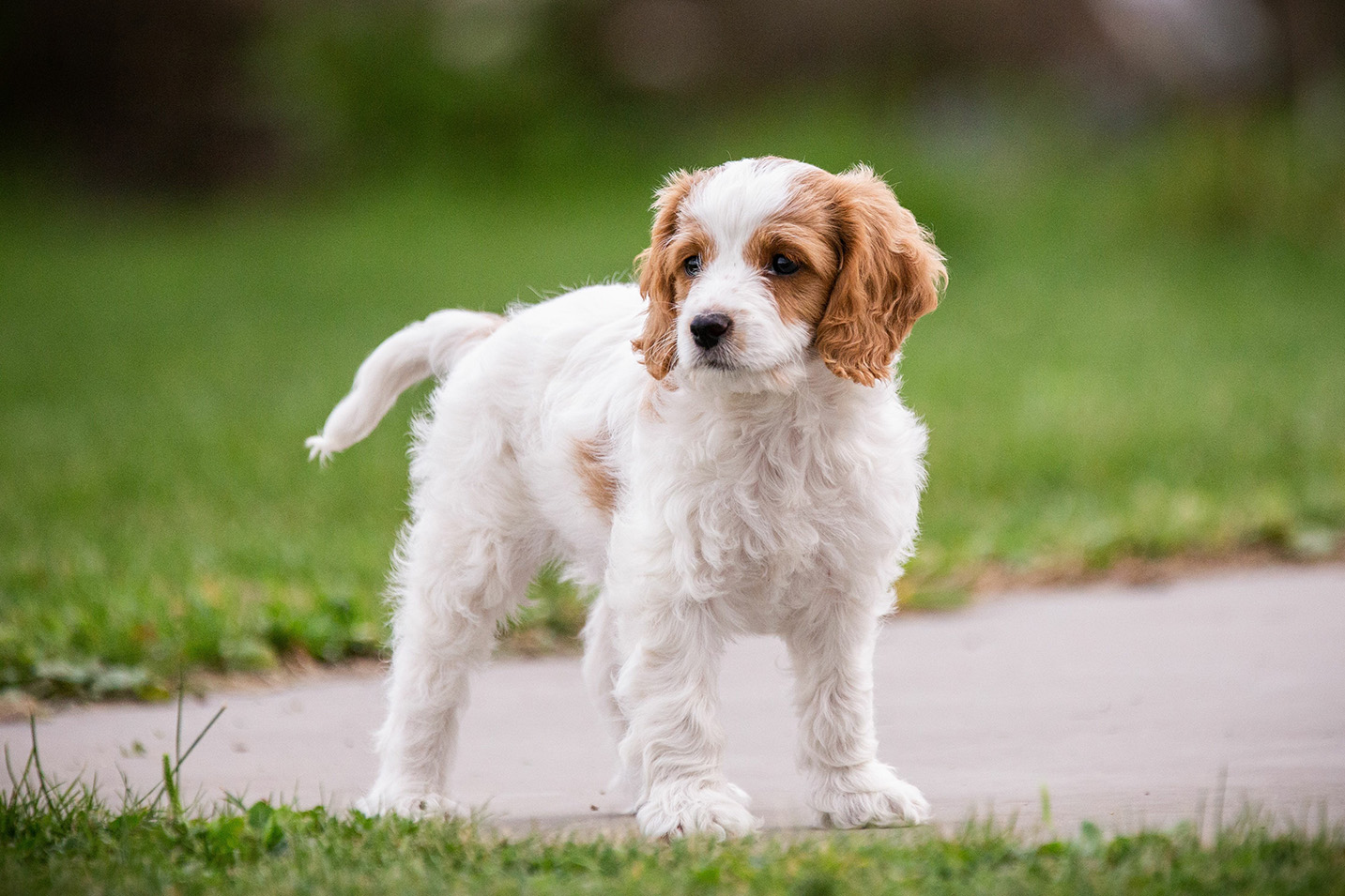
The Cavachon is a delightful hybrid dog breed, resulting from a cross between a Cavalier King Charles Spaniel and a Bichon Frise. Known for their affectionate nature, playful demeanor, and adorable appearance, Cavachons have quickly gained popularity among dog lovers. Typically weighing between 12 and 20 pounds and standing 12 to 13 inches tall, they are small, compact dogs that make excellent companions for families, singles, and seniors alike.
One of the Cavachon’s most appealing features is its soft, wavy or curly coat, which is typically low-shedding and hypoallergenic, making it a good choice for allergy sufferers. Their coats come in a variety of colors, including white, apricot, cream, and combinations of these with tan or black markings. With their expressive dark eyes, floppy ears, and cheerful expression, Cavachons are undeniably endearing and exude charm wherever they go.
Cavachons inherit the best traits from their parent breeds. From the Cavalier King Charles Spaniel, they gain a loving and gentle temperament, while the Bichon Frise contributes a playful, lively personality and hypoallergenic coat. Cavachons are highly social dogs that thrive on human interaction and enjoy being part of family activities. They are great with children and other pets, making them a versatile choice for households of all types.
These dogs are moderately active and enjoy daily walks, interactive play, and cuddling on the couch. Their intelligence and eagerness to please make them relatively easy to train, though their gentle nature benefits from positive reinforcement methods. Cavachons are adaptable and can thrive in various living environments, from apartments to larger homes, as long as they receive plenty of love and attention.
With their combination of beauty, intelligence, and a loving temperament, Cavachons have become a cherished companion for dog lovers seeking a small, affectionate, and low-maintenance pet. Their friendly nature and adaptability make them an excellent choice for a wide range of lifestyles.
History
The Cavachon is a relatively modern hybrid breed that originated in the United States in the late 20th century or early 21st century. Developed as part of the growing trend of designer dogs, the Cavachon was bred to combine the best traits of two beloved purebred parent breeds: the Cavalier King Charles Spaniel and the Bichon Frise. Breeders aimed to create a small, hypoallergenic companion dog with a friendly temperament and an adorable appearance, making it an appealing choice for families, singles, and seniors alike.
The parent breeds of the Cavachon have rich and distinct histories. The Cavalier King Charles Spaniel is a centuries-old breed associated with European royalty, known for its gentle and affectionate nature. The Bichon Frise, on the other hand, has Mediterranean origins and gained fame as a playful and cheerful companion to both sailors and nobility. By blending these two breeds, the Cavachon was designed to inherit the Cavalier’s loving personality and the Bichon’s hypoallergenic, low-shedding coat.
Since its development, the Cavachon has gained significant popularity in the United States and other countries for its adaptability and charm. While not recognized as a purebred by major kennel clubs like the American Kennel Club (AKC), the Cavachon is celebrated in hybrid dog registries and by dog lovers for its unique combination of traits. Its friendly nature, moderate size, and low-maintenance grooming requirements make it a versatile and desirable companion for a variety of households.
Today, the Cavachon continues to grow in popularity, loved for its endearing personality and suitability as a family pet or companion for individuals of all ages. Its development reflects the modern demand for dogs that fit into diverse lifestyles while maintaining the best qualities of its parent breeds. The Cavachon’s rise in popularity is a testament to its winning combination of beauty, intelligence, and affectionate nature.
Appearance
Cavachons are usually small, with a compact, sturdy build and a soft expression. They often inherit the Cavalier’s large, round eyes and feathered ears, paired with the Bichon’s plush coat texture; coats can be wavy, curly, or somewhere in between.
Color and markings vary widely because there is no single written breed standard. You’ll commonly see cream/white, apricot, tan, sable, or multi-color patterns, and the coat tends to be medium length with a “teddy bear” style when trimmed.
Colors
• Apricot
• Black
• Blenheim
• Brown
• Cream
• Piebald
• Red
• Sable
• Tricolored
• White
Health
As a crossbreed, a Cavachon can inherit health risks seen in either parent breed, and the mix doesn’t guarantee freedom from genetic issues. Responsible breeding and early veterinary guidance make a big difference.
Common concerns to discuss with your veterinarian include heart disease risks associated with Cavaliers (notably mitral valve disease), orthopedic issues like patellar luxation, allergies/skin irritation, ear infections (especially with floppy ears and hair in the ear canal), and dental disease typical of small dogs. Ask breeders about health testing in the parent dogs and keep routine checkups on a consistent schedule.
Care
Plan on regular coat maintenance. Frequent brushing helps prevent mats, and most owners schedule routine grooming (including trimming around the eyes, feet, and sanitary areas). Keep ears clean and dry, and stay on top of dental care—small dogs are prone to tartar buildup.
Exercise needs are usually moderate: daily walks plus indoor play and short training games tend to be enough. A consistent feeding plan and portion control matter, since small companion breeds can gain weight quickly if treats and table scraps add up.
Training
Cavachons often respond well to gentle, reward-based training. Keep sessions short and upbeat, and focus early on basic cues, polite greeting, and handling exercises (brushing, nail trims, ear checks) so grooming is easier later.
House-training can be straightforward but may take patience—small dogs do best with a tight schedule, lots of reinforcement, and proactive management. If barking or separation stress shows up, address it early with gradual alone-time practice and enrichment rather than punishment.
Temperament
Many Cavachons are affectionate “shadow dogs” that prefer to be near their people. They’re often friendly with visitors and can be excellent family companions when they’re well socialized and handled gently.
Expect a playful streak and a bit of alert barking—especially if they lean toward the spaniel side. Because they bond closely, some Cavachons struggle with separation or boredom; calm, gradual independence training helps prevent clinginess and nuisance barking.
Lifestyle
Cavachons are typically adaptable to apartments or houses as long as they get daily attention and a predictable routine. They’re companion-oriented and generally happiest when someone is home often or when they can go along for errands and visits.
They usually enjoy moderate activity—walks, gentle fetch, puzzle toys, and learning tricks. Because they’re small and people-focused, supervise play with very young children and teach kids calm handling to avoid accidental bumps or falls.
Ownership
If you’re considering a Cavachon, prioritize where the puppy (or adult dog) comes from. Look for transparent health history on both parent breeds, a clean living environment, early socialization, and a willingness to match puppies to appropriate homes rather than “first come, first served.”
Budget for ongoing grooming, training, and routine veterinary care, and be realistic about time at home—this is a breed mix that often dislikes long solo days. Adoption through breed-savvy rescues can be a great option, especially if you want an adult dog with a known temperament.
Interesting Facts
- Developed in North America in the 1990s as a small companion cross of Cavalier King Charles Spaniel × Bichon Frise.
- Because it’s a mixed breed, appearance (size, coat texture, color) can vary widely even within the same litter.
- Often described as affectionate and people-oriented, with a tendency to follow family members from room to room.
- Coat care is a major commitment: regular brushing plus routine grooming appointments help prevent mats.
- Not recognized as a pure breed by major kennel clubs such as the UK Kennel Club.
- Early socialization and gentle training are important to curb alert barking and reduce separation-related stress.