
Cavalier King Charles Spaniel
Basics
The Cavalier King Charles Spaniel is a small toy spaniel bred first and foremost for companionship. The modern Cavalier was developed to resemble the longer-muzzled toy spaniels seen in historic paintings, and The Kennel Club formally recognized the Cavalier as a separate breed in the mid-20th century.
Today’s Cavaliers are best known as affectionate “people dogs” that want to be included in everyday life—lounging on the couch, following you from room to room, and happily joining family outings. They’re generally adaptable, but they’re not a good match for owners who want a very independent dog.
Description
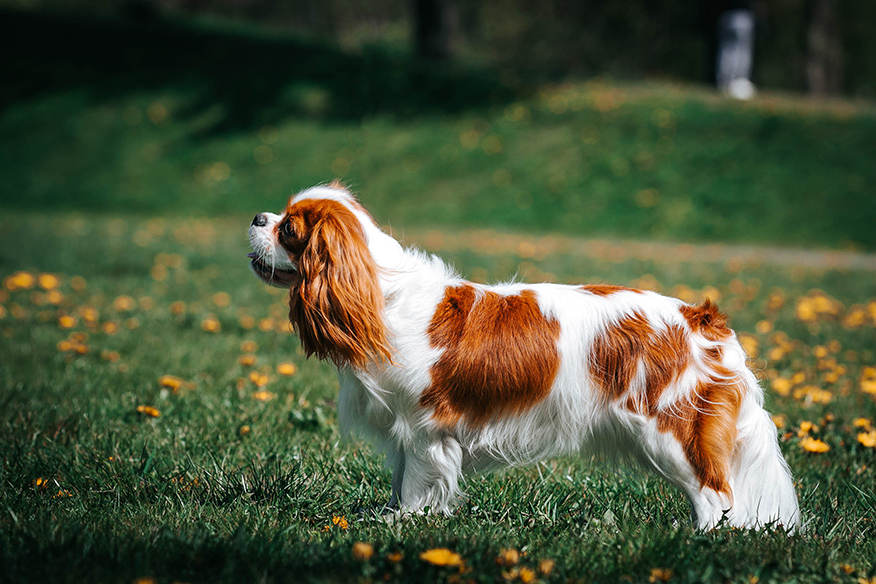
The Cavalier King Charles Spaniel is a graceful and affectionate toy breed renowned for its gentle temperament, elegant appearance, and strong connection to human companionship. This breed typically weighs between 13 to 18 pounds and stands 12 to 13 inches tall, making it a perfect size for both lapdog duties and active play. With its large, soulful eyes, silky coat, and feathery ears, the Cavalier exudes charm and beauty that captivates dog lovers worldwide.
The breed's coat is medium-length and soft, requiring regular grooming to maintain its luxurious appearance. Cavaliers come in four distinct color patterns: Blenheim (chestnut and white), Tricolor (black, white, and tan), Ruby (solid red), and Black and Tan. These variations add to the breed's appeal and individuality. Despite their aristocratic look, Cavaliers are friendly, playful, and adaptable, making them well-suited for various living situations, from apartments to country homes.
Cavalier King Charles Spaniels are known for their affectionate and sociable nature. They form strong bonds with their families and thrive on human interaction, making them ideal companions for families, singles, and seniors alike. While they enjoy lounging on the couch, Cavaliers are also energetic and enjoy daily walks, playtime, and even canine sports like agility or obedience training. They are intelligent and eager to please, which makes training a rewarding experience.
One of the breed’s most endearing traits is its versatility. Cavaliers can adapt to the energy level of their household, making them equally happy in active or more relaxed environments. Their gentle and patient demeanor makes them excellent companions for children and other pets, further solidifying their status as one of the most beloved toy breeds.
With their blend of beauty, intelligence, and affectionate nature, Cavalier King Charles Spaniels bring joy and companionship to any home. Their rich history and timeless charm continue to make them a favorite among dog enthusiasts worldwide.
History
The Cavalier King Charles Spaniel has a rich and storied history, tracing back to 16th and 17th century Europe, where small spaniels were cherished as lapdogs by nobility and royalty. The breed’s name pays homage to King Charles I and his son King Charles II of England, who were famously devoted to their small spaniels. King Charles II was particularly enamored with the breed, often depicted with his spaniels in portraits. Legend has it that he issued a royal decree allowing these dogs to enter any public place, a privilege said to persist to this day in England.
During the Restoration period, these spaniels became a fashionable accessory in royal courts. They were bred as companion dogs, prized for their affectionate nature and ability to warm the laps of their aristocratic owners. Early depictions in paintings by artists such as Van Dyck show small spaniels with flat faces, long ears, and silky coats, traits that would become hallmarks of the modern Cavalier King Charles Spaniel.
By the 18th and 19th centuries, the breed’s appearance began to shift as it was interbred with other small dogs, including Pugs and Japanese Chin, resulting in the flatter-faced King Charles Spaniel, also known as the English Toy Spaniel. However, during the early 20th century, efforts were made to revive the original appearance of the spaniels seen in historical paintings. A wealthy American named Roswell Eldridge offered prizes at a British dog show in the 1920s for spaniels that resembled these earlier depictions, sparking renewed interest in the breed.
This led to the development of the Cavalier King Charles Spaniel as a distinct breed, with a longer muzzle, larger eyes, and a more natural expression than its English Toy Spaniel counterpart. The breed standard was formalized in 1928, and the Cavalier King Charles Spaniel Club was established in the United Kingdom. The breed gained official recognition from The Kennel Club in 1945 and was later recognized by the American Kennel Club (AKC) in 1995.
Today, the Cavalier King Charles Spaniel is celebrated as a loving and adaptable companion, cherished for its historical ties to European royalty and its enduring charm. Its journey from royal courts to modern homes reflects its timeless appeal and its status as one of the most beloved toy breeds in the world.
Appearance
Cavaliers are active, graceful little spaniels with a sweet, gentle expression. The UKC standard describes a long, silky coat with plenty of feathering and no trimming, and ears set high with long ear leather and heavy feathering.
They come in four recognized color patterns: Blenheim (chestnut and white), tricolor, black and tan, and ruby. Overall, the breed should look balanced and elegant rather than fragile, with a level back and a tail carried on the level of the topline.
Colors
• Black & Tan
• Blenheim
• Chestnut & White
• Ruby
• Tricolored
Health
Health should be a major focus with this breed. The Kennel Club notes key areas commonly screened in Cavaliers, including mitral valve disease (heart), syringomyelia (a neurologic condition diagnosed by MRI), and inherited eye conditions—one reason reputable breeders emphasize testing and careful selection.
As an owner, the practical takeaway is to buy (or adopt) with eyes open: request proof of appropriate health screening in the family line, keep routine veterinary checkups, and take new symptoms seriously (exercise intolerance, coughing, persistent scratching near the neck, pain sensitivity, or changes in vision).
Care
Cavalier coats are comparatively easy to live with but do require routine maintenance. Regular brushing helps prevent tangles in feathering (ears, chest, legs, and tail) and reduces shedding around the house; gentle ear care matters because heavy ear feathering can trap moisture and debris.
Exercise needs are moderate: daily walks plus playtime are usually enough. Keep an eye on weight, use dental care early (small breeds can be prone to tartar), and prioritize safe, controlled activity—Cavaliers enjoy running, but they’re small enough to be injured by rough play or big-dog collisions.
Training
Cavaliers are typically eager to please and respond well to soft, reward-based training. Short sessions with food rewards and praise work especially well for manners, leash skills, and recall, and their spaniel heritage often means they enjoy games that involve chasing and retrieving.
Because they’re friendly, training should also include polite greeting skills and impulse control (sit to say hi, wait at doors). If barking shows up, focus on teaching an alternative behavior (go to mat, look at me) rather than punishing—these dogs are sensitive and do better with calm consistency.
Temperament
A good Cavalier is friendly, affectionate, and steady—often happiest when it can cuddle and be close to its family. UKC emphasizes a temperament that is gentle and affectionate with no tendency toward nervousness, while still being cheerful and sporting.
Because they’re so social, Cavaliers typically do best with early positive socialization and calm exposure to new situations. They can become clingy or anxious if they’re routinely left alone for long hours, so building independence skills (crate time, settle, short alone periods) is important.
Lifestyle
Cavaliers can thrive in apartments or houses as long as they get daily attention and a consistent routine. They’re usually content with moderate exercise, but they’re happiest when their “real job” is being with you—couch time counts, as long as it’s balanced with walks and mental enrichment.
They generally do well with families, seniors, and multi-pet homes, but supervision is important with very young children. Their friendliness can also make them overly trusting, so secure fencing and good leash habits are essential.
Ownership
A Cavalier is a great choice for someone who wants a gentle companion and is willing to prioritize health and responsible sourcing. Look for breeders who health-test and can discuss heart, neurologic, and eye risks honestly, or work with a rescue that will match you with a dog whose temperament fits your household.
Plan ahead for the “velcro dog” factor: invest time in teaching calm independence, and set up a care plan for days you’ll be away. With thoughtful training and good preventive care, Cavaliers are often an easy-to-live-with, affectionate addition to the family.
Interesting Facts
- The Kennel Club recognizes the Cavalier as a separate breed (distinct from the King Charles Spaniel) and notes recognition in 1945.
- UKC describes the Cavalier as 12–13 inches at the withers and typically 12–18 pounds.
- There are four accepted colors: Blenheim, tricolor, black and tan, and ruby.
- The coat is long and silky with feathering and is traditionally shown untrimmed.
- Breed health screening commonly focuses on heart disease (mitral valve disease), syringomyelia, and eye conditions (The Kennel Club guidance).