
Collie
Basics
The Collie is a classic Scottish sheepdog type that comes in two coat varieties: Rough (the familiar long, flowing coat) and Smooth (a shorter, hard, flat coat). Modern Collies are widely kept as companions, but their background is as responsive, active pastoral dogs bred to work closely with people.
A well-bred Collie is typically bright, steady, and people-oriented—often happiest when they can be near the family and given a job to do, even if that “job” is training games, hiking, or organized dog sports. They’re best suited to owners who enjoy daily interaction rather than a low-engagement, hands-off pet experience.
Description
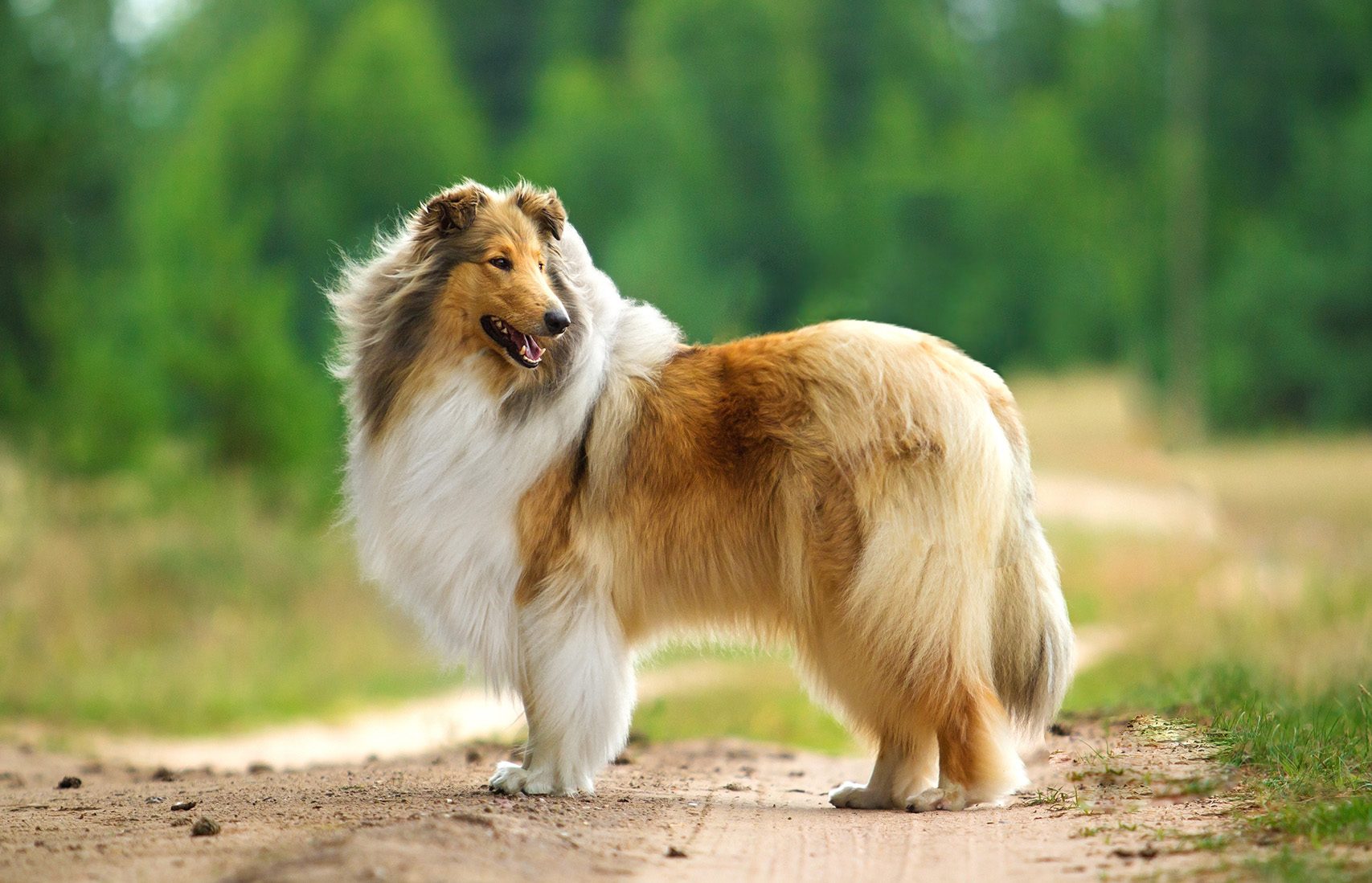
The Collie is a highly intelligent, loyal, and graceful dog breed that originated in Scotland and Northern England. Known for its distinctive long, flowing coat and gentle nature, the Collie was originally bred for herding sheep and working as a farm dog.
Physically, the Collie is a medium to large-sized dog with a well-proportioned, athletic build. There are two main types of Collies: the Rough Collie, which has a long, thick double coat, and the Smooth Collie, which has a shorter, dense coat. Both types have a strong, square-shaped body, a wedge-shaped head, and almond-shaped eyes that convey intelligence and expressiveness. The breed's coat is often sable (a mix of tan and white), but it can also come in other colors like blue merle or tri-color.
Temperamentally, Collies are known for their intelligence, loyalty, and gentle demeanor. They are highly trainable and eager to please, which makes them great family pets and excellent working dogs. Collies are good with children, other pets, and strangers, and their gentle nature makes them ideal companions for families. They also have strong herding instincts and are often protective of their home and family, making them good watchdogs.
Collies require regular exercise, including walks, playtime, and mental stimulation to keep them healthy and happy. They are typically active and enjoy outdoor activities but are also content to relax indoors with their family. Their long coat needs regular grooming, especially the Rough Collie, to prevent matting and tangling.
Overall, the Collie is an affectionate, intelligent, and versatile breed that excels as a family pet, working dog, or companion. With the right care, training, and socialization, Collies make loyal and loving members of any household.
History
The Collie is a beloved and iconic breed with a history that traces back to the rolling hills and rugged landscapes of Scotland and northern England. Originally developed as a herding dog, the Collie’s ancestors were likely brought to the British Isles by Roman conquerors around 2,000 years ago. Over time, these early herding dogs were bred with local stock to create a versatile and intelligent breed well-suited for managing sheep and cattle in the challenging environments of the Scottish Highlands and Lowlands.
The name "Collie" is believed to derive from the word *colley*, referring to the black-faced sheep that the dogs were tasked with herding. By the 19th century, the Collie had become an integral part of Scottish agriculture, known for its intelligence, agility, and keen working instincts. The breed gained prominence beyond Scotland during the Victorian era, when Queen Victoria fell in love with the Collie during a visit to her estate in Balmoral. Her admiration for the breed helped elevate its status from a working dog to a fashionable companion among the British elite.
As the Collie gained popularity, two distinct varieties emerged: the Rough Collie and the Smooth Collie. The Rough Collie, with its luxurious coat, became particularly famous in the 20th century thanks to literary and film depictions, most notably in *Lassie Come-Home*, which immortalized the breed as a symbol of loyalty and heroism. The Smooth Collie, with its shorter coat, retained its reputation as a capable herding dog while also gaining recognition as a family pet and working companion.
Today, the Collie is celebrated worldwide for its gentle temperament, intelligence, and versatility. While it remains a capable herding dog, it is equally cherished as a family companion, therapy dog, and participant in canine sports. The breed’s history reflects its adaptability and enduring appeal, solidifying its place as one of the most recognizable and admired breeds in the world.
Appearance
Breed standards describe a Collie as lithe and strong, with a proud, balanced outline—athletic rather than heavy. The head is a refined, wedge-like shape with a slight stop, a blunt (not square) muzzle, and almond-shaped eyes that contribute greatly to the breed’s soft, intelligent expression.
The Rough Collie carries a full double coat with a distinct mane/ruff and feathering, while the Smooth Collie has the same overall silhouette with a shorter coat. Commonly recognized colors include sable & white, tricolour, and blue merle; in merles, one or both eyes may be blue/merle without penalty in many standards.
Colors
• Black White & Tan
• Blue Merle
• Blue Merle & White
• Blue Merle White & Tan
• Sable
• Sable & White
• Sable Merle
• Sable Merle & White
• White
• White Merle
Health
As with many purebred dogs, responsible Collie breeding leans on screening and DNA testing rather than guesswork. UK breed health guidance commonly highlights routine eye testing and hip scoring, and it also lists DNA tests often used in the breed, including tests for Collie eye anomaly (CEA/CH), multi-drug resistance (MDR1), and certain forms of progressive retinal atrophy (such as PRA-rcd2), among others.
For owners, the practical approach is to choose puppies from parents with documented health results, keep the dog lean and fit, and schedule regular veterinary checkups (including eye monitoring). If MDR1 sensitivity is a concern in your dog’s lines, discuss medication choices with your veterinarian before using new drugs or parasite preventives.
Care
Daily exercise matters, but it doesn’t have to be extreme: a long walk, a good run, or an energetic play session plus a little mental work (tricks, scent games, short training sessions) usually keeps a Collie content. Without that outlet, barking or busy, fidgety behavior can become a habit.
Grooming depends heavily on coat type. Rough Collies typically need thorough brushing once or twice weekly (and more during seasonal sheds) to prevent mats behind ears, in feathering, and around the ruff; Smooth Collies are lower-maintenance but still benefit from weekly brushing and routine nail/ear/dental care.
Training
Collies generally learn quickly and respond best to reward-based training—food, praise, games, and clear routines. They’re often emotionally sensitive, so calm repetition and gentle boundaries work better than harsh corrections.
Start early with socialization and practical “house skills”: polite greetings, loose-leash walking, recall, and settling. Herding-style instincts can show up as circling or chasing movement, so teaching impulse control and offering structured outlets (obedience, rally, agility foundations, herding lessons where available) helps channel the brain that made the breed famous.
Temperament
The Collie’s reputation as a devoted family dog has real roots: they are often gentle, responsive, and tuned in to household routines. Many Collies prefer to assess new situations before diving in, which can read as “reserved” rather than pushy or exuberant.
Because they were shaped to notice movement and react quickly, some individuals can be vocal or sensitive to environmental changes. The best temperaments combine animation and confidence with kindness—shy, sullen, or aggressive behavior is considered undesirable in breed standards.
Lifestyle
Collies tend to thrive in homes that enjoy routine and together-time: they often want to be where their people are and do poorly when isolated for long stretches. They can fit suburban or even apartment life if their daily exercise and enrichment needs are met.
They’re commonly described as good with children and other pets when raised with them and taught manners. Because some individuals can be alert and talkative, it helps to teach a “quiet” cue and provide predictable daily activity to reduce boredom barking.
Ownership
A good Collie experience starts with selecting the right breeder (or rescue) and the right variety for your lifestyle. Rough Collies offer the iconic look but require a real grooming commitment; Smooth Collies are often easier to maintain while keeping the same temperament and structure.
Ask for proof of health screening and DNA testing that’s relevant to the breed, and talk through temperament goals—steady confidence and responsiveness are priorities. Plan to invest in training, enrichment, and coat care tools (especially for Roughs), and you’ll be rewarded with a highly attentive companion.
Interesting Facts
- Two coat varieties: Rough (long, full coat) and Smooth (shorter, hard, flat coat).
- Pastoral roots in Scotland as working sheepdogs; later popularized worldwide as a family companion.
- Recognized colors commonly include sable & white, tricolour, and blue merle.
- Breed standards emphasize overall balance, a refined wedge-like head, and a sweet, intelligent expression.
- Many Collie communities emphasize health screening such as eye testing and hip evaluation.
- DNA tests often referenced for the breed include CEA/CH and MDR1, among others (availability and recommendations vary by kennel club and region).