
Deutscher Wachtelhund
Description
The Deutscher Wachtelhund, also known as the German Spaniel, is a versatile and enthusiastic hunting dog breed from Germany. Bred primarily for hunting, it is known for its strong scenting abilities, excellent tracking skills, and its enthusiasm for both upland game and waterfowl. The breed is highly valued by hunters for its versatility in the field.
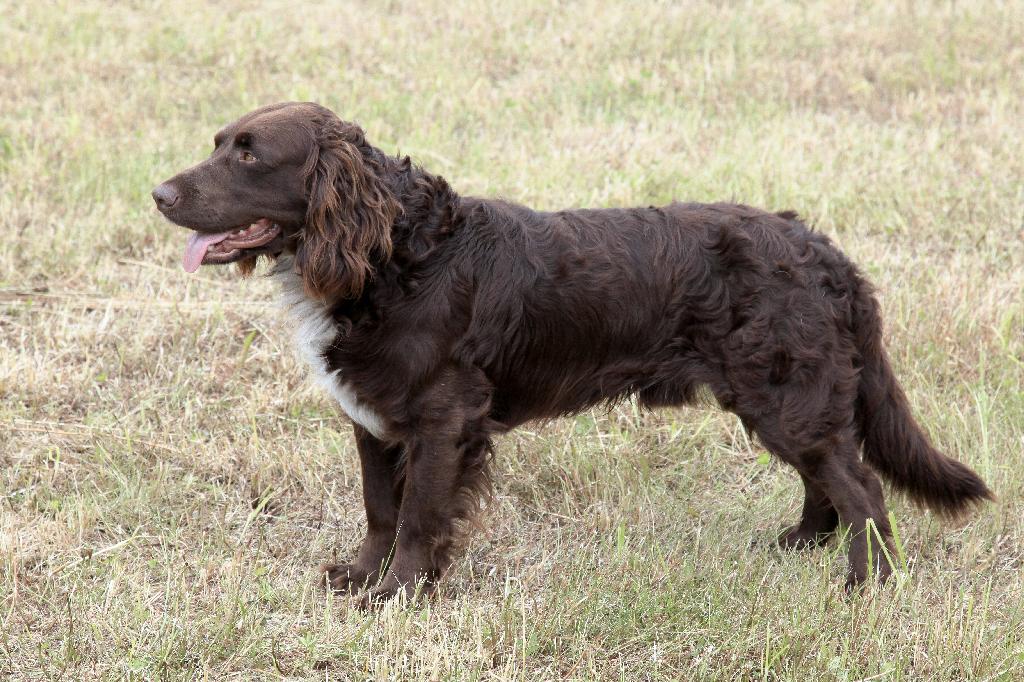
Physically, the Deutscher Wachtelhund is a medium-sized, well-built dog with a compact, muscular body. It has a dense, water-resistant coat that is usually brown or liver-colored, often with white markings. The coat is moderately long, with feathering on the legs, chest, and tail, giving it a rugged appearance. The breed has a distinct, expressive face, with dark eyes and a strong, alert expression.
Temperamentally, the Deutscher Wachtelhund is known for its high energy, intelligence, and strong work ethic. It is an enthusiastic and determined hunter, eager to please and highly trainable. This breed is also friendly, loyal, and affectionate with its family. While it is generally good-natured, the Deutscher Wachtelhund can be independent and requires a firm, consistent handler for training. Socialization is important to ensure it interacts well with other pets and strangers.
As a working dog, the Deutscher Wachtelhund thrives in active environments, particularly those that involve outdoor activities like hunting, tracking, and retrieving. It requires regular physical exercise and mental stimulation to remain happy and healthy. This breed is best suited for owners who are experienced with hunting dogs and who can provide the exercise and training it needs.
Overall, the Deutscher Wachtelhund is a versatile, energetic, and loyal breed, ideal for hunters and active families. With the right training, socialization, and care, it makes an excellent companion for those who enjoy outdoor activities and have the time and energy to meet its exercise and training needs.
History
The Deutscher Wachtelhund, or German Spaniel, is a versatile hunting dog with a rich history rooted in Germany. The breed was developed in the late 19th century to fulfill the needs of hunters seeking a reliable and adaptable dog capable of working in forests and fields. "Wachtelhund" translates to "quail dog," highlighting its primary use as a flushing and retrieving dog for upland game birds, although it has proven adept at hunting a wide variety of game, including deer and wild boar. The Wachtelhund is particularly valued for its ability to locate and flush game in dense underbrush, a skill that made it indispensable to German hunters.
The foundation of the Deutscher Wachtelhund can be traced to ancient spaniel-type dogs that were common in Europe during the Middle Ages. These dogs were gradually refined and standardized in the 19th century under the guidance of Friedrich Roberth, a German breeder who played a pivotal role in establishing the breed. Roberth focused on preserving the Wachtelhund's working abilities, emphasizing traits such as a keen nose, stamina, and an instinct for tracking and flushing game. The breed was officially recognized in Germany in 1903, and its development has since been closely monitored by the German Wachtelhund Club, which maintains strict standards to ensure its hunting capabilities are preserved.
The Wachtelhund’s popularity remained strong among hunters throughout the 20th century, particularly in Germany and neighboring countries. Unlike many other breeds that became popular as show dogs or pets, the Deutscher Wachtelhund has retained its primary role as a working dog. Breeding practices continue to emphasize functionality and temperament over appearance, ensuring the Wachtelhund remains true to its original purpose as a versatile and dependable hunting companion.
Today, the Deutscher Wachtelhund is still relatively rare outside of Germany but has a dedicated following among hunters in Europe and North America. It is known for its intelligence, trainability, and strong bond with its handler, making it an excellent partner for those who can meet its exercise and working needs. The breed’s history reflects its enduring connection to the hunting traditions of Germany and its status as a specialized yet highly valued member of the sporting dog world.
Colors
• Brown
• Brown & White
• Red