
Doberman Pinscher
Basics
The Doberman Pinscher (Dobermann) was developed in Germany as a personal protection dog—an athletic, intelligent breed built for speed, endurance, and close partnership with a handler. In the home, a well-bred Doberman is often deeply devoted and naturally watchful, with a strong desire to stay near their people.
This is a “high responsibility” breed: they tend to be powerful, quick to learn, and highly sensitive to inconsistent rules. The best Doberman experience comes from owners who enjoy training as a lifestyle and who can provide structure, daily activity, and thoughtful social exposure.
Description
The Doberman Pinscher is a highly intelligent, loyal, and athletic breed known for its striking appearance and versatility. Originally developed in Germany by Karl Friedrich Louis Dobermann in the late 19th century, the Doberman was bred for protection, guarding, and police work. Today, it is still renowned for its protective instincts, speed, and agility, making it a popular choice for security roles and as a family companion.
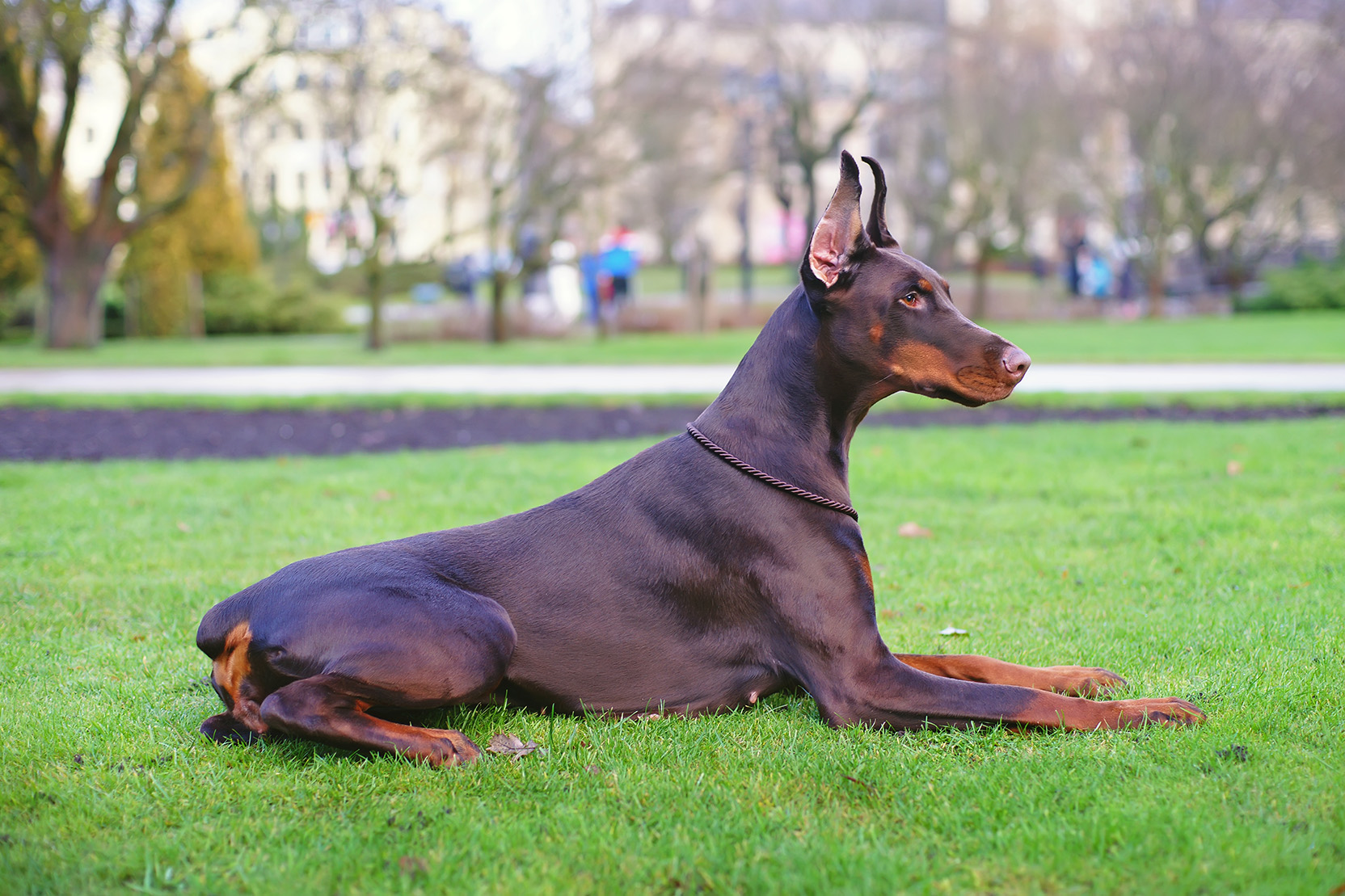
Physically, the Doberman is a sleek, medium to large-sized dog with a well-defined, muscular build. It has a short, smooth coat that typically comes in black, red, blue, or fawn, often with tan markings. The breed's erect ears and tail (often docked) contribute to its alert and powerful appearance. Dobermans are known for their elegant stance and athleticism, which makes them highly capable in various activities, including obedience, agility, and working tasks.
Temperamentally, Dobermans are highly intelligent, loyal, and protective. They form strong bonds with their families and are often described as fearless and confident. While they are known for their protective instincts, they are also affectionate and loving, especially with their owners. Proper training and socialization from an early age are essential, as Dobermans can sometimes be wary of strangers, but they are generally friendly and approachable with those they know.
The Doberman Pinscher requires regular physical and mental exercise to maintain its well-being. It thrives in active households and enjoys activities like running, playing, and participating in dog sports. Due to its high energy and intelligence, the breed benefits from structured training and an outlet for its natural drive.
Overall, the Doberman Pinscher is a versatile, loyal, and highly trainable breed. With the right care, training, and socialization, it makes an excellent family pet, guard dog, or working companion.
History
The Doberman Pinscher, often regarded as one of the most intelligent and versatile dog breeds, was developed in the late 19th century by Karl Friedrich Louis Dobermann, a tax collector from Apolda, Germany. Dobermann sought to create a loyal and protective companion to accompany him during his work, which often required him to travel through dangerous areas. Using his access to various dogs in his secondary role as a dogcatcher, he selectively bred dogs that combined strength, intelligence, agility, and loyalty, resulting in the breed we know today.
The exact mix of breeds used in the creation of the Doberman Pinscher is not fully documented, but it is believed to include the Rottweiler, German Pinscher, Weimaraner, Manchester Terrier, and possibly the Greyhound. This blend of breeds gave the Doberman its characteristic traits: a sleek, muscular body; a sharp mind; and a courageous yet dependable nature. By the early 20th century, the Doberman Pinscher had gained recognition for its exceptional versatility, excelling in roles such as guard dog, police dog, and military service animal.
The breed was first recognized by the German Kennel Club in 1900 and quickly gained popularity across Europe. In the United States, the Doberman Pinscher Club of America was founded in 1921, further promoting the breed. During both World Wars, Dobermans served as messenger dogs, sentries, and scouts, earning a reputation for bravery and reliability. The breed’s military contributions, particularly during World War II, solidified its status as a working dog of great value.
Today, the Doberman Pinscher is celebrated worldwide as both a working dog and a devoted family companion. Known for its intelligence, trainability, and elegance, the breed continues to excel in a variety of roles, including search and rescue, police work, and competitive dog sports. While the Doberman remains a formidable protector, its affectionate and loyal temperament has also made it a favorite among dog lovers. Its enduring popularity reflects the vision of its creator and the breed's remarkable adaptability and strength of character.
Appearance
Breed standards describe the Doberman as a medium-sized, square-built dog—compact, muscular, and elegant, with a proud carriage. The head is long and dry with a blunt-wedge shape, almond-shaped eyes with an energetic expression, and a clean, arched neck flowing into a short, firm back.
The coat is short and sleek, emphasizing the breed’s athletic outline. Commonly recognized colors include black, red, blue, and fawn (Isabella), each with rust-red markings; overall presentation should look clean and “built for work,” not heavy or coarse.
Colors
• Black & Rust
• Blue & Rust
• Fawn & Rust
• Red & Rust
• White
Health
Dobermans are a breed where health screening and breeder transparency matter. UK breed health guidance commonly emphasizes DNA testing for von Willebrand disease type I (vWD1) and also references additional screening/testing (such as eye testing for PHPV, hip evaluation, and other DNA tests used within the breed community).
From an owner perspective, the safest path is to choose breeders who can show current test results for the sire and dam, explain what those results mean, and discuss longevity in their lines. Once home, keep your Doberman fit and lean, maintain regular veterinary care, and promptly investigate changes in stamina, coughing, fainting, or exercise tolerance.
Care
Dobermans need daily physical exercise and mental work. Brisk walks plus training sessions, scent work, structured play, or sport foundations (obedience/rally/IGP-style skills where appropriate) help burn energy in a constructive way and reduce frustration behaviors.
Coat care is easy—weekly brushing and routine nail/ear/dental care usually cover it—but Dobermans do not have heavy insulation. Plan for weather management (warmth in cold climates and sensible heat precautions), and prioritize lean body condition to protect joints and athletic longevity.
Training
Training should start early and stay consistent. Dobermans tend to learn quickly and often respond best to clear markers, rewards, and predictable rules; harsh, punitive methods can create conflict in a sensitive, driven dog.
Focus on impulse control and real-world manners: calm greetings, leash skills, reliable recall, place/settle, and cooperative handling for grooming and veterinary care. Advanced obedience and structured sports can be a great fit, but the foundation should always be stability and control first.
Temperament
Dobermans are often described as energetic, alert, loyal, and obedient—traits that made them successful in protective roles and that can make them excellent companions in experienced homes. They typically bond intensely with their family and prefer to be involved rather than left to entertain themselves.
Because they are naturally watchful, early socialization is essential so confidence doesn’t turn into suspicion. A stable Doberman should be self-controlled and responsive to the handler, able to settle at home and switch into working mode when asked.
Lifestyle
Dobermans do best as true indoor companions. They typically want a “shadow dog” level of proximity to their people and may struggle if routinely isolated or under-stimulated.
They can live in many home types, but they need daily structured time—both exercise and training. Households that enjoy routine, boundaries, and ongoing enrichment usually find the breed’s intensity becomes a feature, not a bug.
Ownership
Choose a Doberman with your lifestyle and experience level in mind. Look for breeders (or reputable rescues) who prioritize stable temperament and who can provide verifiable health testing, a clear contract, and ongoing support.
Plan for more than basics: training classes, enrichment, quality containment (fencing/leash management), and thoughtful socialization are non-negotiable. With that investment, Dobermans can be remarkable partners—athletic, responsive, and deeply loyal.
Interesting Facts
- Developed in Germany as a protection-oriented working dog; known for close handler partnership.
- Built for speed and endurance with a square, compact, muscular outline.
- Breed standards describe an energetic, watchful, determined, loyal, and obedient temperament.
- Short, sleek coat; commonly seen in black, red, blue, or fawn (Isabella) with rust markings.
- Breed communities commonly emphasize health screening and DNA testing (such as vWD1) before breeding.
- Thrives with structured training and daily mental/physical outlets; not an “easy” low-effort breed.