
Dogue de Bordeaux
Basics
The Dogue de Bordeaux (often called the French Mastiff) is an ancient French molosser type historically used for guarding, defence, and deterrence. Breed histories describe dogs of this type working as property and livestock guardians, as well as in other demanding roles, and the modern Dogue still carries that “serious presence” today.
In family life, they’re typically at their best as calm, steady house companions with a loyal attachment to their people. Because they are large, powerful, and sometimes stubborn, they’re best matched with owners who value early training, thoughtful socialization, and sensible management from puppyhood onward.
Description
The Dogue de Bordeaux, also known as the French Mastiff, is a large, powerful, and muscular breed originally from France. Known for its strength, loyalty, and protective instincts, the Dogue de Bordeaux was traditionally used as a guardian, working dog, and even in hunting large game like boar.
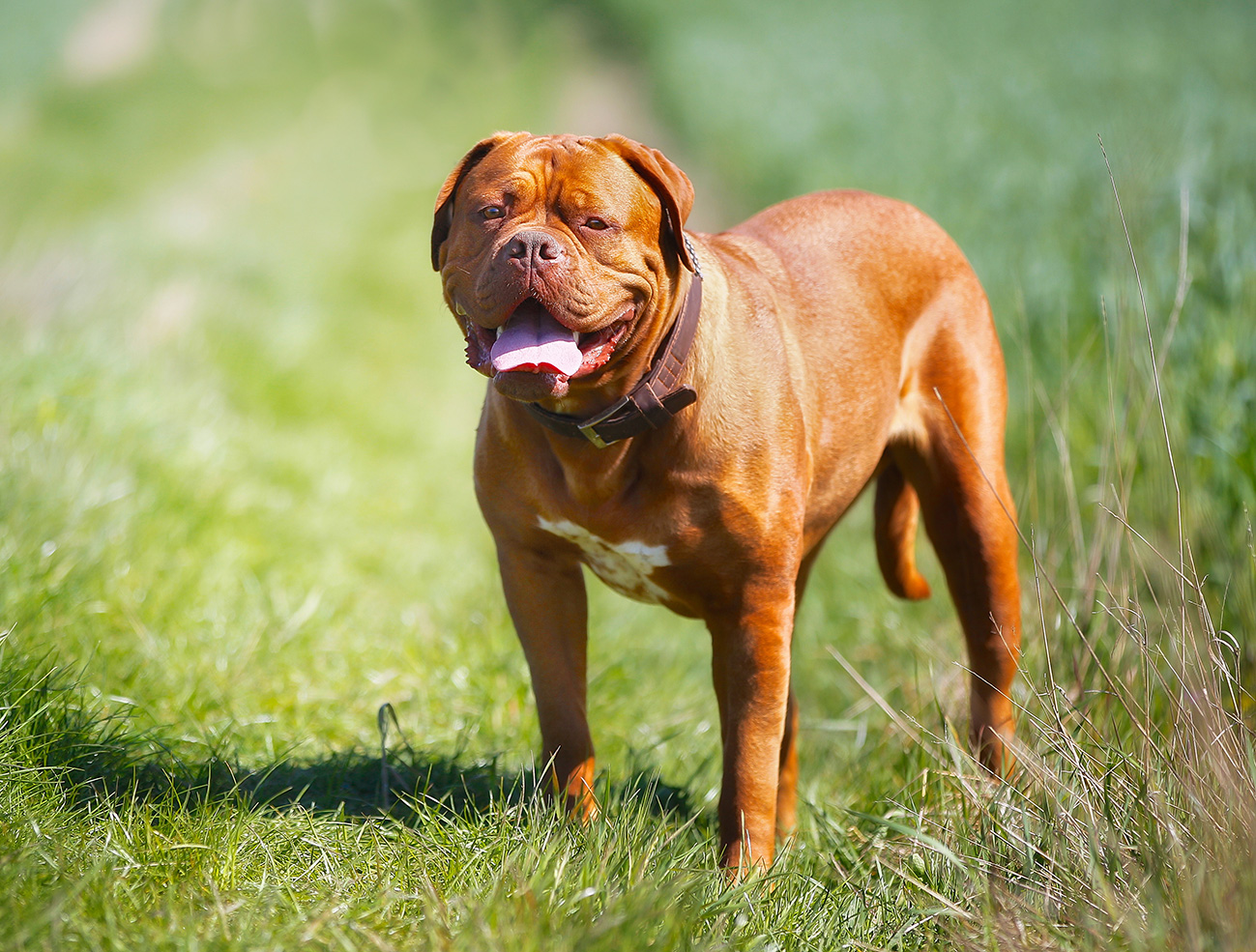
Physically, the Dogue de Bordeaux is a massive dog with a broad, heavyset body. It typically stands between 23 to 27 inches tall at the shoulder and weighs anywhere from 90 to 115 pounds or more. The breed has a short, fine coat that is usually a reddish-brown or fawn color. It has a distinctive wrinkled face with a large head, powerful jaws, and a strong, muscular neck. Despite its imposing appearance, the Dogue de Bordeaux is generally known to be affectionate and gentle with its family.
Temperamentally, the Dogue de Bordeaux is loyal, protective, and calm, making it an excellent guard dog and family companion. It forms strong bonds with its family members and can be especially protective of children. While it may be reserved or wary of strangers, the breed is generally not aggressive unless it perceives a threat. Early socialization and consistent training are essential to ensure the Dogue de Bordeaux is well-behaved and balanced.
This breed is not overly active but requires regular exercise to maintain its health. While it enjoys outdoor activities, it is more prone to lounging around the house once it has been exercised. Due to its large size, the Dogue de Bordeaux can be prone to certain health issues, such as hip dysplasia, and may require regular veterinary care.
Overall, the Dogue de Bordeaux is a powerful, loving, and loyal breed that makes an excellent family companion, protector, and guard dog. It requires an experienced owner who can provide firm leadership, training, and the necessary exercise to keep it healthy and happy.
History
The Dogue de Bordeaux, also known as the French Mastiff, is one of the oldest and most iconic French dog breeds, with a history that stretches back several centuries. Its exact origins are not fully documented, but the breed is believed to have descended from ancient Molosser dogs brought to Europe by the Romans and Greeks. These robust and powerful dogs were used in various capacities, including as war dogs, hunting companions for large game, and guardians of property.
By the Middle Ages, the Dogue de Bordeaux had become a prominent breed in France, particularly in the Bordeaux region, from which it takes its name. It was prized by French nobles and butchers alike for its strength and versatility. The breed was employed for a wide range of tasks, such as protecting estates, pulling carts, and even guarding vineyards. In addition to these practical roles, the Dogue de Bordeaux was also used in bull-baiting and other blood sports, which were popular in Europe during the era.
The breed's numbers began to decline in the 19th century, but efforts to preserve it gained momentum after its appearance at the first French dog show in 1863. The Dogue de Bordeaux's distinctive traits, including its large, muscular build, loose skin, and expressive face, helped it stand out and earn admiration. However, the breed faced significant challenges during the World Wars, with its population dwindling dangerously low due to food shortages and the general upheaval of the times.
Thanks to the dedication of breed enthusiasts and careful breeding programs in the mid-20th century, the Dogue de Bordeaux was revitalized. It gained recognition from major kennel clubs, including the American Kennel Club (AKC) in 2008, further securing its status as a beloved breed. Today, the Dogue de Bordeaux is celebrated for its loyal, affectionate, and protective nature. While it remains a formidable guardian, it is equally cherished as a gentle and devoted family companion, reflecting the breed's long history of strength and resilience.
Appearance
The Dogue de Bordeaux is a heavy, muscular, large-headed molosser with a compact, powerful body and an unmistakable presence. Standards emphasize a strong, athletic build rather than exaggerated bulk, with a broad chest and substantial bone.
Coat is short and fine. Colors are various shades of fawn and red/mahogany (often described in standards and kennel club guidance), sometimes with a mask. Because the breed’s head and body are so distinctive, correct structure, steady movement, and overall balance matter more than sheer size.
Colors
• Fawn
• Isabella
• Mahogany
• Red
Health
Breed guidance commonly stresses the importance of pre-breeding screening, especially orthopedic and eye evaluations. UK kennel club health recommendations for the breed include hip, elbow, and eye testing as a baseline before breeding.
For owners, that translates into choosing breeders who can show current screening results and who prioritize soundness and longevity, not just “macho” size. At home, keep the dog lean, avoid rapid weight gain, and work with a veterinarian on a sensible plan for growth, conditioning, and any breed-typical issues that may arise in large molosser dogs.
Care
Despite the mastiff look, Dogues still need consistent conditioning: daily walks, gentle strength-building, and mental engagement help keep joints and muscles working well. Avoid overdoing high-impact exercise in young dogs, and prioritize controlled movement, good footing, and gradual fitness.
Coat care is simple—weekly brushing and basic hygiene—but owners should be prepared for typical mastiff realities like drool and facial/skin folds that may need regular wiping. Routine nail trims, ear checks, and dental care round out the basics.
Training
Training should start immediately and focus on cooperation and manners: loose-leash walking, calm greetings, impulse control at doors/food, and reliable “place/settle.” In a giant, powerful breed, “polite” is a safety feature.
They often respond best to short, positive sessions with clear boundaries—reward what you want, prevent rehearsal of bad habits, and keep expectations consistent. Socialization should be planned and controlled, emphasizing neutral, confident behavior rather than forced greetings with every person or dog.
Temperament
As a breed developed for guarding and defence, the Dogue de Bordeaux is often naturally watchful and discerning. With good breeding and good upbringing, that tends to show up as calm confidence—aware of what’s happening, but not frantic or reactive.
They usually do best with clear household rules and calm leadership. Early, positive exposure to visitors, neutral dogs, and everyday environments helps them learn what is normal, which supports the stable “dissuasion” role the breed is known for: presence first, action only if truly necessary.
Lifestyle
The Dogue de Bordeaux is usually more “home guardian” than “endless athlete.” They often prefer to be near their people, lounging between activity sessions, but they still need daily routine, training refreshers, and structured walks to stay balanced.
They’re typically best in homes with enough space to manage a large dog comfortably (wide hallways, secure entrances, sensible crate/room setup), and with owners who can handle a strong dog on leash. Consistent routines and calm handling are key to a stable adult.
Ownership
Owning a Dogue de Bordeaux means planning for size: food, equipment, travel logistics, and veterinary costs scale up quickly. It also means committing to early training so you have an adult dog that is easy to live with—especially around visitors and in public.
Choose breeders who are transparent about health screening (hips/elbows/eyes and other breed-relevant concerns), temperament, and the realities of living with a mastiff. If you want a laid-back but loyal companion with a strong guarding heritage, and you can provide structure and management, the breed can be a deeply rewarding partner.
Interesting Facts
- Also known as the French Mastiff; classified as a molosser type in many kennel club systems.
- Historically used for guarding, defence, and deterrence; valued for presence and power.
- Short, fine coat; commonly seen in fawn/red/mahogany shades, sometimes with a mask.
- A breed with substantial size and strength—early manners and leash skills are essential.
- UK kennel club guidance commonly recommends hip, elbow, and eye testing prior to breeding.
- Best suited to owners who want a calm home companion and can manage a giant dog responsibly.