
English Coonhound
Basics
Often called the “English dog” by hunters, the English Coonhound is a fast, endurance-minded scent hound developed in the American South from foxhound-type ancestors. The breed’s job is to trail game by scent—most famously raccoons at night—then stay at the tree and bay until the handler arrives.
In registries you may see the name “American English Coonhound” (AKC) used to distinguish the breed from English foxhounds, while UKC records the breed as English Coonhound. Regardless of name, this is a purpose-bred hunting hound: athletic, independent, and famously vocal when on a track.
Description
The English Coonhound is a medium to large-sized hunting dog breed known for its exceptional tracking abilities and endurance. Developed in the United States, the breed was originally used for hunting raccoons and other game, thanks to its strong sense of smell and determination.
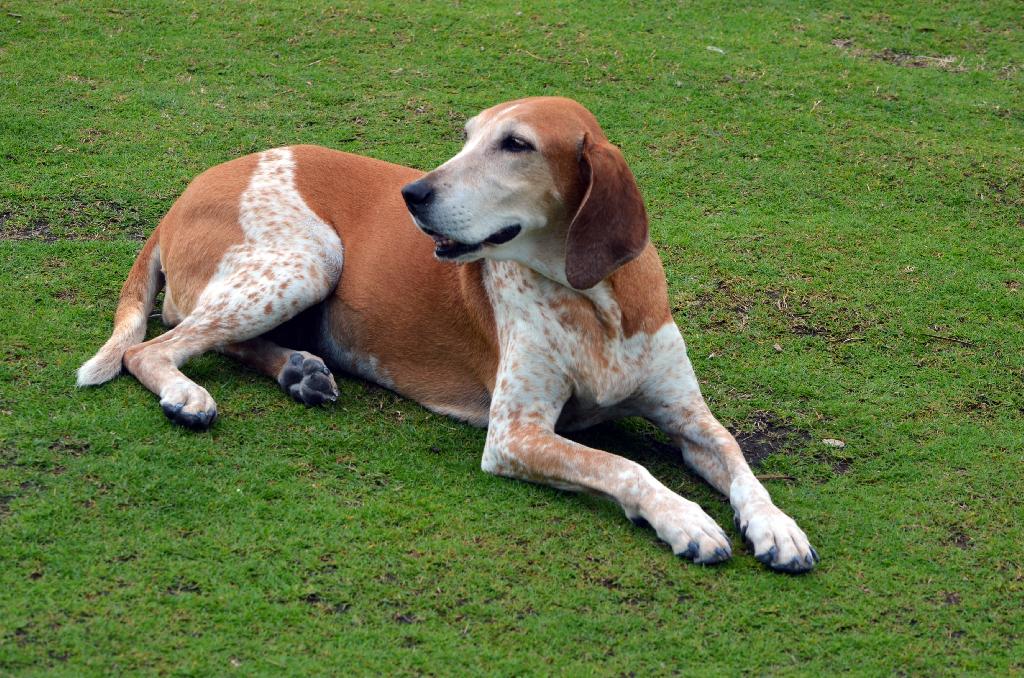
Physically, the English Coonhound has a lean, muscular build that allows it to cover large distances in the field. It typically stands between 22 to 27 inches tall and weighs between 45 to 75 pounds. The breed has a short, smooth coat that can come in various colors, including black and tan, red and white, and tri-color patterns. Its expressive eyes and long, droopy ears contribute to its characteristic coonhound appearance.
Temperamentally, English Coonhounds are known for being friendly, loyal, and independent. They are social dogs that enjoy being around their family and are typically good with children and other pets. However, due to their strong hunting instincts, they may be less reliable off-leash unless well-trained and socialized. While they are gentle and affectionate with their owners, they can be reserved or aloof with strangers.
As a working dog, the English Coonhound excels at tracking, treeing, and hunting game. It is highly energetic and requires regular exercise, including long walks and outdoor activities to keep it physically and mentally stimulated. Without enough exercise or attention, it can become bored and potentially destructive.
Overall, the English Coonhound is a versatile and hardworking breed that excels in hunting and tracking tasks. It makes a loyal, friendly companion for active families or individuals who can provide plenty of exercise and stimulation. With the right training and socialization, the English Coonhound can also thrive as a family pet.
History
The English Coonhound, also known as the American English Coonhound, is a versatile and hardworking breed with roots deeply tied to the early hunting traditions of the United States. Its ancestry can be traced back to the 17th and 18th centuries when English settlers brought foxhounds to the American colonies. These dogs, bred for hunting foxes in England, were adapted by American hunters to track raccoons, deer, and other game in the dense forests and rugged terrains of the New World. Over generations, these imported dogs were selectively bred to enhance their stamina, scenting ability, and agility, giving rise to the English Coonhound.
By the 19th century, the breed had become a favorite among American hunters for its ability to track game by scent, even over challenging terrain. Known for its versatility, the English Coonhound excelled not only in treeing raccoons at night but also in hunting larger game during the day. The breed’s endurance, keen nose, and loud, melodious baying made it an indispensable companion in hunting expeditions, particularly in the southern and midwestern United States.
Initially, the English Coonhound was grouped with other coonhound breeds, such as the Bluetick and Treeing Walker Coonhounds, as they shared similar origins. However, over time, distinctions between these breeds became more defined based on their physical characteristics and hunting styles. The English Coonhound is noted for its speed and adaptability, traits that set it apart from its coonhound counterparts.
In 1905, the breed was officially recognized by the United Kennel Club (UKC) as the English Fox and Coonhound. It gained further recognition in 2011 when it was accepted into the American Kennel Club's (AKC) Hound Group. Today, the English Coonhound is celebrated not only for its hunting prowess but also as a loyal and friendly family companion. While it remains a popular choice among hunting enthusiasts, its intelligence, sociability, and affectionate nature make it a cherished pet for those who appreciate its rich history and hardworking spirit.
Appearance
The English Coonhound is strongly built but not heavy—balanced, graceful, and made to cover ground efficiently for hours. In outline the body is square to slightly longer than tall, with a deep chest, straight back, and muscular hindquarters that provide drive.
The head is classic hound: broad between the ears with a long, square muzzle and soft, low-set ears that reach nearly to the nose when pulled forward. The coat is a hard, protective hound coat of medium length. Color is variable and commonly includes redtick, bluetick, tri-color with ticking, and combinations of white with red, black, or lemon.
Adults are medium-to-large hounds. UKC’s standard lists height (at the withers) of about 22–27 inches for males and 21–25 inches for females, with weight kept proportional to height and soundness.
Colors
• Black
• Black & Tan
• Blue
• Bluetick
• Brown
• Liver & White
• Red
• Red & White
• Redtick
• Tricolored
• Tricolored w/ Tick
• White & Tan
Health
English Coonhounds are generally built for durability and long nights of work, so maintaining soundness is mostly about smart conditioning and basic preventive care. Keep the dog lean, build stamina gradually, and avoid weekend-warrior overexertion that can lead to strains.
Because many English Coonhounds spend time outdoors, parasite prevention and routine tick checks matter—especially around ears, under collars, and between toes. After hunts or long hikes, inspect feet and nails, and watch for limping, foxtails, or skin irritation.
Work with your veterinarian on a sensible wellness plan (vaccines, dental care, and age-appropriate screening). If you’re buying a puppy, ask breeders what health issues they track in their lines and what testing or veterinary documentation they can share.
Care
Daily exercise isn’t optional for this breed. Plan for brisk walks plus opportunities to run safely, and add nose-work style games (scent trails, hide-and-seek treats, tracking practice) to satisfy the mind as well as the body.
Grooming is straightforward: the short-to-medium hound coat usually needs only weekly brushing and occasional baths. Like many drop-eared hounds, routine ear checks and gentle cleaning when needed help prevent odor and irritation—especially after wet hunts, swims, or heavy brush.
A fit English Coonhound should look athletic and feel hard-muscled rather than soft. Feed for an active lifestyle, monitor body condition, keep nails trimmed for traction, and check pads, burrs, and minor cuts after long outings.
Training
Training an English Coonhound is a study in motivation. These dogs are bred to work independently on scent, so they often ask “why?” before they comply. Short, upbeat sessions with high-value rewards work better than drilling; end while the dog still wants more.
Recall is the big project. Start early, practice on long lines, and expect setbacks when a new scent blows through. Many owners find it safest to assume an off-leash hound may choose the trail over the handler unless in a fenced area.
Channel the voice and drive rather than trying to erase them. Teach a reliable “quiet” cue, reinforce calm in the house, and give legal outlets for the instincts—tracking games, scent work classes, or hunting/field activities if that’s part of your life.
Temperament
In the home, a well-socialized English Coonhound is typically pleasant and sociable, with an affectionate “houndy” friendliness toward people. In the field, the breed’s instincts switch on fast: nose-first problem solving, determination on a trail, and the confidence to work in the dark and in rough terrain.
Expect a dog that communicates—coonhounds are bred to use their voice, and many will bay or “talk” when excited, bored, or following scent. They’re also commonly driven by prey instincts, which can make small pets and outdoor wildlife very tempting unless carefully managed.
Because their history favors field performance over uniform show traits, temperament can vary by line. Meeting relatives, asking about hunt drive and off-switch at home, and prioritizing steady, human-friendly temperaments helps owners choose a good fit.
Lifestyle
This is an outdoorsy, go-all-night hound that thrives with room to move and a job to do. A securely fenced yard, access to trails, and owners who enjoy daily activity are a much better match than a low-exercise routine.
Apartment living can be challenging for two reasons: energy and volume. The breed’s baying voice is part of its working design, and boredom can amplify noise. If you share walls, plan for extra enrichment and be realistic about how vocal your dog may be.
With the right outlets, English Coonhounds can be excellent family companions—friendly, sturdy, and happy to be included. Without those outlets, they tend to invent their own entertainment (following their nose, roaming, or practicing their “night music”).
Ownership
Successful ownership starts with honesty about what you want: a hunting partner, a sport dog for tracking and scent games, or an active companion. Ask breeders and rescues about hunt drive, noise level, and how the dog behaves indoors when exercised.
Plan for management as much as training. Secure fencing, leash skills, and a strategy for scent-induced “selective hearing” are essentials. Many coonhound owners also invest in enrichment tools—snuffle mats, scent trails, puzzle feeders—to keep the nose busy.
If you’re considering a working-line dog, talk through expectations around time, travel, and local rules for hunting/training. This breed is happiest when its instincts are respected and given safe, structured outlets.
Interesting Facts
• UKC first registered the breed in 1905 under the name “English Fox & Coonhound.”
• AKC recognized the breed in 2011 and uses the name “American English Coonhound,” though many hunters still say “English dog.”
• The breed is known for a classic hound bawl/bay voice used to communicate on trail and at the tree.
• The English Coonhound has historically shown wide color variety; redtick is especially common.
• The Treeing Walker Coonhound and Bluetick Coonhound were originally registered as “English” in UKC before becoming separate breeds in the 1940s.