
English Foxhound
Basics
The English Foxhound is a traditional British scenthound developed to work in a pack, covering long distances at a steady gallop while following scent. Bred for stamina and teamwork, it’s a substantial, athletic hound whose instincts are shaped by generations of mounted hunting.
In modern homes, the breed tends to thrive with people who like being outdoors and can provide daily, purposeful exercise. Many English Foxhounds are happiest when they have canine company and consistent routines, because “pack life” is baked into how they were designed to live.
Description
The English Foxhound is a breed of hound originally developed in England for fox hunting. Known for its endurance, speed, and excellent scenting ability, the English Foxhound has long been prized for its ability to track and chase foxes over long distances during hunts.
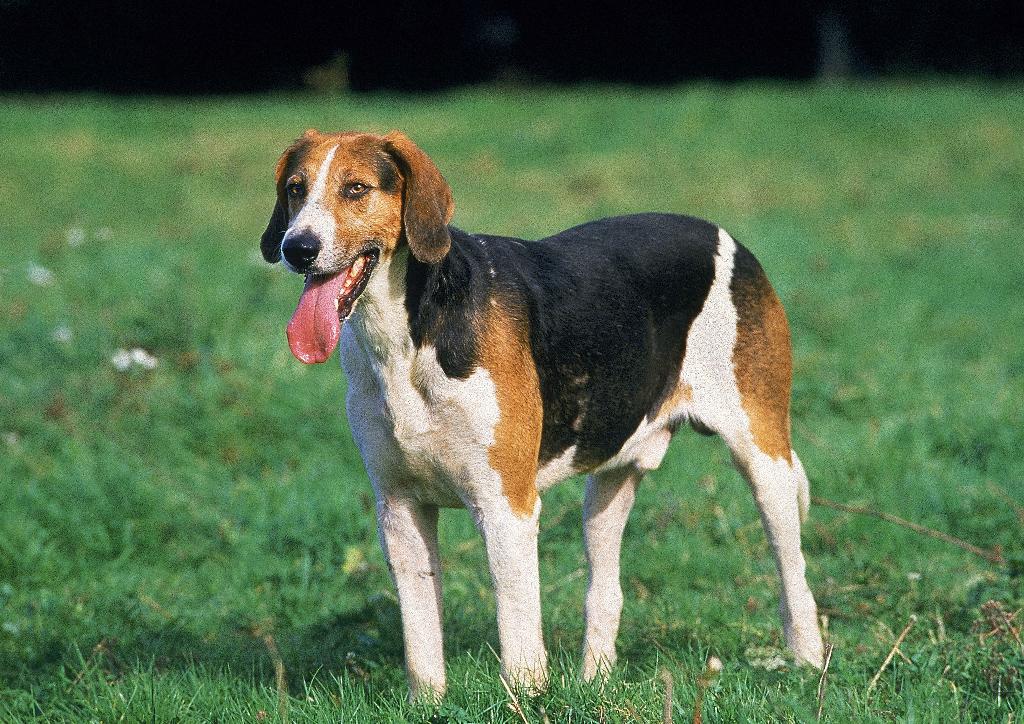
Physically, the English Foxhound is a large, well-built dog with a sleek, athletic frame. It typically stands between 21 to 25 inches at the shoulder and weighs between 60 to 75 pounds. The breed has a short, dense coat that is usually tri-colored, with combinations of black, white, and tan, although other color variations can occur. The English Foxhound's long legs, deep chest, and powerful build allow it to cover vast distances at a steady pace.
Temperamentally, the English Foxhound is known for being friendly, social, and intelligent, though it can be independent and sometimes stubborn. It has a calm demeanor and is generally good-natured with people, including children, though it may be reserved or aloof with strangers. The breed is known for being affectionate with its pack and its family, though it retains a strong independent streak due to its origins as a hunting dog.
As a working dog, the English Foxhound excels at endurance running and scenting, making it well-suited for tracking and hunting. It requires significant exercise and thrives in an active environment, making it an excellent choice for those with the time and space to provide long walks, jogs, or runs. Without sufficient exercise, the breed can become bored and may develop undesirable behaviors.
Overall, the English Foxhound is a highly energetic, loyal, and friendly breed that excels in hunting and tracking. While not typically kept as a family pet in urban settings, it can make a great companion for experienced owners who lead active lifestyles and can provide the necessary physical and mental stimulation.
History
The English Foxhound is one of the oldest and most well-established hunting breeds, with a history dating back to the 13th century in England. It was developed specifically for fox hunting, a sport that gained prominence as deer populations dwindled and the nobility sought a new form of hunting. The breed was created by crossing various hounds, including the Greyhound for speed, the Bulldog for tenacity, and other scent hounds for their tracking abilities. The result was a dog with the endurance, strength, and keen nose needed to pursue foxes across the English countryside.
By the 18th century, fox hunting had become a highly organized and prestigious activity, with dedicated hunting clubs and well-documented breeding programs. The English Foxhound was meticulously bred to meet the demands of this sport, including the ability to run for hours without tiring and a temperament suitable for working in packs. Breeders maintained detailed pedigrees, making the English Foxhound one of the first breeds with a systematically recorded lineage. Its development reflected not only practical needs but also the cultural and social aspects of rural England, where fox hunting was a significant tradition.
The breed was introduced to North America in the 18th century, where it influenced the development of the American Foxhound. While the American Foxhound was adapted to suit the terrain and game of the United States, the English Foxhound retained its classic traits and continued to thrive in its homeland and beyond. Despite its close association with hunting, the breed has also been shown in conformation events and remains an enduring symbol of English heritage.
Today, the English Foxhound is recognized for its athleticism, endurance, and friendly nature. While it is still used for hunting in some parts of the world, it has also found a place as a companion animal for active families. Its rich history as a breed meticulously crafted for a specific purpose reflects the interplay between tradition, sport, and the human-canine bond.
Appearance
English Foxhounds are well balanced, powerful, and “clean cut,” built more for endurance than for flash. They have a long, square muzzle with open nostrils, pendant ears that lie close to the head, and a deep chest that supports strong lung capacity for extended work.
The coat is short, dense, and weatherproof, and you’ll see them in a wide range of classic hound colors and markings. Typical height is about 23–25 inches at the shoulder, giving them a medium‑large frame with long, straight legs and an efficient, tireless gait.
Colors
• Black White & Tan
• Lemon & White
• Tricolored
• White
Health
English Foxhounds are generally robust, but their deep chest and athletic build mean you should take bloat (gastric dilatation-volvulus) seriously: avoid hard exercise right around meals, feed measured portions, and discuss risk reduction with your vet. Keeping them lean and well-muscled also helps protect joints and overall soundness.
Common, practical health priorities are the “every dog” basics: parasite prevention, routine dental care, and watching for ear irritation or infection—especially after swimming or humid weather. If you’re buying from a breeder, ask about health screening and long-term soundness in the line, not just show wins.
Care
Coat care is straightforward: a quick weekly brush to remove loose hair and a wipe-down after muddy adventures is usually enough. Pay regular attention to ears (they’re pendant and can trap moisture), teeth, and nails, and keep an eye out for small cuts or pad wear if your dog exercises on rough terrain.
Exercise is the bigger commitment. These are endurance athletes, not couch companions—plan for long daily walks/jogs, structured play, or safe off‑leash running in a secure area, plus scent games to tire the brain. A well-conditioned Foxhound is easier to live with and less likely to invent their own entertainment.
Training
Start early with socialization and practical skills: leash manners, calm greetings, and being comfortable with handling for grooming and vet care. Use short, upbeat sessions and rewards the dog truly values (food, play, and sometimes permission to sniff) to keep attention in a distracting world.
Recall and off‑leash reliability can be challenging for any scenthound, so build those behaviors gradually and assume that a strong scent may “switch off” hearing in the moment. Focus on management (long lines, secure fencing) and teach alternative outlets—tracking-style games, scentwork, and structured hiking—so the dog’s instincts have somewhere to go.
Temperament
A good English Foxhound is friendly and not aggressive, with the steady, businesslike confidence you’d expect from a working pack hound. They often do best with plenty of social contact—both human and canine—and can be especially content in multi-dog households.
Like many scenthounds, they can be independent thinkers and very motivated by odors in the environment. That combination often shows up as enthusiastic “nose on the ground” exploration, a tendency to vocalize, and a strong desire to follow interesting scents if given the chance.
Lifestyle
This breed fits best with an active household that enjoys daily outdoor time and can provide lots of movement and sniffing opportunities. A home with a secure yard (or reliable access to safe, fenced space) makes life much easier, because an English Foxhound will happily travel if a scent trail invites it.
They’re often most comfortable with company. Long hours alone can lead to boredom and noisy “hound commentary,” so plan on enrichment, dog walkers, or a compatible canine friend if your schedule is demanding. With enough exercise and structure, they can be affectionate, easygoing companions.
Ownership
Owning an English Foxhound is less about fancy grooming and more about time, space, and consistency. Before committing, be honest about your ability to provide endurance-level exercise, manage a strong scent drive, and live with a dog that may bay when excited or frustrated.
If you’re looking for this breed, consider both reputable breeders and hound rescues; many wonderful Foxhounds need homes when their working situation changes. Prioritize temperament, health transparency, and a realistic plan for daily activity—those matter more than any single “perfect” look.
Interesting Facts
• Developed in Great Britain as a pack scenthound built for stamina and endurance work.
• Breed standards commonly describe a well-balanced, powerful, clean-cut hound with a short, dense, weatherproof coat.
• Typical height is about 23–25 inches at the shoulder.
• Temperament in the standard is friendly and not aggressive.
• Often happiest with lots of exercise and social contact, especially with other dogs.
• Acceptable colors are the classic range of recognized hound colors and markings.