Entlebucher Mountain Dog
Basics
The Entlebucher Mountain Dog (Entlebucher Sennenhund) is the smallest of the four Swiss Sennenhund breeds, developed in Switzerland as a tough, agile drover that could move cattle and guard farm property. In modern homes, the same heritage shows up as a bright, energetic dog that bonds intensely with its people and prefers having a job rather than being a “do-nothing” pet.
Entles are medium-sized, compact and strongly muscled, built for quick turns and endurance. They tend to be reserved with strangers and can be protective, so early socialization and clear household rules matter as much as exercise.
Description
The Entlebucher Mountain Dog is a small to medium-sized herding breed from Switzerland, known for its agility, intelligence, and strong work ethic. It is one of the four Swiss mountain dog breeds and is highly valued for its ability to work with livestock and its loyal, protective nature.
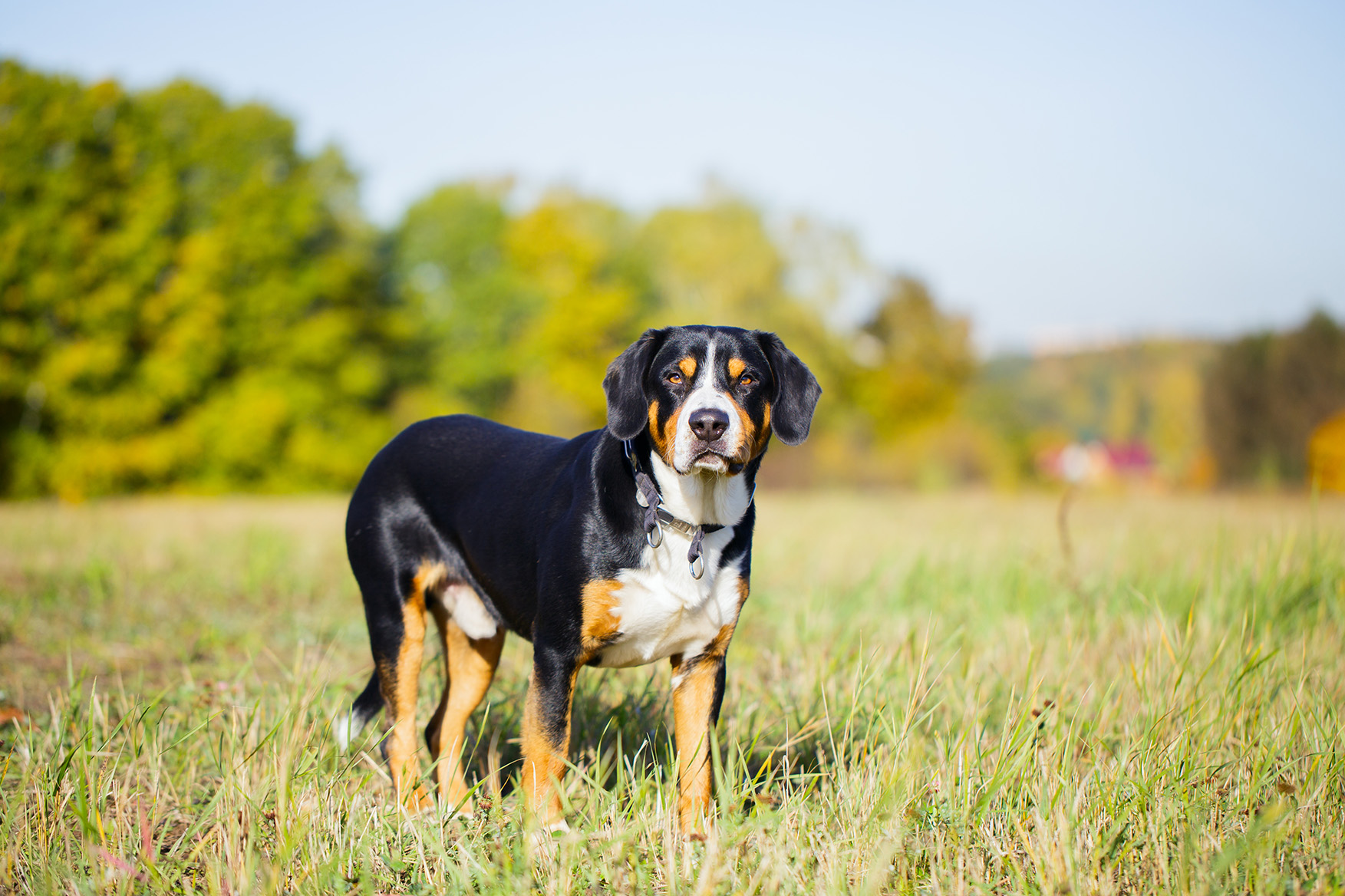
Physically, the Entlebucher Mountain Dog is a compact and muscular dog with a well-balanced, sturdy build. It typically stands between 16 to 21 inches tall at the shoulder and weighs between 45 to 65 pounds. The breed has a striking tri-color coat, usually black with tan and white markings, and a thick, short to medium-length coat that provides protection in harsh weather conditions.
Temperamentally, the Entlebucher is known for being intelligent, energetic, and eager to work. It is a highly trainable breed, but it can also be independent and strong-willed, so consistent training and socialization are important. The breed is affectionate and loyal to its family and is often protective, making it an excellent watchdog. It tends to get along well with children and other pets when properly socialized.
As a working dog, the Entlebucher Mountain Dog excels at herding livestock and performing tasks that require agility and problem-solving skills. It is highly active and requires regular exercise and mental stimulation to prevent boredom. Without sufficient activity, the breed may become destructive or overly energetic.
Overall, the Entlebucher Mountain Dog is a versatile, loyal, and energetic breed that excels in both herding and as a family companion. It is well-suited for active families or individuals who can provide the exercise and structure this intelligent breed needs to thrive.
History
The Entlebucher Mountain Dog, also known as the Entlebucher Sennenhund, is the smallest and most agile of the four Swiss mountain dog breeds. Its origins trace back to the alpine regions of Switzerland, where it was used as a versatile working dog. The breed takes its name from the Entlebuch valley in the canton of Lucerne, where it was first recognized as a distinct type of dog. The Entlebucher was primarily bred to herd cattle, navigate steep and rugged terrain, and serve as a loyal farm companion.
The history of the Entlebucher Mountain Dog is closely tied to its larger relatives: the Appenzeller, Bernese, and Greater Swiss Mountain Dogs. All four breeds are believed to descend from mastiff-like dogs brought to Switzerland by Roman legions over 2,000 years ago. Over time, these dogs adapted to the needs of local farmers, with the Entlebucher developing into a smaller, more nimble breed suited for herding livestock in the narrow and mountainous regions of the Swiss Alps.
Despite its utility, the Entlebucher faced near extinction in the early 20th century due to industrialization and changes in farming practices. The breed was formally recognized in 1913 when it was presented at a Swiss dog show, but it was initially grouped with the Appenzeller. It wasn’t until 1927 that the Entlebucher was recognized as a separate breed, thanks to the efforts of Swiss veterinarian Franz Schertenleib, who worked tirelessly to preserve and promote the breed. The formation of the Swiss Entlebucher Club further ensured its survival.
Today, the Entlebucher Mountain Dog remains relatively rare but is highly valued for its intelligence, energy, and loyalty. While it continues to work as a herding dog in some regions, it has also become a cherished family companion, excelling in obedience, agility, and other canine sports. Its history reflects the resilience of both the breed and the dedicated breeders who have ensured its preservation.
Appearance
An Entlebucher is a slightly elongated, compactly built dog with ample bone and strong muscle. Breed standards describe a height-to-length ratio of about 8:10, giving a sturdy outline without looking heavy or coarse.
The coat is a short, close-fitting double coat with a dense undercoat. Color is always tricolor: a black ground coat with rich tan (rust/fawn to mahogany) points and clear white markings (often including a blaze and white chest).
Colors
• Black
• Black White & Tan
• Black White & Yellow
Health
Responsible breeders track health data and work to reduce genetic disease through screening and transparency. Breed-club health efforts for Entlebuchers have included DNA testing initiatives for Progressive Retinal Atrophy (PRA), and ongoing research/education around Entlebucher Urinary Syndrome (EUS) and certain heart conditions.
For owners, the practical approach is to choose breeders who can show current health testing and who openly discuss family history. In day-to-day life, keep the dog lean and well-conditioned, and bring up any vision changes, urinary concerns, or exercise intolerance promptly with your veterinarian.
Care
The short double coat is generally low-maintenance: weekly brushing usually handles loose hair and keeps the coat glossy, with more frequent brushing during seasonal shedding. Keep nails trimmed, ears clean and dry, and teeth brushed regularly.
Because Entles are athletic and active, routine care should include joint-friendly conditioning (steady walks, hiking, controlled running, strength-through-play) rather than only explosive sprinting. Weight management is also key—extra pounds can stress hips, knees, and the back in a compact working breed.
Training
This breed is intelligent, persistent, and capable of independent problem-solving—great qualities when you train with clarity and structure. Short, frequent sessions with positive reinforcement (food, toys, access to movement) tend to work well, especially when you keep lessons purposeful and varied.
Focus early on impulse control (settle, leave it, recall), polite greeting skills, and comfortable handling/grooming. Many Entles shine in dog sports (obedience, rally, agility, herding, scent work), which provides both mental work and a constructive outlet for intensity.
Temperament
Entlebuchers are confident, lively working dogs—alert and engaged with the world, and typically happiest when they have purposeful daily activity. They’re often affectionate and devoted with family, and their herding/guardian background can make them watchful and quick to notice change.
With unfamiliar people and dogs, they may be reserved rather than immediately social. Consistent puppy socialization and thoughtful introductions help prevent pushy or suspicious behavior from becoming a habit, and channel that natural protectiveness into steadiness.
Lifestyle
Entlebuchers fit best with people who enjoy an active routine and want a dog involved in daily life. Plan on substantial physical exercise plus real mental work (training games, problem-solving toys, sport classes) most days.
They’re not ideal for owners who travel constantly or prefer a low-energy companion. Many do well in houses with yards, but what matters most is structured activity and supervision—without it, boredom can turn into nuisance barking, chasing, or destructive “self-employment.”
Ownership
The Entlebucher’s intense bonding and working drive are a joy for prepared owners and a challenge for casual ones. Expect to invest time in training, socialization, and ongoing enrichment, especially through adolescence.
Look for breeders who participate in health programs and can explain how they raise and socialize puppies. Before bringing one home, have a plan for exercise, training goals, and boundaries—this breed thrives when the household provides leadership, outlets, and consistency.
Interesting Facts
• Smallest of the four Swiss Sennenhund breeds.
• Traditionally used in Switzerland as a cattle drover and farm guardian.
• Always tricolor: black with tan points and white markings, with a short double coat.
• Medium-sized and compact; breed standards emphasize an athletic, slightly elongated outline.
• Often reserved with strangers; early socialization is especially important.
• Breed-club health work has included PRA DNA testing and ongoing research on EUS and some heart conditions.