
Fell Terrier
Basics
The Fell Terrier is best thought of as a traditional working terrier type from the fell (mountain) country of Northern England, rather than a single show-bred “kennell‑club” breed. These tough little dogs were developed for practical work—going to ground to bolt or hold quarry such as fox, and for general vermin control—so working ability and grit have historically mattered more than uniform appearance.
In modern use, “fell terrier” is sometimes used as an umbrella term for related northern working terriers, and it’s closely tied to the history of the Patterdale Terrier. In fact, the UKC’s Patterdale Terrier standard describes the Patterdale as descended mainly from the black, smooth‑coated Fell Terrier developed in the harsh environment of Northern England.
Description
The Fell Terrier is not a single standardized breed but a type of hard, working terrier developed in the rugged “fell” country of northern England, particularly the Lake District and surrounding uplands. Bred strictly for function, Fell Terriers were shaped by generations of fox control in steep, rocky terrain where a small, fearless, and durable dog was essential. Appearance was always secondary to grit, stamina, and working ability.
These terriers were designed to go to ground after foxes, working deep underground in cold, wet, and often dangerous conditions. A Fell Terrier needed the courage to confront quarry in tight spaces, the flexibility to maneuver through narrow tunnels, and the mental toughness to work independently for long periods. Their coats—typically rough or broken—provided protection against weather and abrasion, while their compact size allowed them to follow quarry where larger dogs could not.
Temperamentally, the Fell Terrier is intense, driven, and highly determined. These dogs are known for their seriousness in the field and their willingness to work despite pressure or discomfort. While loyal to their handlers, they are not bred for easy companionship and often retain a strong prey drive and assertive nature that reflects their working purpose.
Today, Fell Terriers remain primarily in the hands of working hunters rather than show rings or mainstream registries. Various strains exist, such as the Patterdale-type and Lakeland-type working lines, each reflecting the preferences of individual hunts and regions. The Fell Terrier stands as one of the purest examples of a true earth-working dog—defined not by uniform appearance, but by proven ability, toughness, and utility in demanding real-world conditions.
History
The history of the Fell Terrier is rooted in the remote uplands, or “fells,” of northern England, particularly the Lake District, Yorkshire Dales, and surrounding border regions. Long before formal dog breeds were established, local huntsmen and farmers bred small terriers for one purpose: controlling foxes and other vermin in some of the harshest terrain in Britain. These early terriers were selected solely on their ability to work underground in cold, rocky, and confined environments.
Unlike many modern breeds, Fell Terriers were never standardized by kennel clubs or shaped for appearance. Each hunt or region maintained its own strain, breeding only from dogs that proved themselves in the field. Traits such as size, coat texture, and color varied, but courage, endurance, flexibility, and voice were essential. A dog that could not face a fox below ground or work repeatedly over a season was removed from the breeding pool, creating an uncompromising form of functional selection.
Throughout the 18th and 19th centuries, Fell Terriers became an integral part of mounted and foot packs used for fox control. They worked in close partnership with hounds and handlers, locating foxes that had gone to ground and either bolting them or holding them until they could be dug to. The terrain they worked—steep scree slopes, stone walls, and deep earths—shaped the tough, no-nonsense terrier type that still defines the Fell Terrier today.
As fox hunting declined and dog shows rose in popularity, many terrier types were standardized and softened, but Fell Terriers largely remained outside that influence. Working men continued to breed them quietly and selectively, preserving bloodlines that prioritized real-world performance. Today, the Fell Terrier stands as a living link to Britain’s working terrier heritage—defined not by pedigree papers or uniform looks, but by generations of proven utility and hard-earned reputation in the field.
Appearance
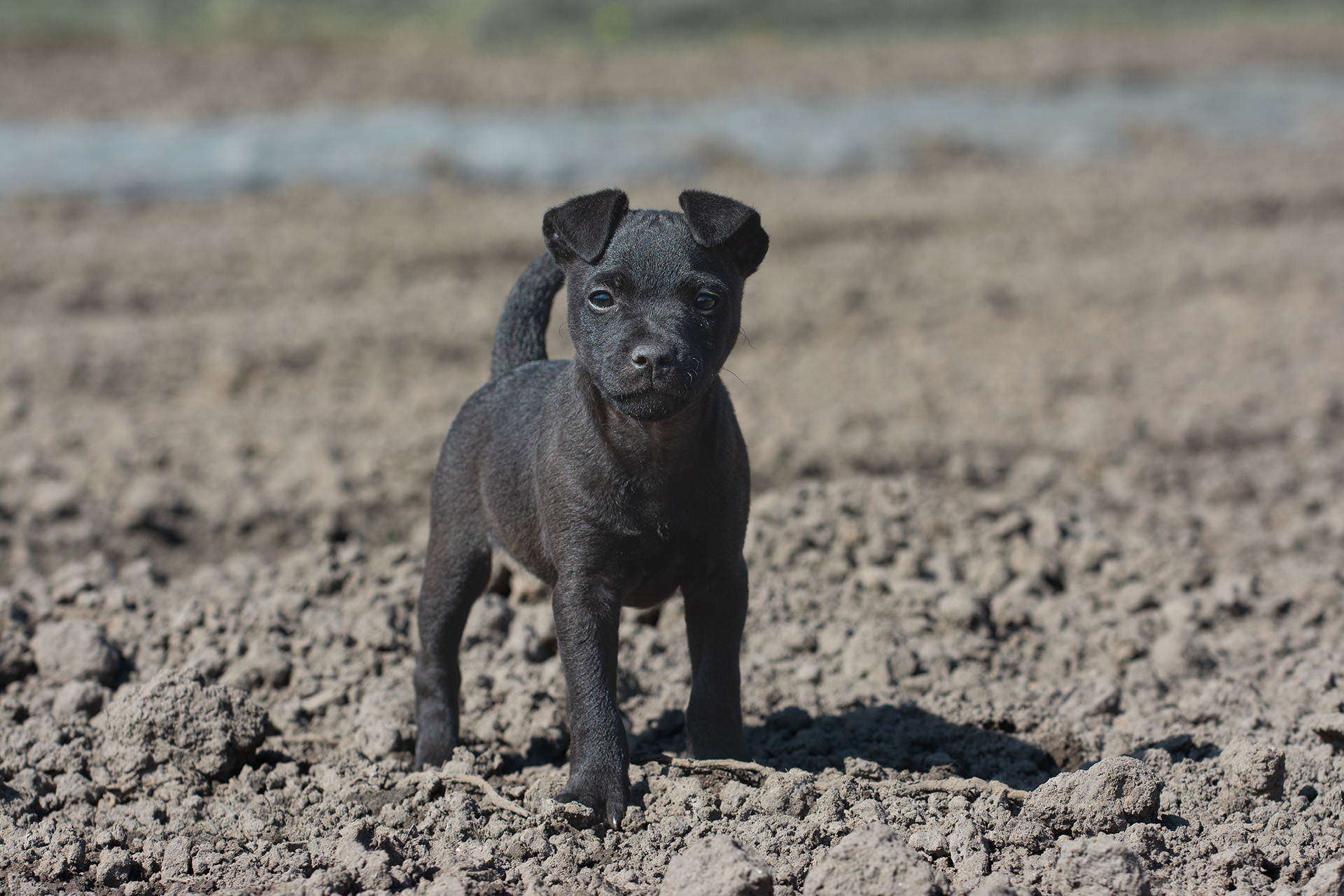
Because Fell Terrier describes a working type, individual dogs can vary more than standardized show breeds. In general, they are small, athletic, long‑legged terriers built to cover rough ground and still fit into tight places underground. A narrow, compressible chest is a hallmark of true earth-working terriers, since it lets the dog follow quarry through confined tunnels.
Coats are typically weather-ready and practical rather than fancy. Many fell terriers are seen in black or red, with coats ranging from short and dense to rougher textures depending on local strains and purpose. Expect a compact, muscular body, strong neck and jaw, and a tail traditionally carried as a working “handle” (with docking historically common in some places, though practices and laws vary).
Colors
• Black
• Black & Tan
• Blue
• Chocolate
• Grizzle
• Liver
• Red
Health
Working-type terriers are often described as hardy, but “hardy” isn’t the same as maintenance-free. A fell terrier’s biggest risks may be the ordinary ones: preventable parasites, dental disease, and injuries from high activity (cuts, sprains, punctures) if the dog is hunting or exploring rough terrain.
Choose breeders who prioritize sound structure and stable nerves for work, and ask about health history in the line. Keep routine veterinary care current (vaccinations, heartworm where applicable, and regular exams), and watch weight—extra pounds make a small, athletic terrier more prone to orthopedic strain over time.
Care
Daily exercise is non-negotiable: brisk walks plus opportunities to run, hike, or do safe “job-like” activities (scent games, tug with rules, structured fetch) help keep a fell terrier balanced. Without enough physical and mental work, they may invent their own entertainment—digging, barking, or dismantling toys and household items.
Coat care is usually straightforward. A short or dense coat typically needs occasional brushing and routine bathing as needed; rougher coats may benefit from hand-stripping or more regular grooming to reduce tangles. Keep nails short for traction, check ears after outdoor work, and stay on top of parasite prevention if the dog spends time in brush or fields.
Training
Training a fell terrier is about channeling drive, not trying to erase it. Start early with reward-based basics (name response, leash skills, settle on a mat) and make sessions short and upbeat. Because many are naturally independent and prey-focused, recall should be trained carefully with long lines, high-value rewards, and lots of repetition in low-distraction settings before you trust it outdoors.
Consistency matters: clear boundaries, predictable routines, and preventing “self-rewarding” behavior (chasing, fence-running, digging) will do more than heavy corrections. Many owners find terrier-safe sports—nosework, barn hunt-style games, agility foundations, or earthdog-style training where legal and appropriate—help build teamwork.
Temperament
A genuine fell terrier temperament is bold, driven, and intensely focused when there’s a job to do. These dogs were selected for courage underground and for persistence, so they tend to be confident, energetic, and “all-in” when something triggers their prey drive.
With people, many are affectionate and comical in the home, but they’re rarely easygoing couch potatoes. They often do best with clear rules, structured outlets, and owners who enjoy a strong-minded terrier. Around small pets and wildlife, supervision is important; many will instinctively chase, dig, and hunt if given the chance.
Lifestyle
This is an active, outdoorsy dog that thrives with purposeful activity. A home with secure fencing (and escape-proof digging prevention) is a big plus, since many will follow their nose and instincts if they spot something to chase. They typically do best in households that can offer daily exercise and engagement, not just quick potty breaks.
In busy urban or apartment settings, success depends on the owner’s commitment to structured outlets and management. Fell terriers can be noisy and reactive if under-stimulated, but with enough work and clear routines they can settle nicely indoors and become entertaining, loyal companions.
Ownership
Fell terriers are a great fit for experienced terrier people, hunters, and active owners who want a small dog with real working grit. They’re usually not ideal as a “first dog” or for homes where a low-prey-drive, highly biddable temperament is essential.
When looking for a dog, focus on ethics and purpose: seek breeders or working registries that can explain the dog’s background, temperament, and what the parents actually do. Ask to meet adult dogs if possible, be honest about your lifestyle, and plan for management tools (secure fencing, long lines, sturdy crates, and enrichment) so the dog’s instincts don’t become household problems.
Interesting Facts
• “Fell” refers to the mountain country of Northern England; fell terriers were developed for work in rugged terrain.
• The term “Fell Terrier” is commonly used for a working type, not a single standardized kennel-club breed.
• The UKC Patterdale Terrier standard notes the Patterdale is descended mainly from the black, smooth-coated Fell Terrier.
• True earth-working terriers are valued for a narrow, flexible chest that allows them to work underground.
• Fell terriers are bred for courage and prey drive; they need purposeful outlets and careful management around small animals.