
Flat Coated Retriever
Basics
The Flat-Coated Retriever is a British gundog developed to be a versatile hunting companion and an affectionate family dog. In the field, they were expected to find and retrieve game on land and in water; at home, they tend to be people-focused and happiest when included in everyday life.
Often nicknamed the “Peter Pan” retriever, the Flat-Coat is known for staying playful and youthful well into adulthood. They do best with owners who enjoy an active, interactive dog and who can provide structure, training, and plenty of things to do.
Description
The Flat-Coated Retriever is a versatile and cheerful sporting dog known for its intelligence, enthusiasm, and friendly nature. Originally bred in the 19th century in England for retrieving game on land and water, this breed remains a favorite among hunters and active families alike. It is often referred to as the "Peter Pan" of retrievers due to its playful, youthful personality that persists well into adulthood.
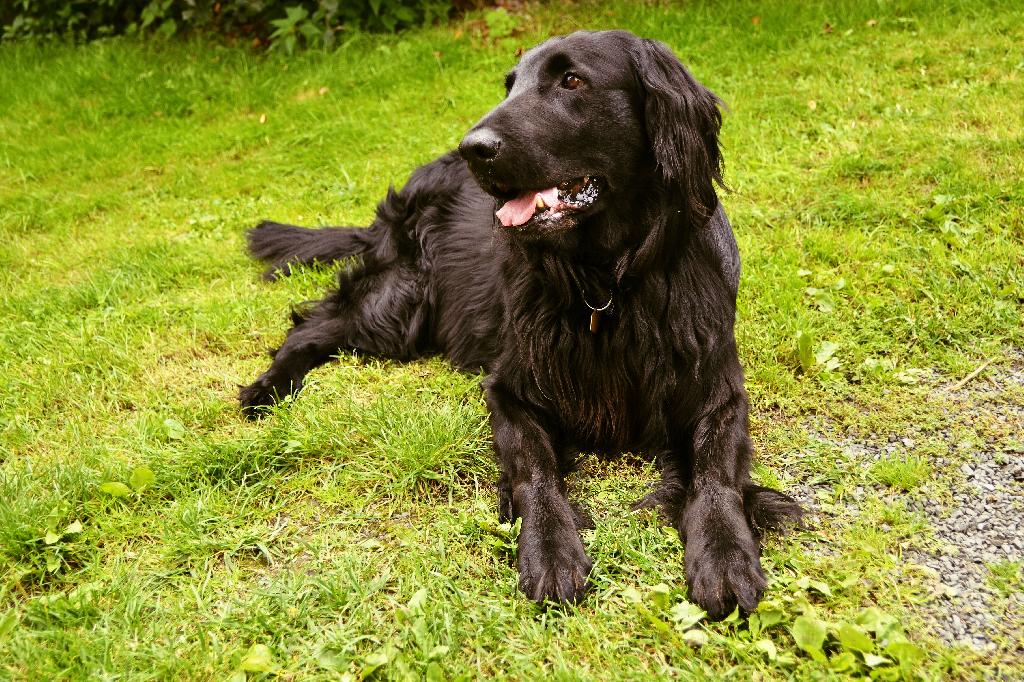
Physically, the Flat-Coated Retriever is a medium to large dog, standing 22 to 24.5 inches tall and weighing 55 to 70 pounds. It has a sleek, athletic build and a distinctive, shiny, flat-lying coat that comes in solid black or liver. Its expressive, almond-shaped eyes exude warmth and intelligence, while its long, feathered tail is often wagging, reflecting its happy disposition. The coat requires regular brushing to maintain its luster and prevent matting, particularly around the ears and tail.
This breed is renowned for its friendly and outgoing personality. Flat-Coated Retrievers are excellent family dogs, known for their patience and gentle nature with children. They are sociable and thrive on interaction with people and other animals, making them unsuitable for environments where they would be left alone for extended periods. Their high energy levels and playful demeanor mean they need regular physical and mental stimulation, whether through long walks, swimming, or games of fetch.
Flat-Coated Retrievers are highly trainable due to their intelligence and eagerness to please. However, they may exhibit a stubborn or distractible streak, particularly if training sessions lack variety or motivation. Positive reinforcement techniques work best for this breed. Beyond their roles as companions or working retrievers, they excel in dog sports like agility, obedience, and tracking, showcasing their versatility and athleticism.
Overall, the Flat-Coated Retriever is a joyful, active, and devoted breed that thrives in loving, energetic households. Its combination of beauty, intelligence, and boundless enthusiasm makes it a wonderful companion for those who can meet its exercise needs and provide the attention it craves. Whether as a hunting partner, therapy dog, or family pet, the Flat-Coated Retriever brings an abundance of love and joy to any home.
History
The Flat-Coated Retriever is a versatile and elegant breed with a rich history tied to the development of modern retrievers in 19th-century Britain. Originally bred as a gamekeeper’s companion, the breed was designed to excel in retrieving waterfowl and upland game, showcasing its keen nose, trainability, and enthusiasm for work both on land and in water. Its development is attributed to the blending of several breeds, including the Newfoundland, Irish Setter, and various spaniels, with some influence from the now-extinct St. John’s Water Dog. This combination resulted in a dog with the endurance and versatility needed for hunting and retrieving in diverse terrains.
The breed gained popularity in the mid-19th century, thanks in part to its performance and striking appearance. Its glossy, flat-lying coat and friendly demeanor earned it admiration not only as a working dog but also as a companion. By the late 1800s, the Flat-Coated Retriever was a favorite among British sportsmen and gained recognition as a distinct breed. It was officially recognized by The Kennel Club in 1915, further solidifying its status in the canine world.
However, the Flat-Coated Retriever’s popularity began to decline in the early 20th century as other retriever breeds, such as the Labrador and Golden Retrievers, gained favor. The breed’s numbers dwindled significantly, and it was on the brink of extinction by the mid-1900s. Dedicated breeders, however, worked tirelessly to revive the Flat-Coated Retriever, emphasizing its versatility, intelligence, and gentle temperament.
Today, the Flat-Coated Retriever remains a relatively rare breed but is cherished by enthusiasts for its joyful disposition and eagerness to please. It continues to excel as a hunting companion, show dog, and family pet. Its history reflects the breed’s resilience and enduring appeal, combining beauty, functionality, and a zest for life that has won the hearts of dog lovers around the world.
Appearance
Flat-Coats are medium-to-large, athletic retrievers with a distinctive, elegant outline and a level topline. A hallmark is the long, clean “one-piece” head with a gentle stop, kind expression, and an overall look of power without bulk.
The coat is straight and flat-lying with feathering on legs and tail, designed to protect a working retriever in wet cover. Breed color is typically solid black or liver, and the tail is carried happily as a smooth extension of the topline rather than curled over the back.
Colors
• Black
• Liver
• Solid Black
• Solid Liver
Health
Like all breeds, Flat-Coated Retrievers benefit from a relationship with a veterinarian and from breeders who prioritize health testing and longevity. Discuss age-appropriate screening and prevention (vaccines, parasite control, dental care) and keep your dog at a healthy weight and conditioning level.
The breed community places strong emphasis on tracking inherited risks and supporting research, including work related to cancer and breed-wide health monitoring. When choosing a puppy or adult dog, ask for documented health clearances (commonly including hips and eyes) and a transparent family history.
Care
The Flat-Coat’s coat is meant to be functional, not fussy. Plan on regular brushing to prevent mats in feathering (ears, legs, tail) and to keep shedding manageable, plus routine ear checks—especially if the dog swims or retrieves in wet conditions.
As an athletic retriever, they need steady exercise and mental work, not just a quick leash walk. Combine free running (in safe areas), fetch/retrieving games, training sessions, and scent-based activities, and keep them lean and fit to support long-term soundness.
Training
Flat-Coats are typically willing to please and enjoy learning, but their clownish enthusiasm can turn into jumping, mouthing, or distracted behavior if training is inconsistent. Short, upbeat sessions with rewards work best, especially when paired with clear boundaries at home.
Start early with socialization and basic manners, then channel their retrieving instinct into productive work: obedience, rally, agility, dock diving, and hunting/retrieving training are all natural fits. Teaching a reliable recall, polite greetings, and a solid “settle” cue makes day-to-day life much easier.
Temperament
A correct Flat-Coat temperament is upbeat: friendly, optimistic, and eager to engage with people. Many are natural social butterflies—devoted to their family, generally good-natured with strangers, and often enthusiastic about meeting other dogs.
They are energetic and “busy” in a good way, with a strong desire to carry, retrieve, and participate. Because they mature slowly and can be exuberant, they benefit from clear house rules, daily outlets for energy, and calm handling that teaches impulse control.
Lifestyle
This is not a couch-potato retriever. Flat-Coats are happiest in homes that can provide daily activity, training time, and companionship—think long walks, hikes, swimming, retrieving, and family involvement rather than long stretches alone.
They can adapt to many living situations if their exercise and enrichment needs are met, but they tend to be at their best with access to outdoor play and a job to do. Because they are social and sensitive to isolation, they usually prefer being indoors with their people when the day is done.
Ownership
A Flat-Coat is a great match for an owner who wants a cheerful, athletic companion and enjoys training. They thrive with consistency, gentle leadership, and a sense of teamwork; they do poorly with harsh methods or a hands-off approach.
Before committing, plan for the time costs: daily exercise, regular grooming, and ongoing reinforcement of manners during a long adolescent period. If you want a retriever who will join every adventure—and who will still feel like a puppy at heart for years—a well-bred Flat-Coat can be a wonderful choice.
Interesting Facts
- Originated in Britain as a versatile hunting retriever for land and water work.
- Nicknamed the “Peter Pan” retriever for a playful, youthful demeanor that often lasts into adulthood.
- Distinctive “one-piece” head and elegant, balanced silhouette are key breed hallmarks.
- Coat is straight and flat-lying with feathering; common colors are black and liver.
- Typically excels in activities like retrieving games, obedience/rally, agility, and field work.