
French Spaniel
Basics
The French Spaniel (Épagneul Français) is a continental pointing dog developed in France for hunting feathered game. It’s known as an athletic, medium-sized gundog with a steady point, a willing retrieve, and a temperament that tends to be gentle and easy to live with.
In modern homes, French Spaniels usually do best with owners who enjoy regular outdoor activity and who appreciate a dog that wants to work in partnership. They typically bond closely with their people and can be both a weekend hunting companion and a calm family dog when their exercise needs are met.
Description
The French Spaniel, or Epagneul Français, is a versatile and elegant hunting breed with a rich history dating back to the Middle Ages. Originating in France, it is one of the oldest spaniel breeds and was highly prized for its abilities in pointing and retrieving game birds. Known for its intelligence, grace, and work ethic, the French Spaniel is a favorite among hunters and an affectionate companion for families.
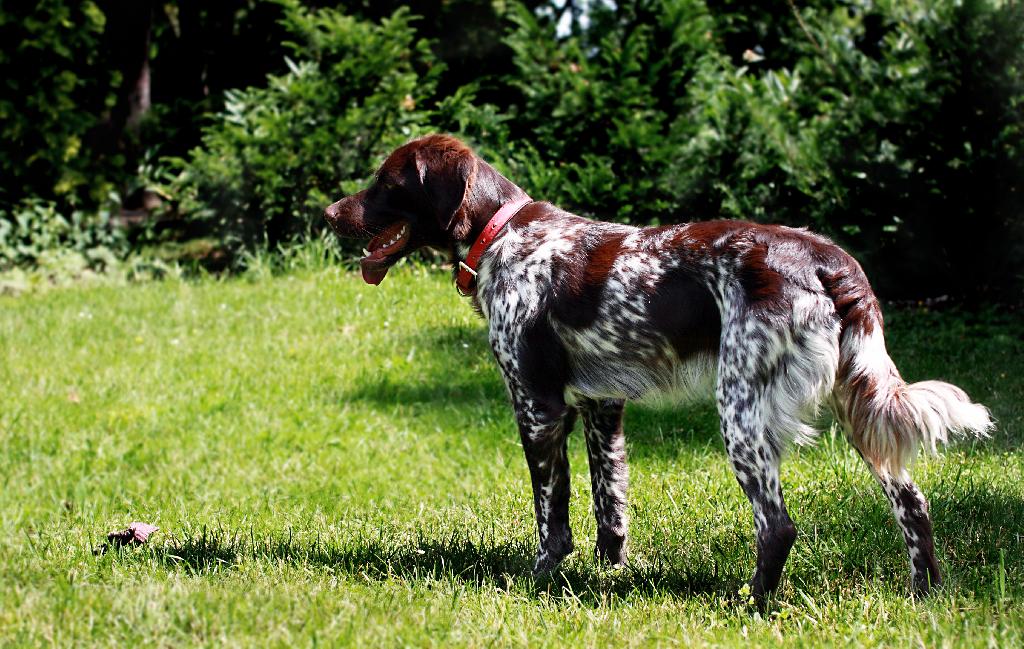
Physically, the French Spaniel is a medium to large dog, standing between 21 and 24 inches tall and weighing 50 to 60 pounds. It has a strong, athletic build suited for endurance and agility in the field. The breed’s coat is medium-length, dense, and slightly wavy, typically in white with brown markings that can vary in shade and pattern. Its expressive eyes and soft, feathered ears give it a gentle, noble appearance. Grooming needs are moderate, requiring regular brushing to keep the coat clean and healthy.
The temperament of the French Spaniel is one of its most endearing qualities. It is gentle, calm, and highly sociable, making it a wonderful family dog. The breed is known for its patience with children and its compatibility with other pets, though early socialization is always beneficial. While the French Spaniel thrives in active households, it also has a mellow side, making it a good balance of work and relaxation.
In the field, the French Spaniel is a skilled and reliable hunting dog. It excels as a pointing breed, working methodically and maintaining close contact with its handler. The breed is particularly well-suited to upland game hunting, thanks to its keen nose, stamina, and ability to navigate various terrains. Its intelligence and trainability make it a joy to work with, whether in hunting or dog sports like agility and obedience.
Overall, the French Spaniel is a loyal, hardworking, and affectionate breed that fits well into active, loving homes. Its combination of hunting prowess and gentle nature makes it a versatile companion, equally at ease in the field or by the family’s side. For those who can provide the exercise and attention this breed needs, the French Spaniel offers a lifetime of devotion and companionship.
History
The French Spaniel, or *Epagneul Français*, is one of the oldest and most revered spaniel breeds, with a history that dates back to medieval France. Its ancestors were likely brought to the region by returning Crusaders in the 11th and 12th centuries and were quickly adopted by French nobility for their skill in bird hunting. Known for their exceptional pointing abilities, these dogs became popular during the Renaissance when falconry and hunting with firearms gained prominence. The breed is frequently depicted in medieval and Renaissance art, highlighting its status as a valued hunting companion.
By the 17th and 18th centuries, the French Spaniel had established itself as an all-purpose hunting dog, excelling in tracking, pointing, and retrieving game. It became especially popular in France’s forested and marshy regions, where its stamina and versatility proved invaluable. However, as hunting styles evolved and other breeds like the English Setter and German Shorthaired Pointer gained popularity, the French Spaniel’s numbers began to decline. By the 19th century, the breed was nearly extinct, its survival threatened by the introduction of more specialized hunting dogs.
The revival of the French Spaniel in the early 20th century is credited to Father Fournier, a passionate French priest and hunter. He worked to standardize and preserve the breed, emphasizing its historical traits of intelligence, work ethic, and loyalty. The French Spaniel was officially recognized by the Société Centrale Canine in 1891 and later by international kennel clubs, ensuring its continued survival.
Today, the French Spaniel remains a relatively rare breed but is cherished by hunting enthusiasts and families alike for its calm, friendly temperament and adaptability. It continues to excel as a pointing and retrieving dog, reflecting its centuries-old heritage. The French Spaniel’s history is a testament to its resilience and the dedication of those who have worked to preserve this noble and versatile breed.
Appearance
French Spaniels are medium-sized, balanced, and strongly built without looking coarse. The outline is slightly longer than tall, with a deep chest and well-muscled hindquarters built for covering ground efficiently in the field.
The coat is flat, silky, and well furnished, with longer, wavier hair on the ears, the backs of the legs, and the tail. Color is white and brown with spotting, patches, light to moderate flecking, or roan; the brown ranges from cinnamon to dark liver.
Adults commonly fall in the mid-20s inches at the shoulder: males about 56–61 cm (22–24 in) and females about 55–59 cm (22–23 in), with a small tolerance in some standards.
Colors
• Brown
• White & Brown
Health
French Spaniels are generally considered a hardy sporting breed, but responsible ownership still means planning for routine screening and preventive care. Ask breeders about orthopedic evaluations (hips/elbows as appropriate), eye health, and family history, and keep your dog at a lean, athletic body condition.
Like many active, deep-chested dogs, they can be at risk for stomach upset if they exercise hard immediately around meals. Sensible meal timing, conditioning, and monitoring can help reduce problems.
A rare but serious issue reported in the breed is acral mutilation and analgesia (reduced pain sensation that can lead to self-injury of the feet). It’s uncommon, but it’s worth discussing with a knowledgeable breeder and veterinarian—especially if you notice unusual licking/chewing or injuries that don’t seem to bother the dog.
Care
Coat care is usually moderate. A thorough brushing once or twice a week helps prevent mats and removes burrs after field time, with extra attention to the feathering on ears, legs, and tail. Occasional baths and routine nail trims are typically enough for a tidy, healthy coat.
Ear care matters for any drop-eared sporting dog. Check and gently clean ears as needed—especially after swimming or running through wet cover—to reduce the risk of irritation or infection.
Exercise is the biggest “care” item: these dogs are built to move. Plan for daily activity (long walks, runs, hikes, off-leash time in safe areas, or field work) plus mental enrichment like scent games and retrieving drills.
Training
French Spaniels often respond best to calm, upbeat training with clear criteria and plenty of reinforcement. They tend to be sensitive to harsh corrections; consistent routines and rewards usually produce faster, steadier progress.
Start early with foundational skills that support both pet life and field work: name response, recall, loose-leash walking, impulse control around birds/squirrels, and comfortable handling for grooming and vet exams. Short, frequent sessions prevent boredom and keep their attitude bright.
If you plan to hunt or compete, channel natural pointing and retrieving instincts with structured exposure—carefully managing arousal so enthusiasm doesn’t turn into breaking or self-rewarding chases. A strong recall and a reliable “whoa/stand” (or equivalent) are especially valuable in this breed type.
Temperament
A well-bred French Spaniel is typically balanced and people-oriented: gentle, calm, and straightforward in the home, while becoming keen and energetic when it’s time to hunt or train. Many are naturally sociable with other dogs and enjoy being included in family routines.
Because they were developed to work close with a handler, they often prefer cooperation over independence. That can make them responsive students—but it also means they may not love long periods of isolation.
As with any sporting breed, temperament is shaped by early socialization, clear boundaries, and adequate daily exercise. With consistent structure, most mature into steady companions that are affectionate without being chaotic.
Lifestyle
This is a “needs to do things” dog. French Spaniels thrive in households that can offer daily physical exercise plus purposeful mental work—retrieving, scent-based games, training sessions, or regular time in the field.
They can adapt to suburban living if exercise is non-negotiable, but a fenced yard (or frequent access to safe off-leash areas) makes life easier. Apartment life can work only for very active owners who reliably provide long outings and enrichment.
In the home, many settle well after activity and enjoy being close to their people. They’re often best suited to families who like an engaged companion rather than a low-maintenance, couch-only dog.
Ownership
Choose your source carefully. Prioritize breeders (or rescues) who can explain temperament, working ability, and health screening in clear terms—and who match puppies to homes based on energy level and expectations. Meet adult dogs when possible to get a realistic picture of size, coat, and temperament.
Plan your time budget up front: daily exercise, training, grooming, and enrichment aren’t optional for a sporting breed. If you hunt, add structured preseason conditioning and safe exposure to birds and gunfire with a trainer or experienced mentor.
Budget for quality food, routine veterinary care, training classes, and gear (crate, long line, grooming tools). With the right setup, French Spaniels can be deeply rewarding: versatile partners outdoors and affectionate companions indoors.
Interesting Facts
- Breed name in French: Épagneul Français.
- FCI classifies the breed in Group 7 (Pointing Dogs), continental pointing dogs of “spaniel type,” with a working trial requirement.
- Typical color is white and brown, often with spotting, flecking, or roan; brown ranges from cinnamon to dark liver.
- Size (FCI): males 56–61 cm; females 55–59 cm (with a small tolerance).
- Often described as gentle and calm at home, while enthusiastic and energetic in the field.
- A rare condition reported in the breed is acral mutilation and analgesia (reduced pain sensation leading to self-injury).